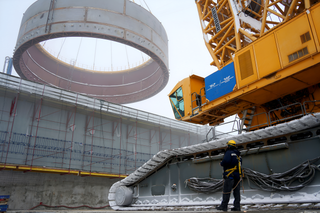
At the third power unit of Leningrad NPP-2, one of the key construction stages has been completed — a support truss, forming the basis of the future reactor system, has been installed in the reactor shaft. The operation was performed by specialists from the Rosatom State Corporation and the Titan-2 construction and engineering complex and was completed three days ahead of schedule.
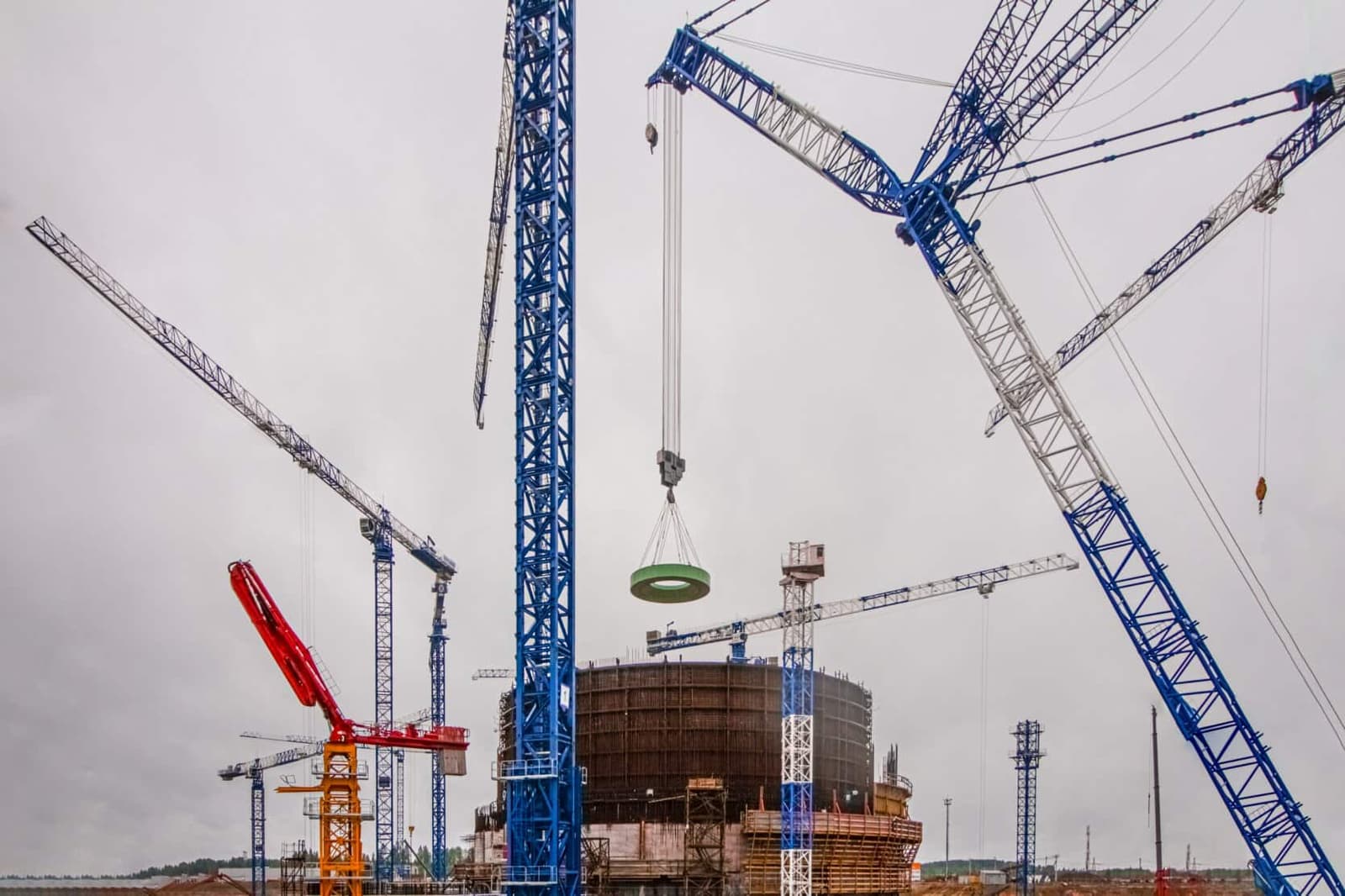
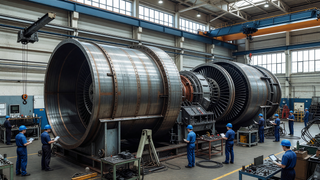
The installation element is a massive annular metal structure which, after concreting, will become part of the load-bearing and protective system of the reactor shaft. The internal cavities of the truss will be filled with special serpentinite concrete, designed to meet high requirements for radiation and thermal protection.
After gaining strength, the concrete will be further checked by non-destructive testing methods to confirm its quality and compliance with design parameters. Special attention will be paid to the geometry of the structure — maintaining coaxiality, elevation marks, and position along the axes before and after concreting, as this determines the correct operation of the assembly under loads throughout the entire life cycle of the power unit.
As explained by Titan-2, the task is not only to fill the structure with concrete but also to ensure the correct curing regime and subsequent verification of characteristics. Work on the support truss is planned to be completed during July.
The next stage of construction involves the installation of a thrust truss, which will further stabilize the reactor and prevent possible transverse displacements during operation.
According to representatives of Leningrad NPP-2, such a double-fastening system provides increased stability of the reactor equipment and is designed for safe operation of the power unit for at least 60 years. The reactor vessel, weighing over 300 tons, will be securely fixed in its design position in all operating modes.
Read more on the topic:
Never miss our newsAdd this site to your preferred sources to see us more oftenAdd on Google