Since August 31, it has become easier for those without tens of millions of rubles in their accounts to obtain qualified investor status in Russia. The Bank of Russia has allowed the necessary level of preparation to be confirmed by a Russian certificate, which can be obtained after a special exam.

Previously, one of the main ways to become a "qual" was sufficient capital: the standard property threshold in 2026 is 24 million rubles. Now, a separate route has appeared – to prove one's preparation through knowledge. At the same time, the old options have not disappeared: status can still be obtained for high income, experience in the financial market, trading turnover, specialized education, or a combination of several criteria.
Now, status can be obtained through one's own knowledge, rather than a large sum in accounts or high income.
How the exam is structured
One option is the Moscow Exchange investment exam. It can be taken from the age of 18, requires Russian citizenship, a "Gosuslugi" account, and a passport. During the testing, one must be in Russia, and it is only allowed to be taken remotely from a computer or laptop.
One hour is given for everything. During this time, you need to answer 50 questions and correctly solve at least 35 – that is, score 70%. The tasks are randomly selected from a closed database of at least 500 questions, so simply memorizing one set of answers will not work. There are both regular tests and practical tasks and cases for comparing investment decisions.
The price of one attempt is 8 thousand rubles including VAT. If the passing score is not achieved, the money for the next attempt is not transferred: retaking will have to be paid for separately again. The attempt can be repeated no earlier than after a calendar month.

What you will have to learn
The exam checks far more than just basic knowledge of buying stocks and bonds. At least 40% of the tasks are devoted to instruments for qualified investors, CFAs (digital financial assets), forex, and financial platforms.
The remaining questions cover risk management, taxes and legislation, financial market structure, accounting, and financial mathematics. That is, the candidate is expected not just to know terms, but to understand how complex products work and what risks are behind them.
Before a paid attempt, you can test yourself for free. A demo test is available on "Finuslugi" that shows the format of questions and the final number of correct answers. Its result does not affect anything, and the tasks from the training version are not necessarily found in the real exam.

Cheating will not be easy
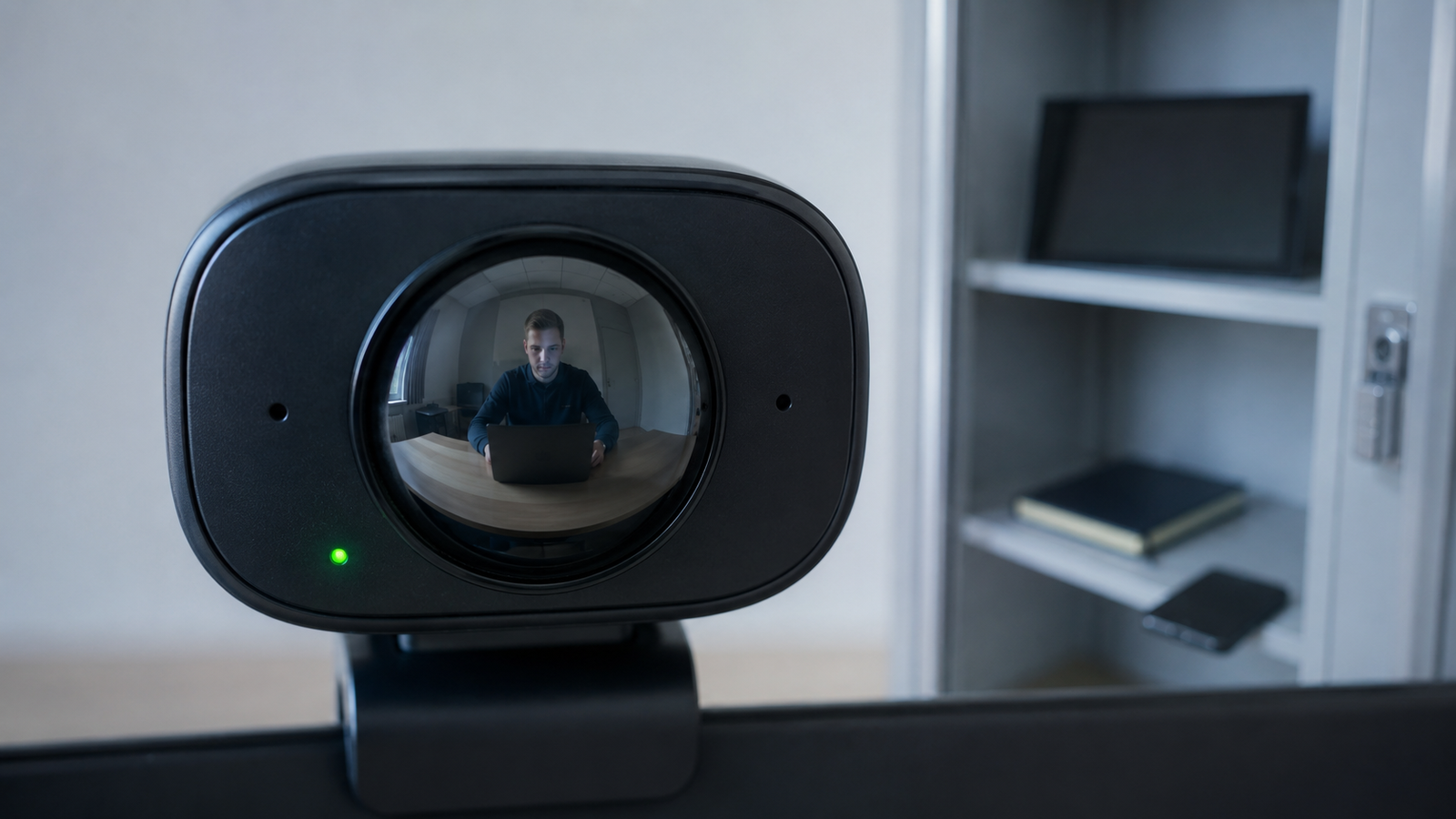
The exam is conducted with proctoring – a remote monitoring system. The camera and microphone remain on, the screen is recorded, and the system tracks the opening of other programs and tabs, extraneous sounds, and the absence of a person in the frame. Before starting, you may be asked to show your passport, workspace, and even turn the camera 360 degrees.
Phones, second monitors, headphones, books, notes, and pre-prepared tables are not allowed. It is even forbidden to read questions aloud or talk to anyone during the exam. Frequent glances to the side can also attract the system's attention, and if a violation is confirmed, the result will be annulled.
Passed the exam – what's next
Getting 35 correct answers does not automatically mean becoming a qualified investor. After successful completion, an electronic investment certificate is generated within seven days. With it, you need to contact your broker or management company and submit an application – they then verify the document and assign the status.
The certificate itself is perpetual. Therefore, when switching to another broker, you will not need to pay 8 thousand rubles again and retake the exam. But the new broker must still independently verify the document and enter the client into their own register of "quals".
And if the result seems erroneous, it can be appealed. An appeal can be filed within three business days, for example, in case of a technical failure, an incorrect question, or a violation of the exam procedure. Simply poor preparation or internet problems on the participant's side are not considered grounds for review.

What the status ultimately gives
A "qual" gains access to some instruments that are unavailable to ordinary investors or available with additional restrictions. These include individual investment funds, CFAs, derivatives and OTC market instruments, some Pre-IPO, and foreign securities. The specific set depends on the broker and the asset itself.
But the exam does not turn risky investments into safe ones. On the contrary, after obtaining the status, the broker assumes that the person is capable of independently understanding a complex instrument and assessing possible losses. Therefore, the new procedure actually changes the main principle of entering the "qual" category: instead of the size of the wallet, the investor can now confirm the right to a more complex market with their own knowledge.
Read more on the topic:
Never miss our newsAdd this site to your preferred sources to see us more oftenAdd on Google