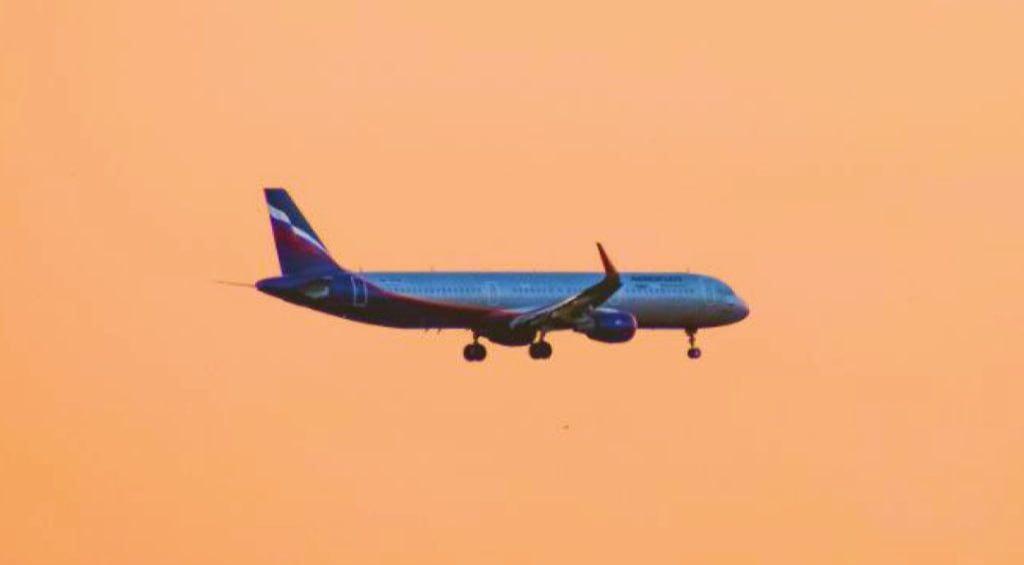
The largest Russian air carrier, Aeroflot, has drawn attention to the threat from the growing presence of foreign airlines in the Russian market. This was announced by the company's CEO, Sergey Alexandrovsky.
This year, foreign carriers will transport approximately 23-24 million passengers. In 2019, they accounted for about 15 million passengers.
Perhaps, this needs special attention to maintain a balance of interests of Russian carriers. The availability of international transportation is important, but the interests of Russian carriers, it seems to me, are very important to monitor and control in this trend.
This summer, 215 weekly flights were operated between Russia and China, served by eight Chinese and seven Russian carriers. Almost half of the bilateral flights were to Moscow, and 22% of flights connected China with the Russian Far East.
According to Alexandrovsky, Chinese carriers have significantly increased their presence in the Russian Far East after Beijing introduced a visa-free regime for Russian citizens in September. This led to a sharp increase in demand for tourist trips from Russia to China. As a result, Chinese companies began to offer "inadequate" fares for their services.
In 2024, Aeroflot carried 55 million passengers, of which 12 million were on international flights. Over the past 9 months of this year, the company has transported 42.5 million passengers.
According to Rosaviatsiya, as of October 26, Russia has direct air connections with 41 countries in Asia, the Middle East, and Latin America. The agency also predicts that by 2025, the volume of passenger air transportation in the country will reach 109.7 million people, which is 2% less compared to the previous year.
Earlier, www1.ru reported that Aeroflot is launching a unified booking system for large families with special fares.
Read more on this topic:
- Aeroflot Will Save MS-21 Production: It Will Be Difficult to Survive Without Large Orders
- AI on the Rise: Aeroflot Will Transfer Up to 70% of Customer Interactions to Neural Networks
- Aeroflot Plans to Join an Alliance of Companies in the Field of AI
Never miss our newsAdd this site to your preferred sources to see us more oftenAdd on Google