The Ministry of Industry and Trade of Russia has presented a list of cars that will fall under localization requirements in accordance with the new taxi law. The document was published in the ministry's official channel on the Max messenger.
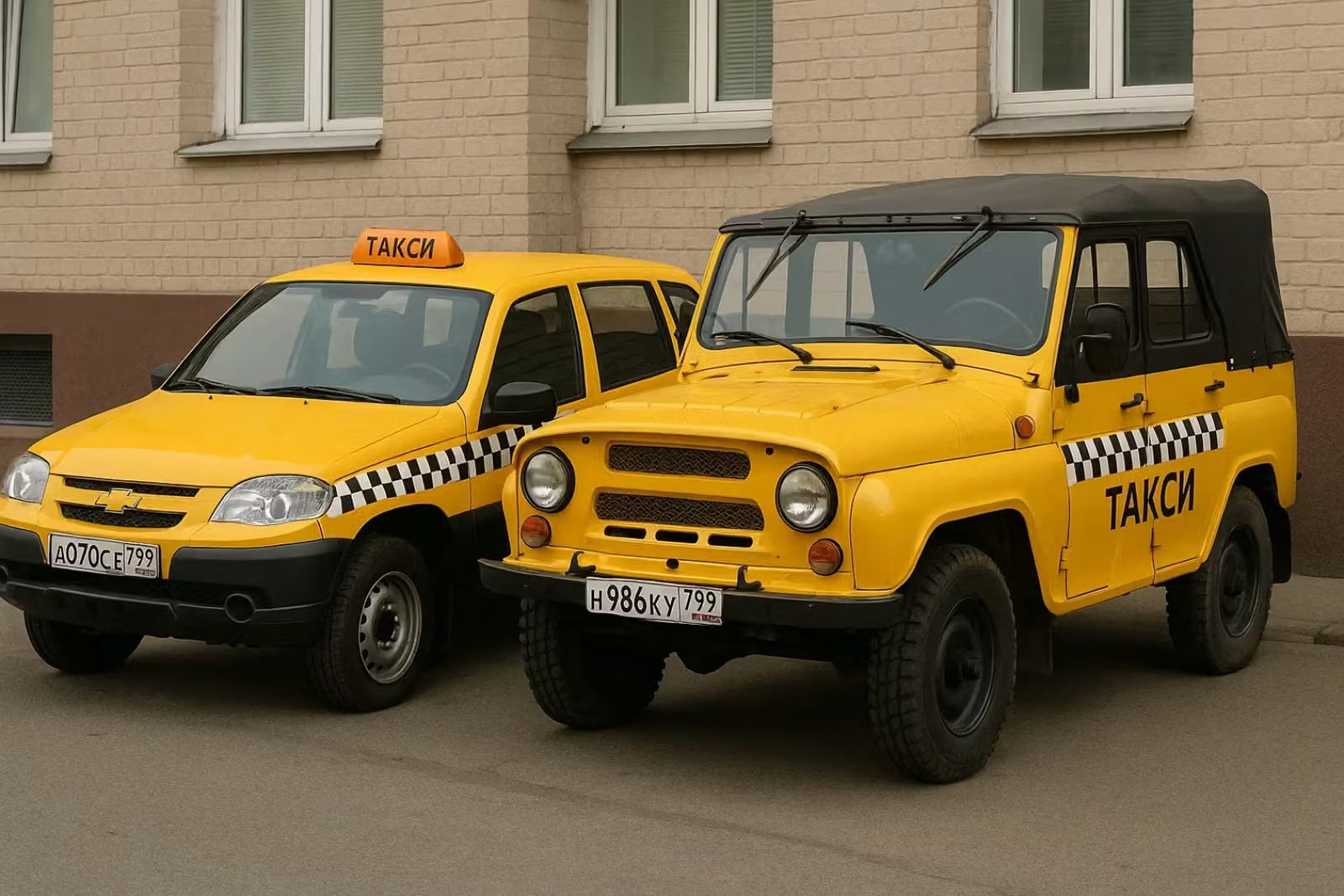
The list includes 20 models from six brands with production in Russia. Among them are Lada (Granta, Iskra, Vesta, Aura, Largus, Niva Legend, Niva Travel), UAZ (Patriot, Hunter), Sollers (SP7), Evolute (I-Pro, I-Joy, I-Sky, I-Jet, I-Space), Voyah (Free, Dream, Passion), and "Moskvich" (3, 3e, 6, 8). The list covers sedans, crossovers, SUVs, and seven-seater models. It includes cars with traditional internal combustion engines, series hybrids, and electric vehicles.
The law on localization of taxi cars will come into force on March 1, 2026. Its requirements apply to cars included in regional taxi registers after this date. For the Kaliningrad region, as well as for the regions of the Siberian and Far Eastern Federal Districts, deferrals are provided.
The primary list is published in advance so that market participants can plan purchases and prepare for the requirements of the law. As new models of Russian brands and cars with localized production appear, the list will be updated taking into account obligations to deepen localization.
Read more on the topic:
- Haval and Solaris Apply for Admission to Russian Taxis Under New Localization Law
- Taxi Fleets to Accelerate Purchases of Foreign Cars Due to New Car Localization Law
- Named Car Brands That Will Be Allowed to Operate as Taxis
Never miss our newsAdd this site to your preferred sources to see us more oftenAdd on Google














![Growth Point: After 5G Launch, Mobile Internet in Russia Accelerated by 20%","subtitle":"TelecomDaily recorded an upload speed increase of 19.7%, and download speed of almost 14%","announce":""}[]}],](https://media.ixbt.site/fit-in/320x/ixbt-data/1727896/ai-image-nvgq0a0v5cjnyxwoc8xpelva.webp)