Shipbuilders at "Okskaya Sudoverf" (Nizhny Novgorod region) have completed the construction of the lead vessel of the RSD71 project, "Konstruktor Egorov". This was reported by the press service of the Russian Maritime Register of Shipping.
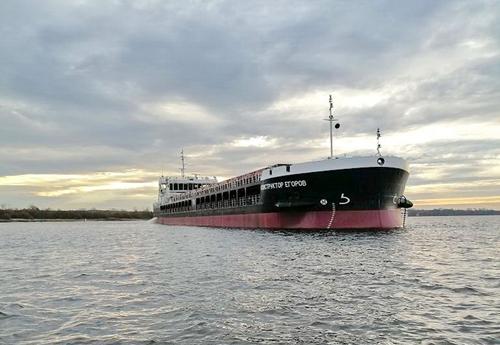
The dry cargo vessel meets environmental requirements for atmospheric emissions. Its engines are equipped with an exhaust gas cleaning system to reduce emissions of nitrogen oxides (NOx).
The vessel was named in honor of Gennady Egorov, the ideologist of Russian shipbuilding. The dry cargo vessel opens a series that is a continuation of the RSD59 project.
"Konstruktor Egorov" has a spacious cargo hold, which is 6 meters longer than the hold of its predecessors. Thanks to the reduced dimensions, vessels of this project will be able to enter ports that are inaccessible to RSD59 dry cargo vessels.
Characteristics of the RSD71 project:
- Length overall - 119.96 m;
- Width - 16.9 m;
- Board height - 6 m;
- Draft - 4.9 m;
- Deadweight - 7174 tons;
- Cargo hold capacity - 9063 cubic meters;
- Speed - 10.7 knots.
Read more on the topic:
To replace Hungarian pusher tugs: KB "Vympel" has developed project 00443
Tugs "Khabarovsk", "Manorsky" and "Shantary" handed over to the customer
The new icebreaking tug "Narvskaya Zastava" received the second of eight hull blocks
Never miss our newsAdd this site to your preferred sources to see us more oftenAdd on Google