Translated with AI from the Russian original.
A Russian, known by the nickname Egor_Ant073, recreated an exact 1:1 scale copy of Moscow's Yasenevo district in Minecraft.
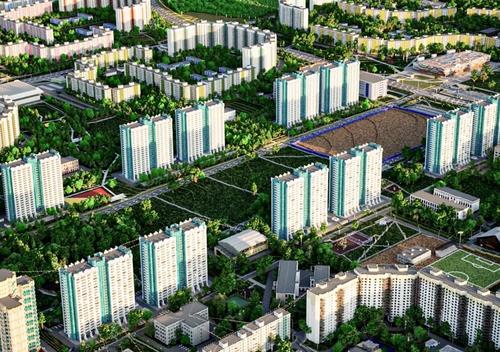
The project was carried out by him alone and took almost four years - 3 years, 10 months, and 19 days. During this time, he recreated all the microdistricts of Yasenevo, including the elevation changes, roads, pedestrian crossings, streetlights, bus stops, and trees.
Egor shared information about the project and invited those interested to visit the server where this virtual district was created, providing instructions on the PlanetMinecraft website. According to him, all the microdistricts of Yasenevo are now fully complete.
Downloading the project files is not possible. Anyone can connect to the BuildTheEarth project server and explore it there.
This is not the first time that exact copies of Russian cities and landmarks have been created in Minecraft. For example, the BTE TeamCIS team previously recreated Lenin Square in Voronezh with a number of significant objects, including the regional government building and the Lenin monument.
Read more on the topic:
"Children of the Birch": Russian students are developing a new game based on Slavic folklore
"Hidden Soul": Tomsk students are developing a game with AI elements based on Russian folklore
Never miss our newsAdd this site to your preferred sources to see us more oftenAdd on Google

















