Translated with AI from the Russian original.
The R-30 "Bulava" sea-based intercontinental ballistic missile (NATO classification SS-N-32) has been adopted by the Russian Armed Forces, according to Yuri Solomonov, General Designer of the Moscow Institute of Thermal Technology (developer of the land-based "Topol-M" missile).
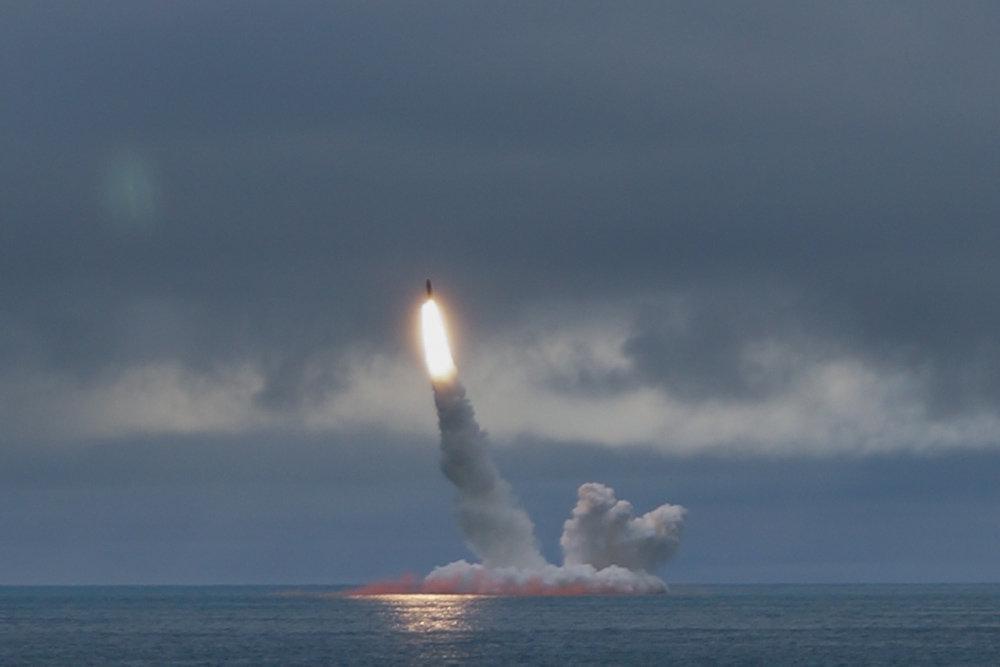
On May 7, 2024, a decree was signed to adopt the "Bulava" missile system.
In November 2023, the strategic missile submarine "Emperor Alexander III" (built by specialists of JSC "PO "Sevmash") conducted a test launch of the "Bulava." The maneuvers took place in the White Sea, and the missile was launched at the Kura missile range.
The carriers of the "Bulava" ICBM are Project 955 "Borei" submarines. The missile has three stages with six hypersonic individually guided warheads. The ICBM is produced by the Votkinsk plant in Udmurtia.
Features of the R-30 "Bulava" ICBM:
- can carry nuclear warheads
- low-altitude flight profile
- flight range is 8,000 km
- launch weight — 36.8 tons
- control system — inertial
- length in the launch container — 12.1 m
- length without the warhead — 11.5 m
Read more on the topic:
USC spoke about projects for 2024
The nuclear cruiser "Emperor Alexander III" joined the Russian Navy
The submarine cruiser "Generalissimus Suvorov" arrived at the Pacific Fleet base
Never miss our newsAdd this site to your preferred sources to see us more oftenAdd on Google

















