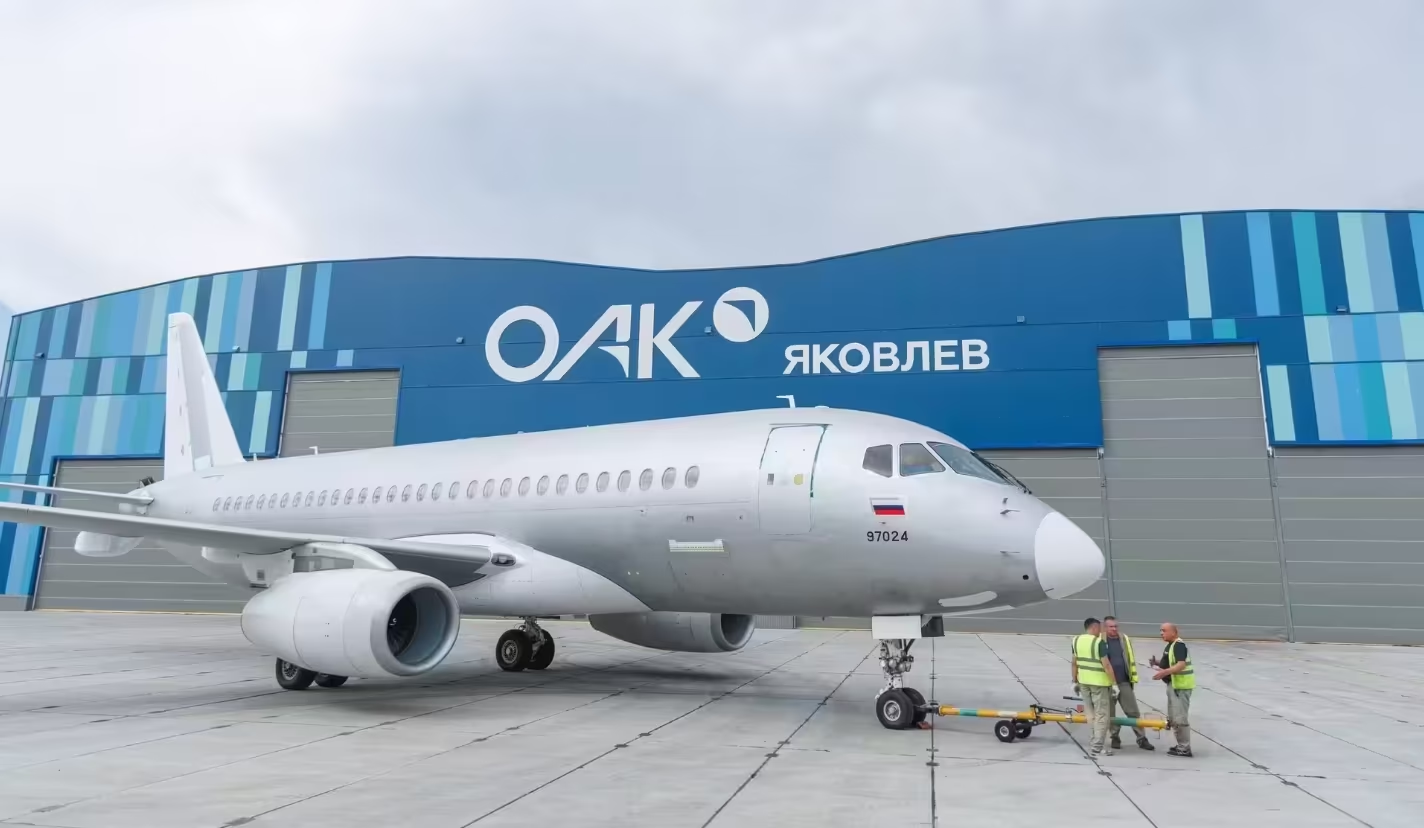
After the start of import substitution, the SJ-100 will compete not only with the Brazilian Embraer but also with the Chinese COMAC C909. Both aircraft were created as regional airliners of the same class, but their development approaches turned out to be completely different.
"Pervy Tekhnichesky" compared the aircraft across five key parameters and determined which one is closer to the ideal regional aviation standard.
Engines
The SJ-100 receives PD-8 engines, which are intended to replace the French-Russian SaM146. This gives Russia critically important independence from Western suppliers.
The Chinese ARJ21 uses American General Electric CF34 engines — reliable but entirely imported. However, they have been in operation for a long time and have a huge service base. We'll call it a draw.
Aerodynamics
The SJ-100 is designed as a completely modern aircraft with a digital fly-by-wire control system, more modern aerodynamics, and a new-generation wing.

The C909 is structurally noticeably more conservative. The aircraft uses tail-mounted engines and many solutions reminiscent of old American regional airliners from the 1980s-1990s. We award the point to the SJ-100.
Capacity and Range
The SJ-100 can carry up to 98 passengers and has a range of about 4300–4500 km depending on the version.
The basic COMAC C909 is designed for approximately 78–90 passengers and flies 2200–3700 km depending on the modification. For maximum range, the Chinese had to create a separate ER version.
In terms of capacity and range, the "Superjet" appears more versatile, so it wins.
Operation
Here, China is currently ahead. The COMAC C909 is already in serial production, operated by several airlines, and has transported millions of passengers. More than a hundred such aircraft are flying worldwide.
.jpg)
The fully import-substituted SJ-100 is still on its way to full commercial operation. For now, we award the point to the ARJ21.
Cabin Comfort
Despite the identical 2+3 seat configuration, the SJ-100 cabin is considered one of the most comfortable in its class. The aircraft has a wider fuselage and lower noise levels in the aft section.
Due to the tail-mounted engines, the acoustic comfort in the C909 is noticeably worse, especially in the rear rows. The point goes to the SJ-100.
Final score — 3:1 in favor of the SJ-100.
In terms of design, aerodynamics, and comfort, the "Superjet" appears to be a more modern aircraft. However, the COMAC C909 wins in the main aspect — product readiness.
The Chinese managed to bring the aircraft to full-scale series production and mass operation, while the SJ-100 with PD-8 is only approaching this stage.