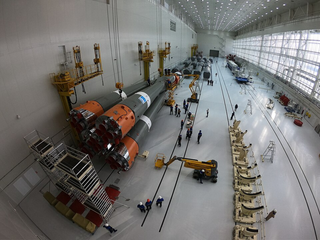
Breakthrough in Space: Five Workshops at Vostochny Transformed into One Supercomplex
For the first time in the history of Russian cosmonautics, all stages of rocket preparation for launch have been concentrated in one building
For the first time in the history of Russian cosmonautics, all stages of rocket preparation for launch have been concentrated in one building
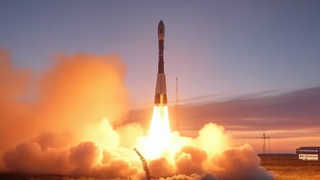
Private investments and military technologies set a new stage for Russian cosmonautics
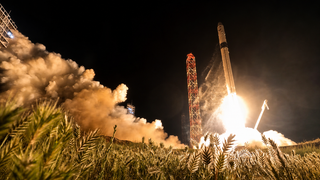
The RD-171MV for "Soyuz-5" has a thrust of up to 800 tons, four combustion chambers, and a completely updated control system
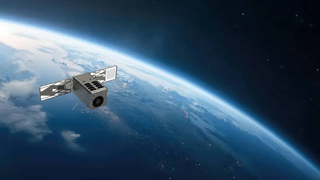
A group of CubeSats will observe the celestial body from various orbits - from low Earth orbit to Lagrange points

Plasma cloud maintained its structure for seven days and caused magnetosphere disturbance
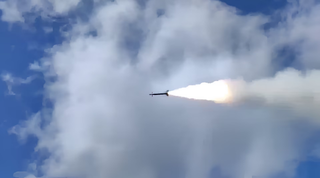
The rocket ascended to an altitude of 420 m and landed by parachute at the airfield
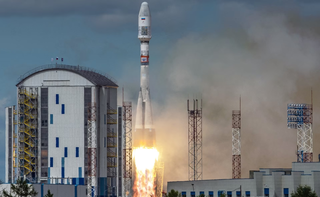
Reasons for financial disputes between organizations are not disclosed
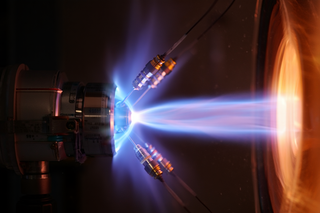
NIEM scheme reduces satellite mass and power consumption
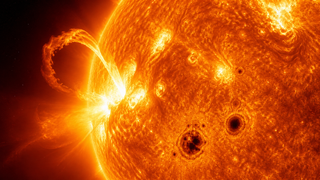
Particle streams can cause geomagnetic storms on Earth
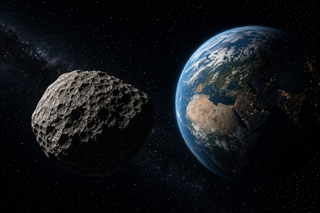
The object will pass approximately 3.5 million km from our planet - about nine times the distance to the Moon

The long-duration flight program is in the early stages of development
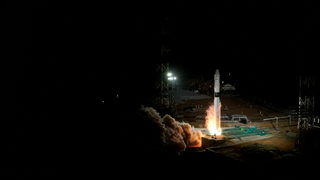
Kinopoisk showed the launch from Baikonur with all stages - from preparation to launch
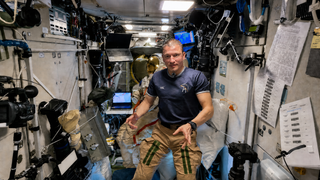
Cosmonaut Kud-Sverchkov opened the hatch of "Progress MS-34" and showed what was delivered to orbit
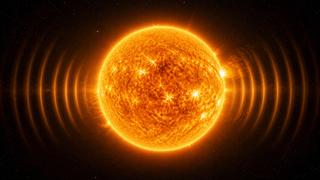
By its "sounds," we can study what's happening inside the star
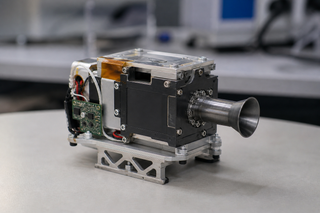
The invention by MEPhI engineers runs on plastic and will be useful for small satellites