An engine whose power is comparable to entire icebreakers can now be seen in detail. Roscosmos has published a new video about the RD-171MV – one of the most powerful liquid-propellant rocket engines ever created – and the Soyuz-5 launch vehicle.
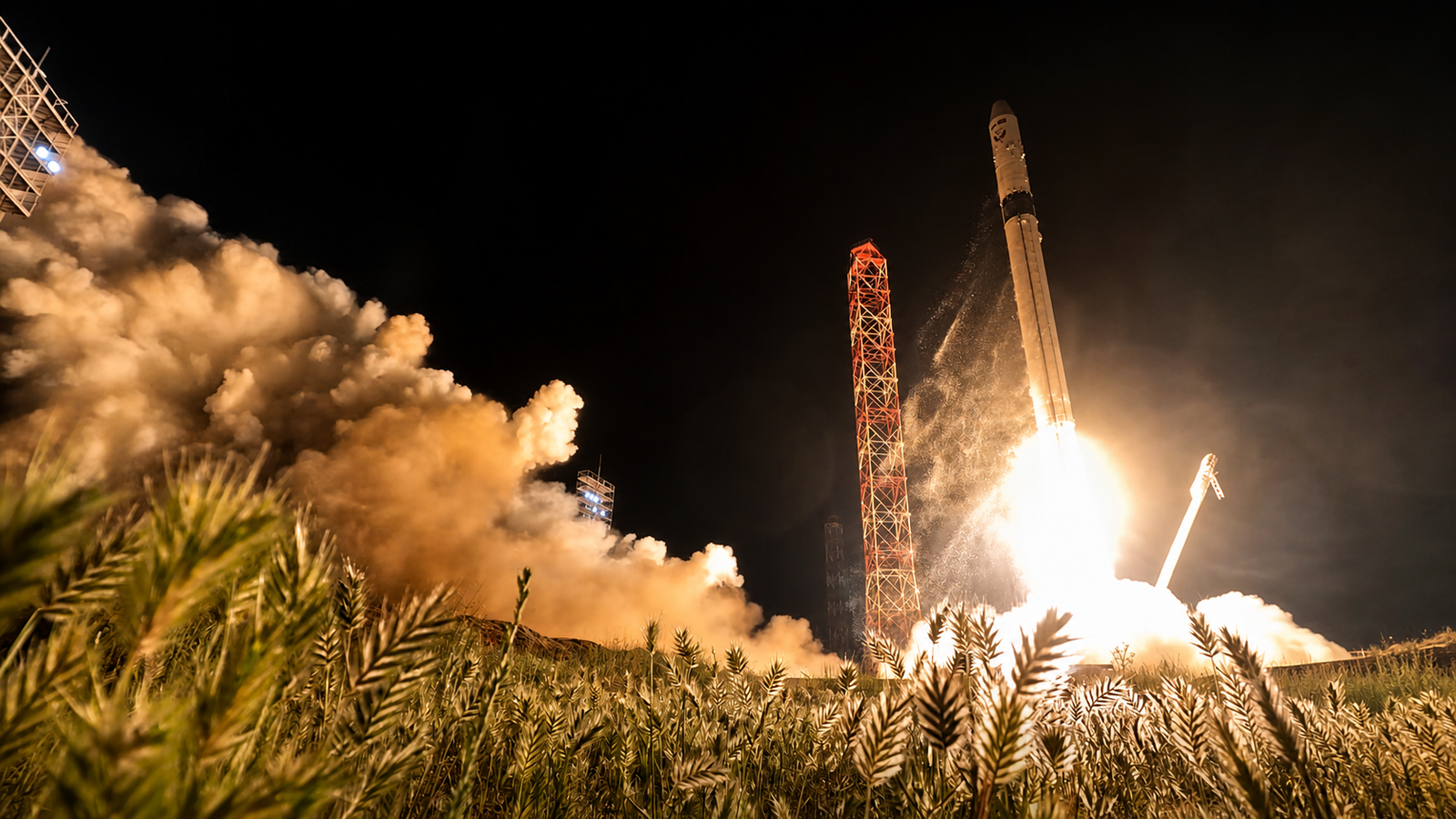
The RD-171MV is installed on the first stage of the Soyuz-5 and is considered the most powerful in its class. It operates on an oxygen-kerosene propellant pair, is equipped with four combustion chambers, and develops a thrust of up to 740 tons at sea level and about 800 tons in vacuum.
The engine was created at NPO Energomash and is a development of the Soviet RD-170 line, which was used on the Energia rocket.
Based on it, modifications RD-171, RD-180, and RD-191 were previously developed, used in both Russian and foreign rockets.
Work on the new version began in 2017. The RD-171MV received an updated control system without foreign components, a higher response speed, and additional safety measures.
The engine's operating time reaches 180 seconds, and the turbine's power is about 250 thousand horsepower. This is more than the total power of the propulsion systems of two Arktika-class nuclear icebreakers.
The first test launch of Soyuz-5 took place on April 30 at 9:00 PM Moscow time from the Baikonur Cosmodrome. The first and second stages of the rocket operated normally. After separation, the dimensional-mass mock-up fell into a pre-closed area for shipping and aviation in the Pacific Ocean.
Read more on the topic:
Never miss our newsAdd this site to your preferred sources to see us more oftenAdd on Google

















