Scientists from Tomsk Polytechnic University, together with colleagues from the N.D. Zelinsky Institute of Organic Chemistry of the Russian Academy of Sciences and the French Aix-Marseille University, have developed a new type of anti-tumor prodrugs. These molecules act on the principle of a "Trojan horse": they remain harmless until they penetrate inside a malignant cell, where they trigger its death mechanism. This is reported by the "Nauchnaya Rossiya" portal.
How it works
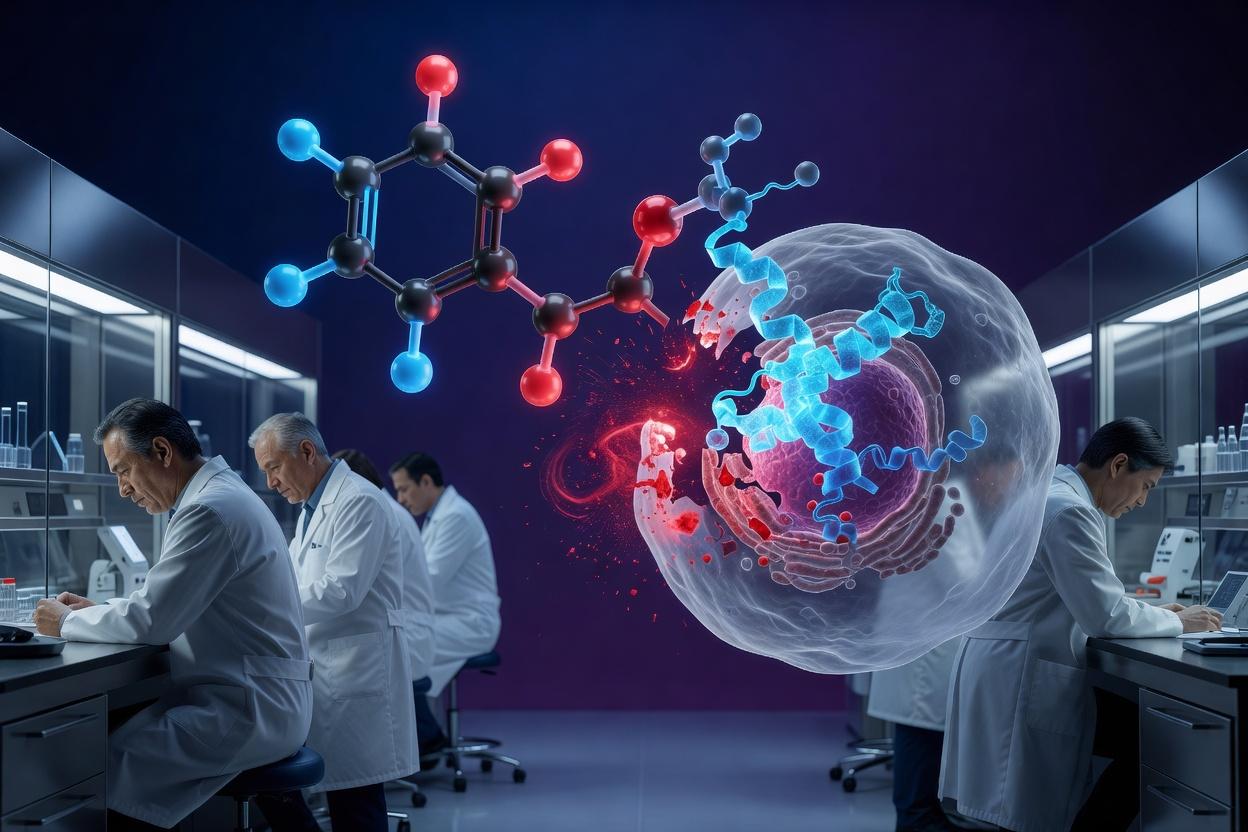
The development is based on alkoxyamines — compounds capable of generating radicals and destroying cell structures. The main problem in their application is high toxicity to healthy tissues. To solve this, researchers attached the dangerous substance to the carbohydrate galactose via a self-destructing linker.
The biochemical "trigger" was the enzyme β-galactosidase, whose level is elevated in cancer cells due to accelerated metabolism. Upon entering the affected cell, the enzyme cleaves the glycosidic bond, after which the linker breaks down and releases the active alkoxyamine.
Results
Testing was conducted on several types of cancer cells, including prostate adenocarcinoma, ovarian, breast, and T-lymphoblastic leukemia. Compounds with a self-destructing linker effectively suppressed the vital activity of cancer cells. Cells died by apoptosis — regulated self-destruction, which minimizes inflammatory processes.
Prospects
TPU Associate Professor Pavel Petunin noted that the development is currently fundamental, and an interesting feature of the developed drugs is their single action. Subsequent metabolites, like the original prodrug, are presumably not cytotoxic, which could potentially avoid severe side effects.
According to him, a new version of prodrugs with metabolic selectivity specifically for cancer cells is currently being developed. After this, the plan is to move to cell spheroids, and then to in vivo testing.
Read more on the topic:
Never miss our newsAdd this site to your preferred sources to see us more oftenAdd on Google