Translated with AI from the Russian original.
Russia is developing technology for growing artificial nerves to aid recovery after severe injuries. The development aims to create tissue-engineered constructs that closely resemble natural nerves. The project is being implemented by specialists from the Kuban State Medical University of the Russian Ministry of Health with the support of the Russian Science Foundation and the Kuban Science Foundation.
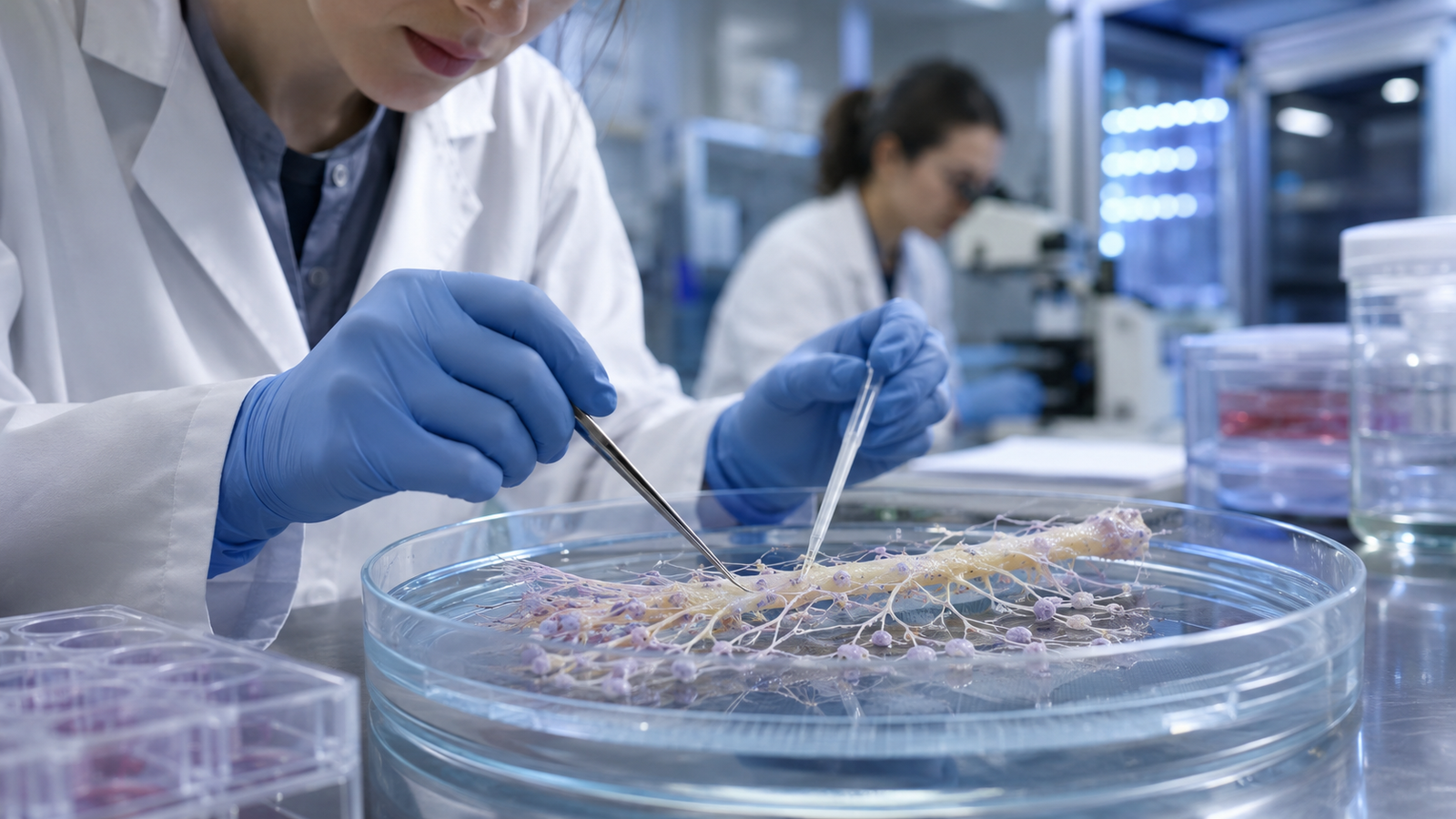
The core of the development is a special biological scaffold that preserves the structure of nerve tissue. It is seeded with Schwann cells, which guide the growth of nerve fibers and help restore lost connections.
Separately, scientists are investigating how specific proteins affect Schwann cells. These cells are crucial for nerve regeneration. According to Karina Melkonyan, Vice-Rector for Strategic Development and Head of the Central Research Laboratory at KubSMU, proteins make them more active: the cells multiply faster, move better within the construct, and more effectively initiate regeneration processes.
Currently, for peripheral nerve injuries, one of the main methods remains autotransplantation – transplanting the patient's own nerve from another part of the body. This approach has limitations: there is not always enough donor material, the operation further traumatizes the patient, and the risk of complications increases.
The developed tissue-engineered analogue is intended to become an alternative to autografts. According to the project authors, the technology will improve the treatment outcomes for severe nerve injuries, reduce surgical trauma, and expand the possibilities of reconstructive medicine.
Next, researchers plan to test the construct on an experimental model of peripheral nerve injury in animals. Peripheral nerves connect the central nervous system to muscles, skin, and internal organs, so severe damage to them can lead to loss of sensation and motor functions. In the long term, the project's results could form the basis for new biomedical products for reconstructive medicine.
Read more on the topic:
Never miss our newsAdd this site to your preferred sources to see us more oftenAdd on Google

















