Russian electronics are incorporating more domestic parts. The share of Russian components in devices is growing by 5–20% per year for various manufacturers, stated Dmitry Kruchay, head of the hardware development group at “Skala^r” (Rubytech group). However, there's a nuance: simple parts like resistors and diodes are largely available in Russia, but complex chips and controllers are still more challenging, other industry participants explained.
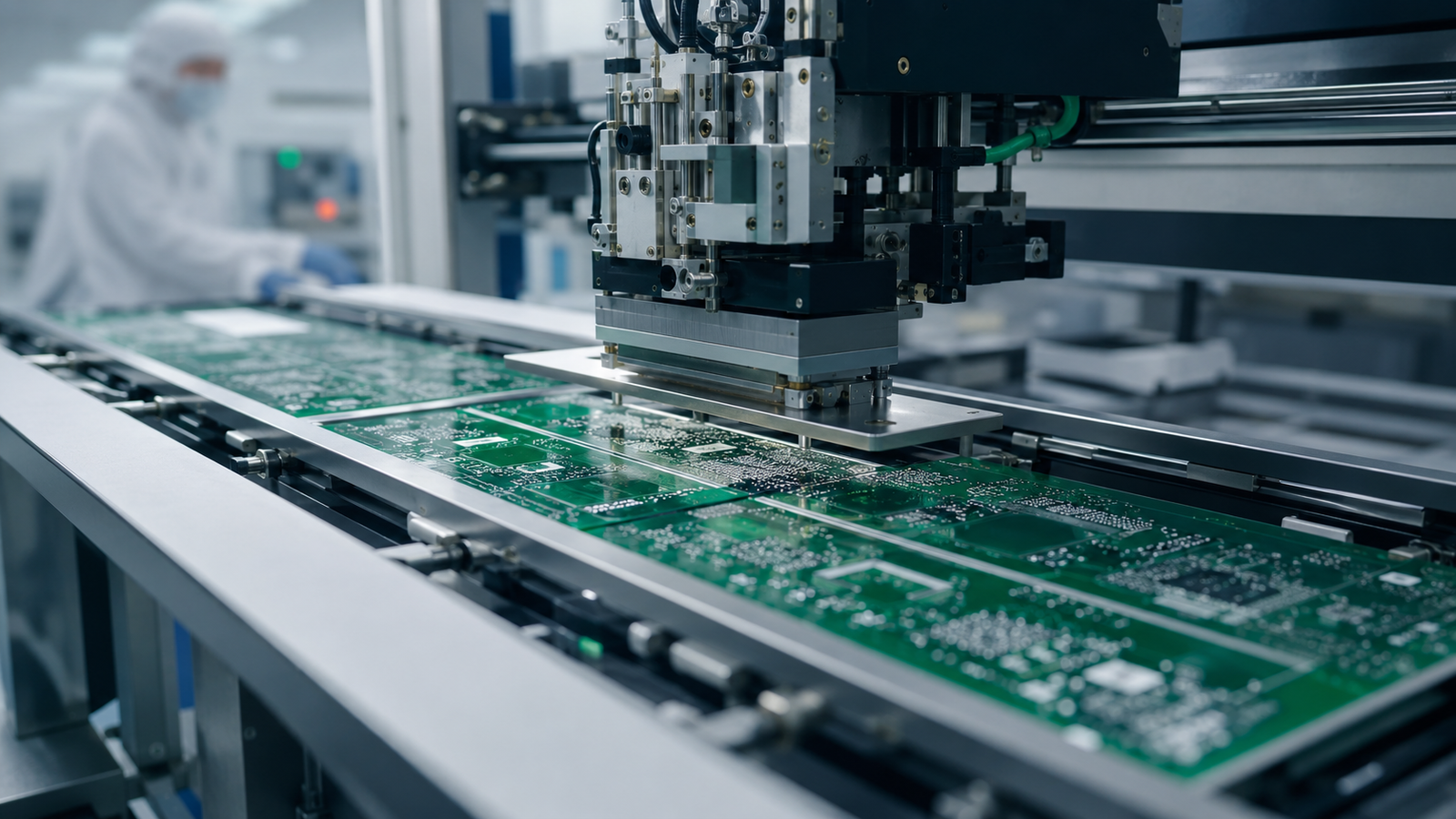
In the segment of servers, data storage systems, and hardware-software complexes, a return to planned growth is expected. According to Alexander Filchenkov from “Graviton”, in 2024, the market grew due to increased government procurement and expanded production of end electronics, but in 2025, it declined by 21–25% due to limited access to imported components. By the end of 2026, this segment could grow again by 15–20%.
However, the situation in the personal computer and laptop market is different. According to industry participants, the market is hindered by a shortage of key components, rising costs, and reduced computer purchases. ICL Techno expects that the situation may only stabilize closer to 2027, or possibly even by 2029.
The market's development is also supported by departmental decisions. For example, enterprises with critical information infrastructure facilities must abandon foreign software and hardware solutions by January 1, 2028. Simultaneously, authorities excluded computers and peripherals from a number of manufacturers, including Acer, Asus, Cisco, Fujitsu, HP, IBM, Samsung, and others, from the parallel import list.
Another important issue is the localization of printed circuit boards.
This is one of the most sensitive issues for the industry. Modern high-speed interfaces require multi-layer boards made of high-quality textolite. Currently, the optimal solution remains the use of Taiwanese textolite for critical layers and Chinese for less critical areas. In Russia, there are several main manufacturers of textolite, but their products do not yet provide the required dielectric characteristics for tracing high-speed interfaces such as PCIe Gen. 5.
According to various estimates, in some cases, the cost can increase by 5–8 times, and equipment delivery times can stretch from the usual weeks to months, and sometimes up to six months or a year. The reason is a shortage of key materials, chemicals for resins and fiberglass, and limited domestic capacities. Against this background, the risks of counterfeit and gray market products appearing are growing.
At the same time, the Ministry of Industry and Trade's register of radio-electronic products uses a scoring system, but, as experts note, it does not always stimulate deep localization: a manufacturer with a minimally sufficient number of points and a manufacturer with a much higher level of localization receive equal access to tenders and preferences.
The main technological gap remains in the complex electronic component base. Resistors, diodes, simple controllers, and simple printed circuit boards are already largely available in domestic versions. But control chips, high-speed interfaces, central processors, and specialized controllers do not yet have full-fledged Russian analogues.
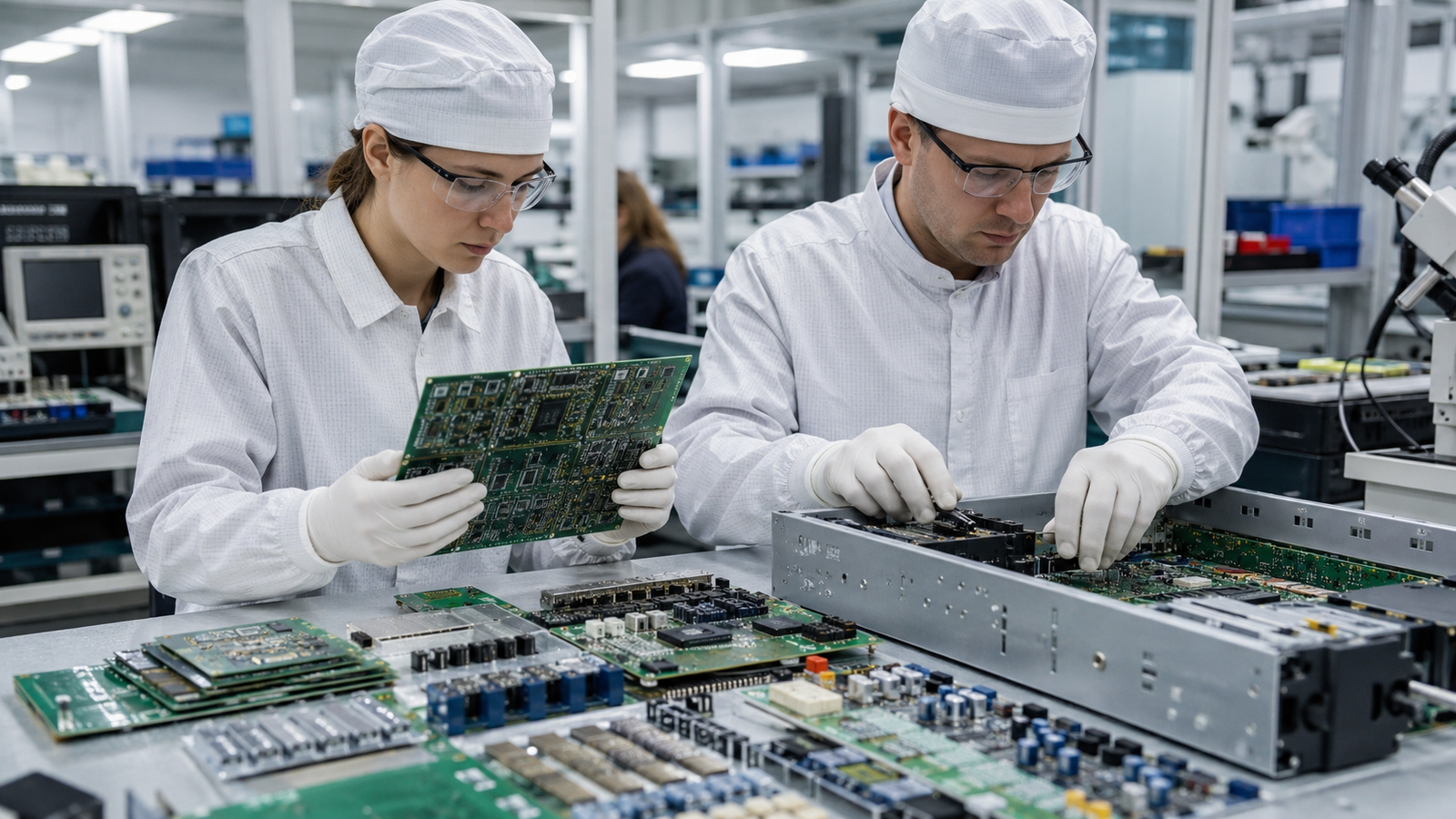
Domestic developments like “Baikal” and “Elbrus” exist, but the technological process does not allow for their mass production in Russia, and their performance is still inferior to foreign solutions. Therefore, according to Konstantin Ryabkin from “Infosistema Jet”, 99% of Russian-made equipment still uses foreign processors, and comparable analogues may only appear by 2030.
However, the market is not standing still. In the coming years, Russian electronics will see the development of computing disaggregation, a transition to single-processor servers, infrastructure for artificial intelligence, specialized storage for AI, edge computing, and embedded cybersecurity at the hardware level. All this is important for data centers, banks, the public sector, energy, transport, industry, and logistics, experts explained.
Read more on the topic:
Never miss our newsAdd this site to your preferred sources to see us more oftenAdd on Google

















