Translated with AI from the Russian original.
Scientists at the Siberian University of Science and Technology named after M.F. Reshetnev have developed and patented a method for producing light-transmitting wood. The new material retains the natural pattern and mechanical strength of wood, but at the same time is capable of transmitting light. The development may be in demand in construction, design, furniture production, and finishing materials.
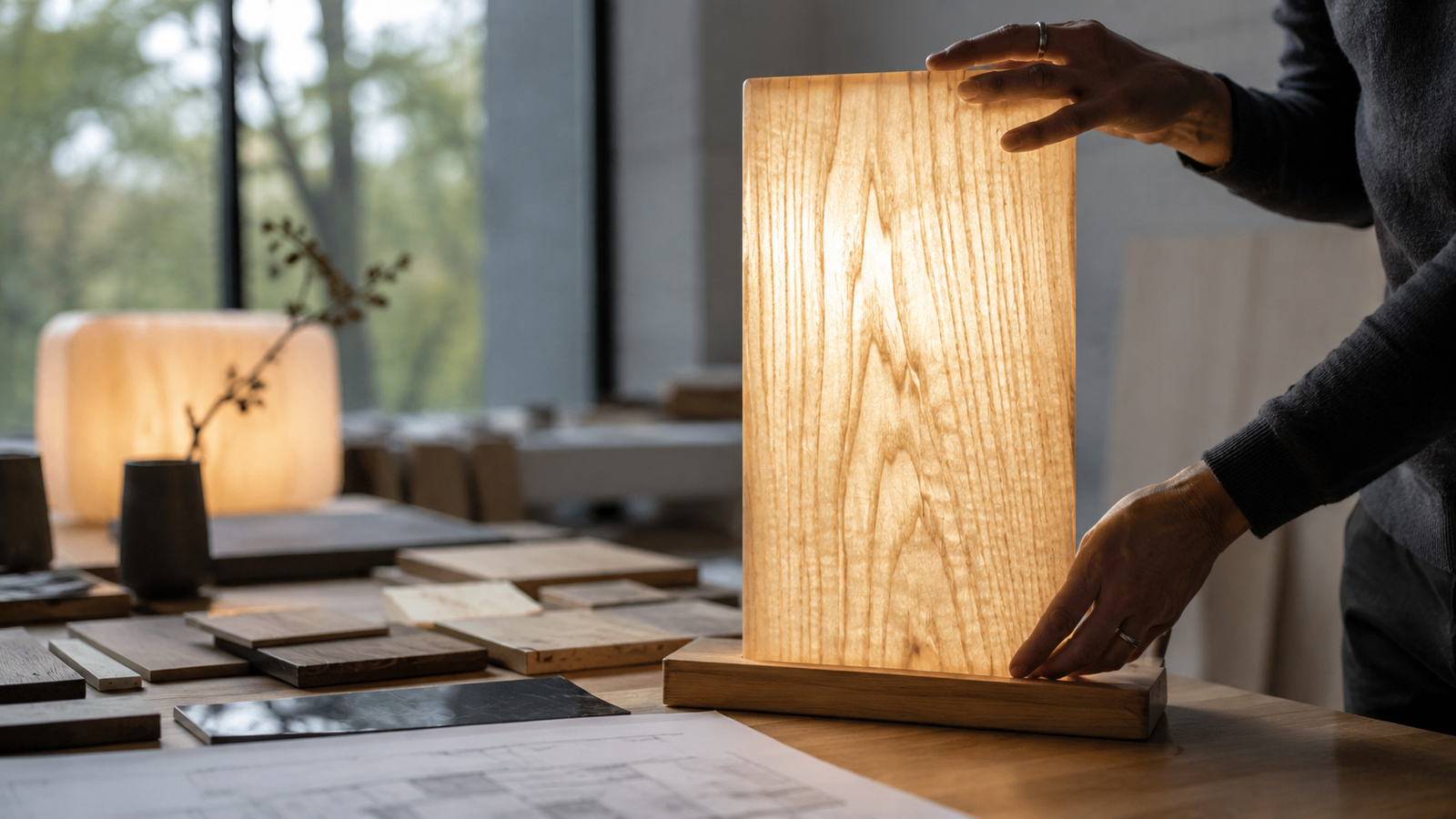
"Transparent wood" is obtained in several stages. First, the wooden substrate undergoes delignification and bleaching. In other words, the wood is specially treated to prepare its internal structure. After that, it is impregnated with a special compound. As a result, it retains its strength and natural pattern, but acquires a high optical transmittance coefficient.
This material can be used for panels and partitions, furniture elements, decorative finishes, and other interior solutions. It can become an alternative to glass and plastic where several qualities are important at once: safety, strength, and an unusual appearance.
Light-transmitting wood has a number of advantages. It is less fragile than glass and can conduct daylight into rooms. Due to this, in some cases, the need for artificial lighting can be reduced.
Read more on the topic:
- Scientists from Perm Polytechnic have found a way to protect house walls from cracks and self-destruction
- Super-Strong Concrete with Thermal Power Plant Waste Invented at KSUAE: It Can Even Be Used to Build Bunkers
- Paints in Russia may become cheaper: part of expensive imported raw materials replaced by new technology
Never miss our newsAdd this site to your preferred sources to see us more oftenAdd on Google

















