Artificial intelligence can be used in the religious sphere as an auxiliary tool, but not in matters of church sacraments and confession. This was stated in an interview with TASS by Vladimir Legoyda, head of the Synodal Department of the Moscow Patriarchate for Church Relations with Society and the Media.
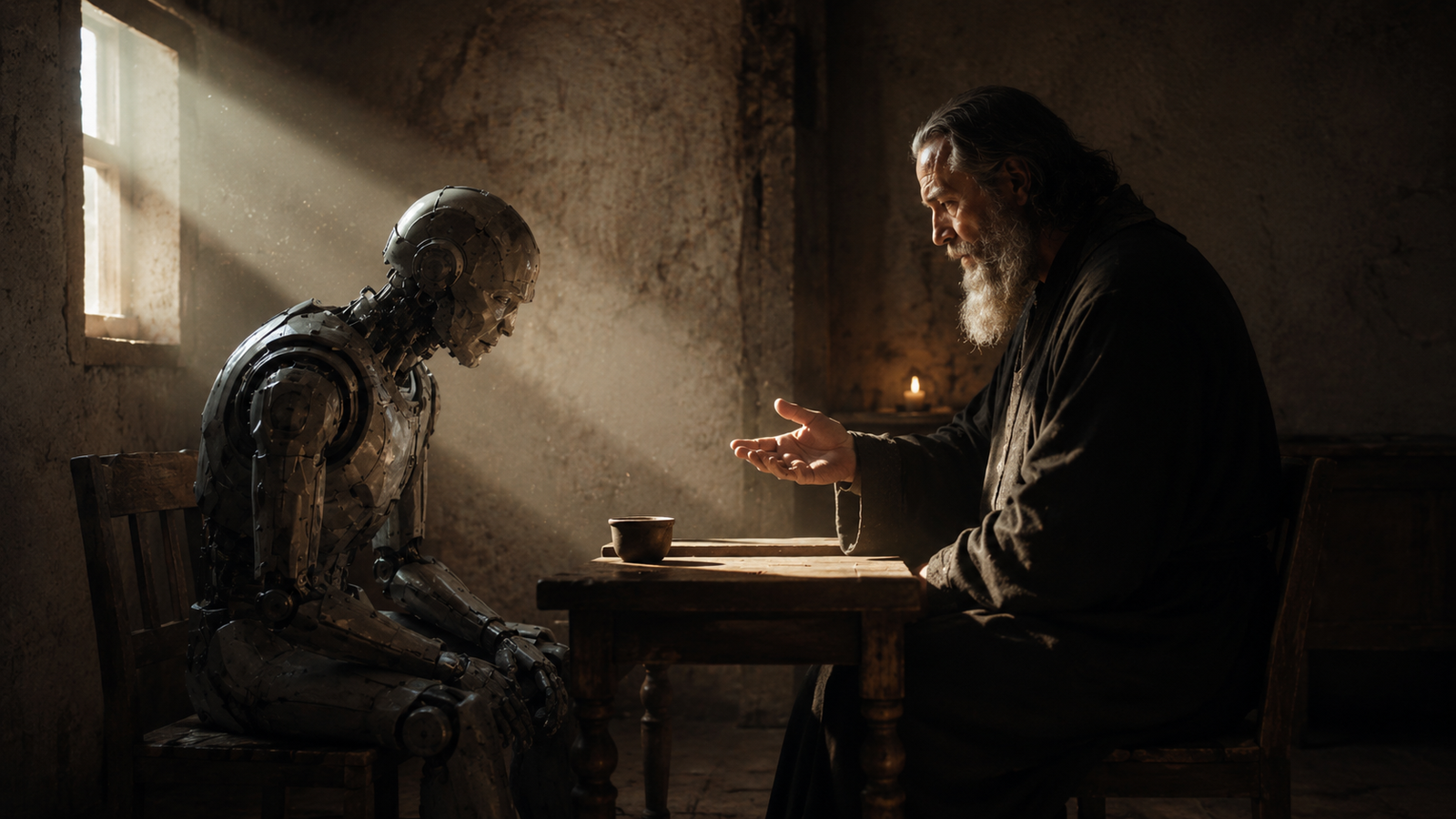
Speaking about religious content created by neural networks, Legoyda noted that everything depends on the content. He cited as an example videos that formally use church themes, but, according to him, can hardly be considered full-fledged religious content.
There are such humorous stories, I came across them online, when a generated priest stands there, and a voiceover says: "Father, what hymns should not be sung at a funeral?" And he says: "Call me with you." You can laugh, but I'm not entirely ready to call it religious content.
Separately, the representative of the Russian Orthodox Church spoke about sermons. According to him, AI can be useful at the preparation stage, for example, for finding materials, but the sermon itself must remain the living personal word of the priest.
Hardly anyone will argue that a priest, when going out to preach, must speak from the heart — unlike the preparatory part, when a search engine or even artificial intelligence can be used to find material.
Legoyda also said that in some theological educational institutions, AI is used precisely for pedagogical purposes.
Although I know that in some seminaries, academies, precisely to feel the difference, they also resort to AI, but precisely for pedagogical purposes.
At the same time, he emphasized that society has not yet fully realized the scale of changes brought about by the spread of artificial intelligence.
It is clear that we do not yet fully realize how much our lives have already changed due to the spread of what we call artificial intelligence.
He drew the main boundary for the use of neural networks in the field of church sacraments. According to Legoyda, AI should not be used where it concerns confession and the spiritual life of a person.
There are areas where artificial intelligence should not be allowed. I mean everything that relates in Orthodoxy to sacraments, to confession.
The representative of the Russian Orthodox Church called the idea of confession through an electronic assistant unacceptable.
All these talks about confession to an electronic assistant are, of course, completely unacceptable.
At the same time, he allowed the use of AI for educational materials.
And if we are talking about creating educational videos and so on, why not?
Legoyda also separately spoke about Orthodox bloggers. According to him, priest-bloggers have already become part of the modern church media environment.
If by Orthodox blogging we mean priest-bloggers, and we even have a council of priest-bloggers at our department, created with the blessing of the Patriarch, it includes the most popular priests with the largest audiences. We treat this as an existing reality.
At the same time, the representative of the Russian Orthodox Church noted that this format has its own risks.
Priests are also people, they are also prone to completely human manifestations, emotional and otherwise. Therefore, of course, one can get carried away, succumb to some media temptations, start chasing likes and so on.
According to him, the problem is not in the internet itself, but in how the priest behaves in the new space.
In general, it's just a place of preaching. The main thing is that the preaching does not turn into something else.
Legoyda emphasized that a priest should not lose his role even on social networks.
A priest should not stop being a priest, no matter where.
Read more on the topic:
Never miss our newsAdd this site to your preferred sources to see us more oftenAdd on Google