Translated with AI from the Russian original.
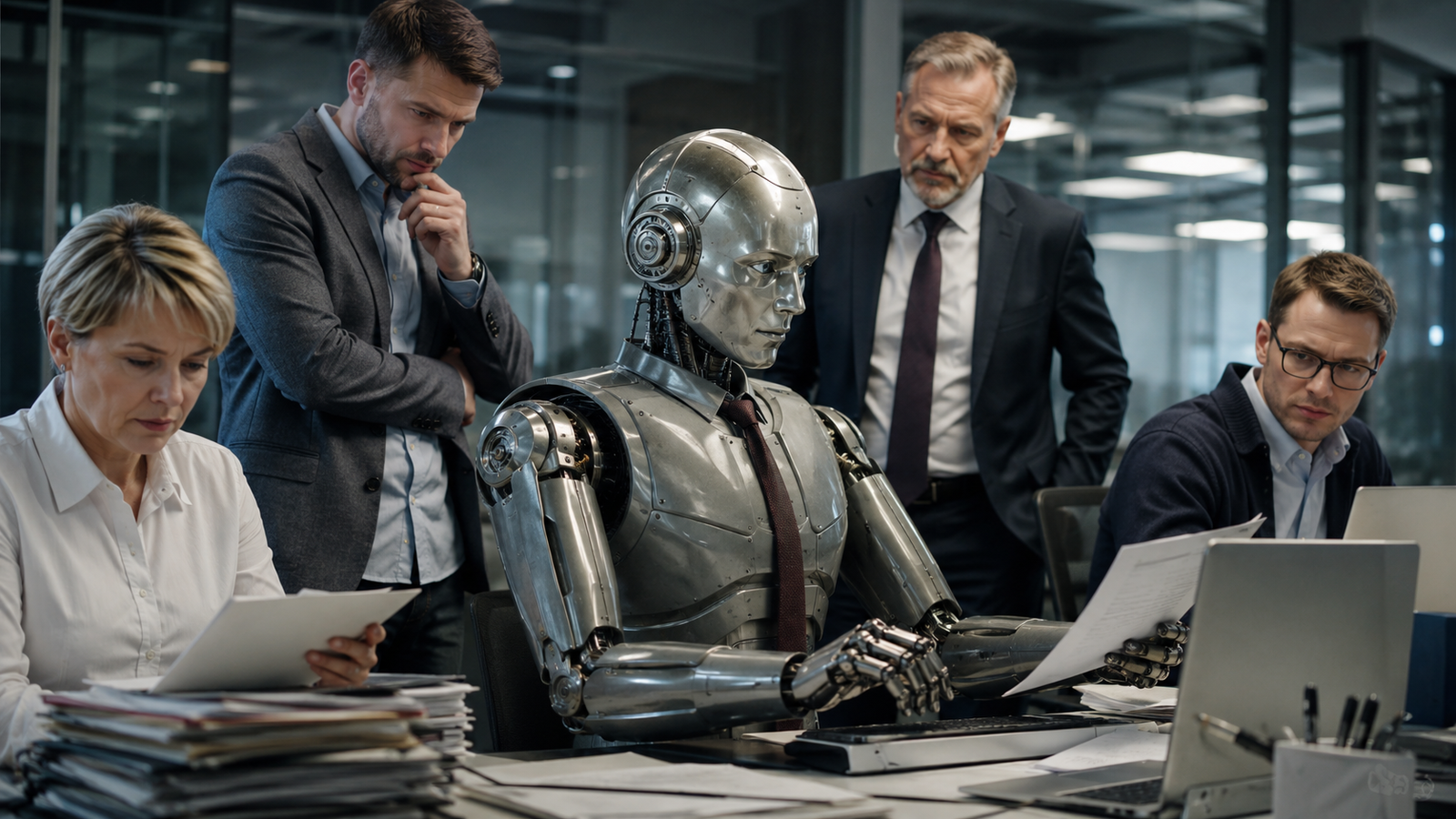
In Russia, an assessment has been made of which categories of workers may face the highest risk of displacement due to the introduction of artificial intelligence. According to VNII Truda's calculations, on average about 7.5% of those employed in the regions may lose their previous jobs or face a serious transformation of duties in the coming years due to AI technologies.
The study was presented at a round table in the Federation Council. As Vladimir Smirnov, acting general director of VNII Truda, explained, analysts surveyed several thousand Russian companies that are already implementing AI. Currently, about 5–6% of such organizations are in the economy, with most of them concentrated in wholesale trade, education, and the IT sector.
Experts identified the highest risks for office workers: the critical risk of their job duties being replaced was estimated at 82%. For mid- and high-level specialists, the figures were 64% and 60%, for managers – 58%, for operators and machine drivers – 57%. AI currently poses the least threat to unskilled workers: for them, the risk was estimated at 37%. For skilled workers, the figure was 48%, and for service and trade workers – 46%.
Analysts also calculated the possible consequences for the regions. On average, potential job losses could amount to about 7.5% of the total number of employed people in the subject. The highest figures were recorded in Amur Oblast – 8.06%, Novgorod Oblast – 8.05%, and Kursk Oblast – 8%. In Moscow, the figure was 7.87%, in St. Petersburg – 7.97%, and the minimum level was predicted in Chechnya – 7%.
Trade unions believe that the state and employers need to prepare a labor market adaptation plan in advance. This refers not only to the risk of layoffs but also to retraining employees for new tasks. Representatives of the educational and technological spheres also propose restructuring the education system so that people learn to work with AI from an early age, rather than blindly competing with it.
Sergey Roshchin, Vice-Rector of the Higher School of Economics, noted that in the future, the issue will not be direct replacement of humans by artificial intelligence, but rather competition among workers: those who cannot use AI will be displaced by specialists who have already integrated these tools into their profession.
At the same time, experts also warn about the other side of the technological race. The spread of AI can not only change employment but also affect the skills of the workers themselves. If simple operations are increasingly transferred to machines, people will have to specifically develop more complex competencies – otherwise, there is a risk that along with routine, part of professional thinking will also begin to disappear.
Read more on the topic:
Never miss our newsAdd this site to your preferred sources to see us more oftenAdd on Google

















