Translated with AI from the Russian original.
A system based on artificial intelligence has been developed in Russia, capable of analyzing power grid accidents directly at the point of their occurrence in a fraction of a second. The technology was created by students and employees of NRNU MEPhI together with colleagues from the AIRI Institute of Artificial Intelligence and Ivanovo State Power Engineering University.
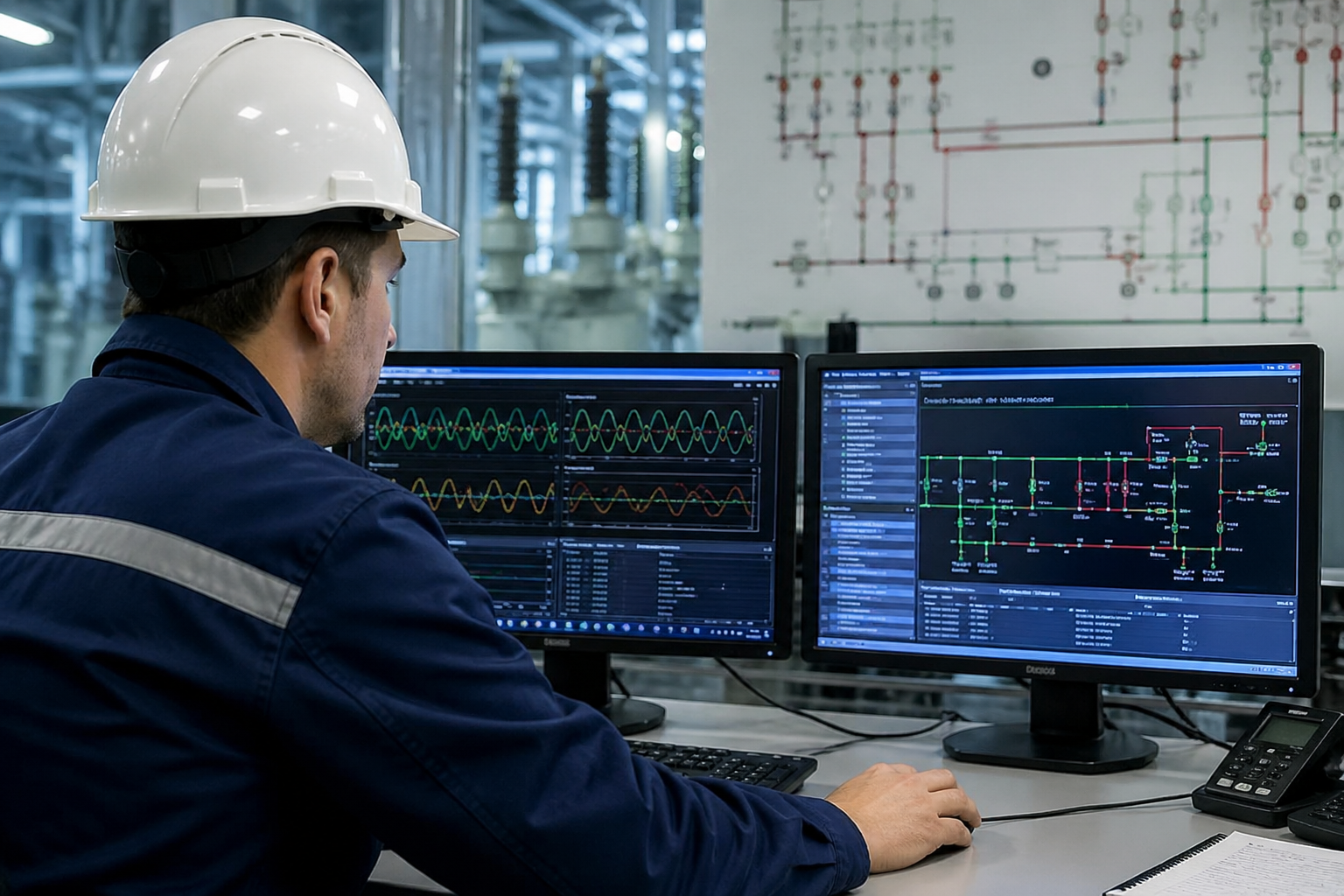
How the system works now
Today, in the event of a short circuit or other failure, the protective automation records an oscillogram – a kind of “snapshot” of how the network behaved at the moment of the accident.
But then a complex and lengthy process begins. To understand the cause, engineers have to manually copy data to an external drive, take it to the office, or send it to the equipment manufacturer.
As a result, the analysis can take hours or even days.
What the scientists changed
Researchers from NRNU MEPhI have developed a cascaded neural network architecture that can analyze signals directly on site – at substations and peripheral devices.
As Alexander Kovalenko, junior researcher at the Institute of Intelligent Cybernetic Systems of NRNU MEPhI, explained, the system consists of several levels.
Lightweight models work as quickly as possible and record high-frequency signals. Then more complex models are connected, which already detail the oscillogram over time.
AI writes the report itself
Another layer is used on top of the technical part – artificial intelligence language models.
They automatically generate human-readable reports and send them to the central control panel.
Such reports indicate exactly where the accident occurred, what type it is, and what actions need to be taken.
According to the developers, all diagnostics take fractions of a second. This allows moving from a “post-accident” reaction to continuous online monitoring of the power grid status.
Read more on the topic:
Never miss our newsAdd this site to your preferred sources to see us more oftenAdd on Google

















