Translated with AI from the Russian original.
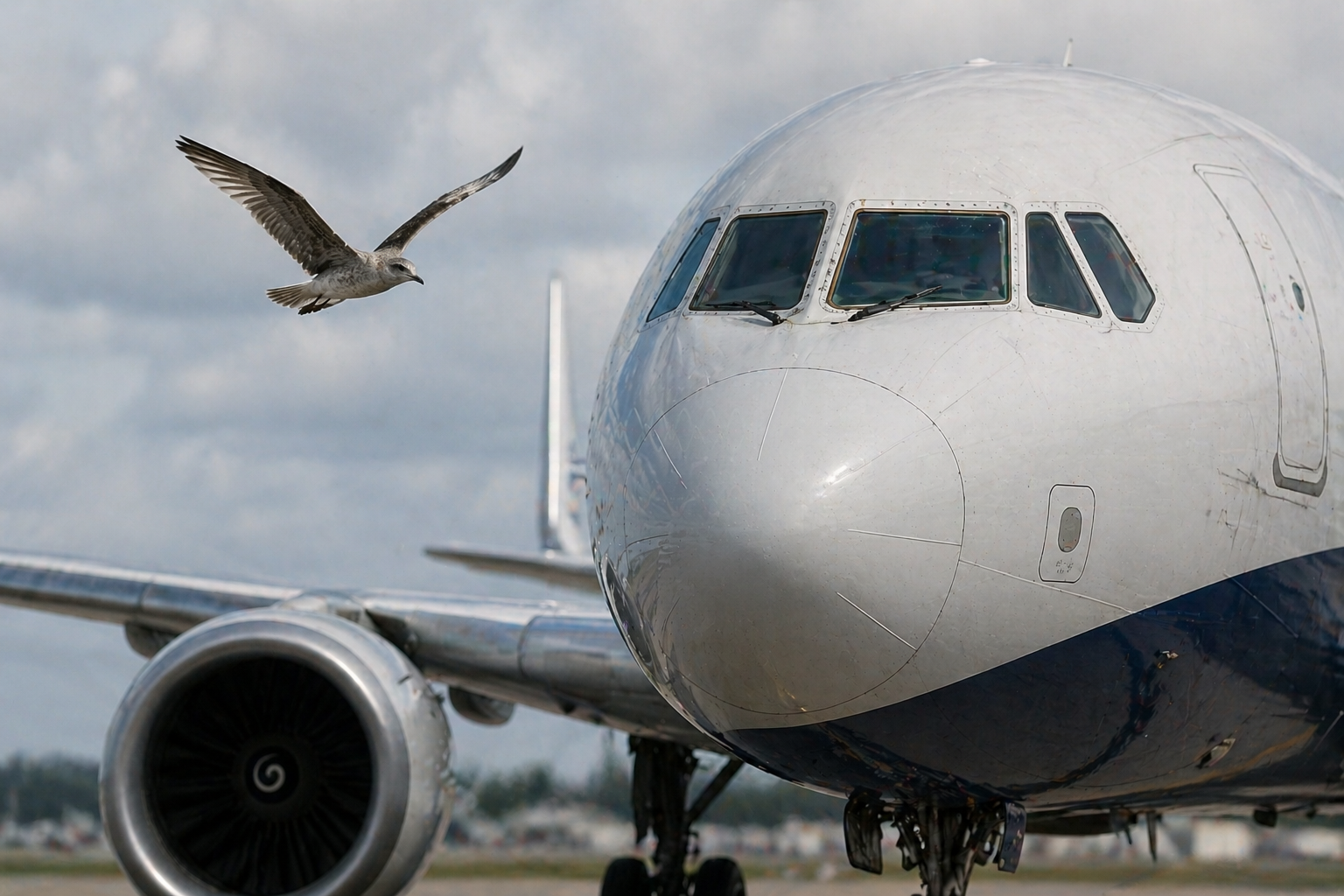
A common bird strike on an aircraft can be much more dangerous than it seems. Even if the part looks almost intact, its service life can be reduced by 14 times. This conclusion was reached by scientists from Perm Polytechnic University, who for the first time comprehensively studied how scratches and dents affect the strength and durability of fiberglass.
Why this is important for aviation
Fiberglass is widely used in aviation: it is lightweight, inexpensive, and does not rust. It is a composite material consisting of glass fibers, which provide strength, and a polymer resin that binds them together and distributes the load.
However, during operation, damage inevitably appears on it: cracks, delaminations, scratches, and dents. Moreover, many of them are almost invisible from the outside, although the material inside has already begun to deteriorate.
What problem scientists are solving
Strict safety standards apply in aviation. But when damage is detected, engineers cannot accurately say how much longer the part will last.
Existing control methods detect the defect itself, but do not allow assessing the remaining resource. Therefore, it is necessary either to replace parts prematurely or to lay down excessive strength.
As a result, aircraft become heavier, consume more fuel, and pollute the air more, and maintenance becomes more expensive.
What the scientists did
PNIPU researchers for the first time conducted a comprehensive study that simultaneously compared the effect of scratches and dents – both on strength and durability.
Before that, such data were studied separately. Scientists reproduced two of the most typical damages on fiberglass samples:
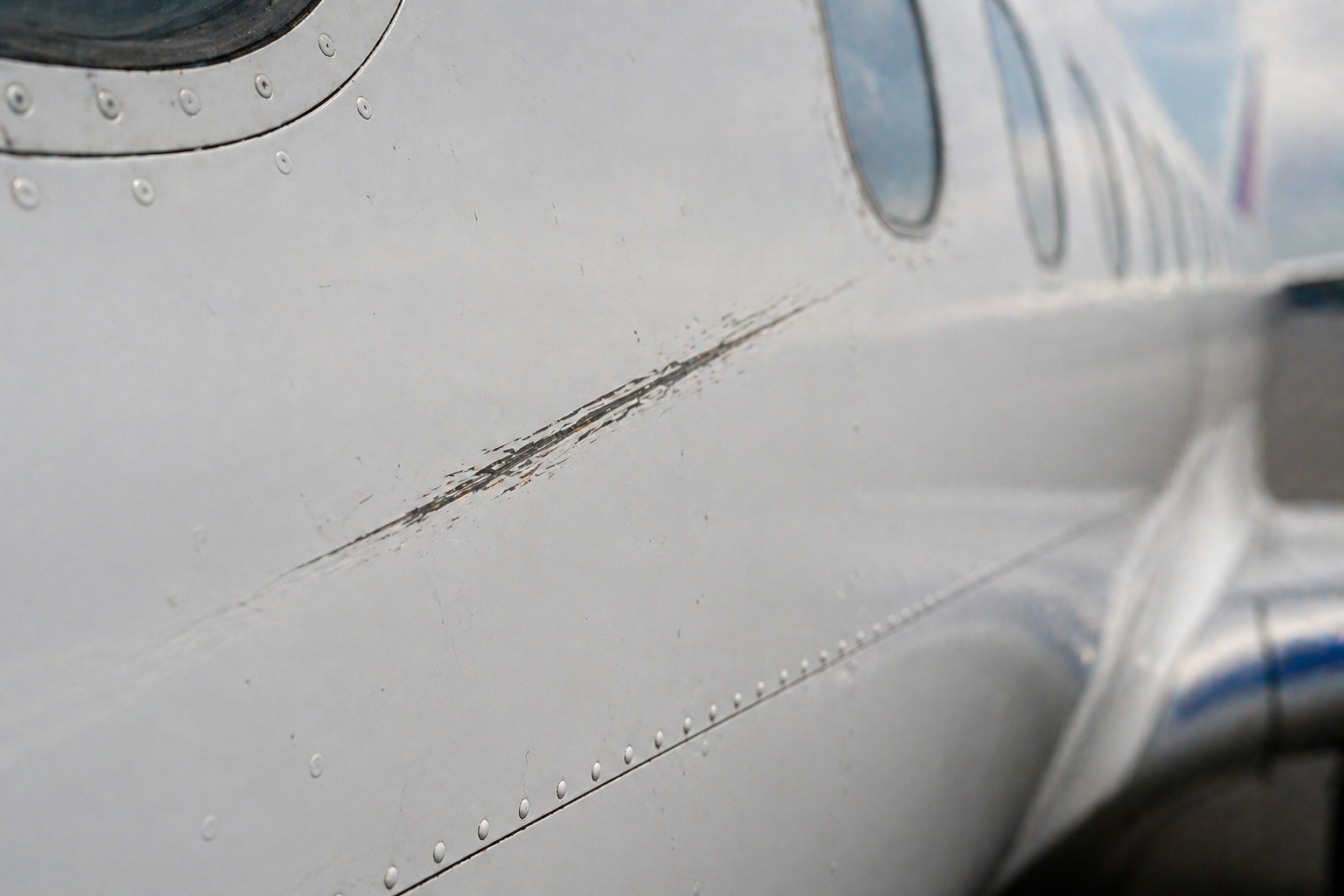
- scratches – with a force of 1 kN (approximately like a load of 100 kg);
- dents – with a force of 10–15 kN (such an impact is caused by stones, hail, or birds).
For comparison: a bird weighing 5 kg can create a force of more than 13 tons upon impact.
The samples were divided into three groups: without damage, with a scratch, and with dents of different strengths. First, they were loaded to failure. It turned out that a scratch almost does not affect strength, a weak dent reduces it by 17%, a medium one by 25%, and a strong one by 30%.
The main discovery
Important results were obtained during cyclic tests – when samples were repeatedly loaded, simulating takeoffs and landings. An intact part withstood more than 5000 cycles, with a scratch – about 2800, with a strong dent – only 368.
This is 93% less. In other words, such a part lasts 14 times less: instead of 14 years – about one year.
Scientists also found that the danger of damage depends on the operating mode. A weak dent is especially dangerous during long-term operation with small loads – as in passenger aircraft. In this case, the resource drops by 4 times. And a strong dent is critical during sharp overloads – as in fighters. Here, the resource can decrease by 50 times compared to weak damage.
What this will give the industry
The results allow engineers to more accurately assess the condition of parts. Now it is possible to rely on specific calculations – how many cycles a part will withstand with certain damage and operating mode.
This makes it possible to reduce aircraft weight, reduce fuel consumption and emissions, extend the service life of parts, and reduce costs without compromising safety.
The study was published in the journal Fracture and Structural Integrity and was supported by the Russian Science Foundation.
Read more on the topic:
Never miss our newsAdd this site to your preferred sources to see us more oftenAdd on Google

















