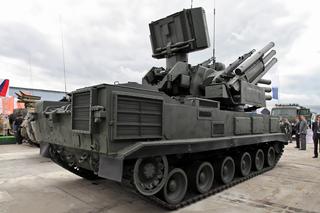
The concept of a new glider missile with an underwater vehicle and a search system was developed by specialists of the Naval Academy of the Russian Navy. The promising new product will solve the issue of destroying underwater targets, including submarines; the patent was officially registered in the FIPS database.
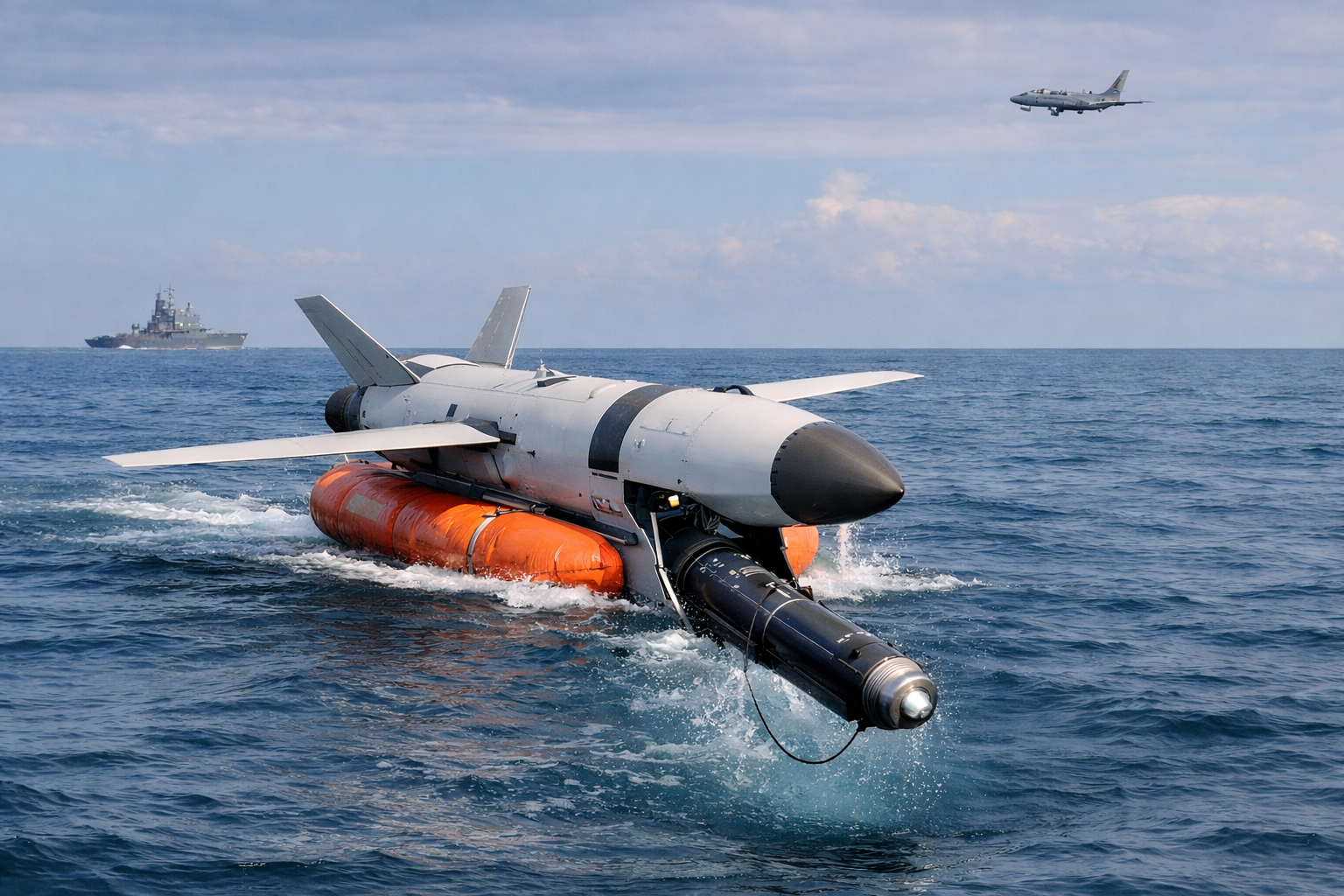
According to the engineers' concept, the missile is launched from a coastal, shipborne, or airborne carrier. After the rocket engine completes its operation, the glider transitions to controlled flight, and a cruciform lifting wing, elevators, and rudders deploy. At the calculated point, splashdown occurs, and a parachute and float are deployed.
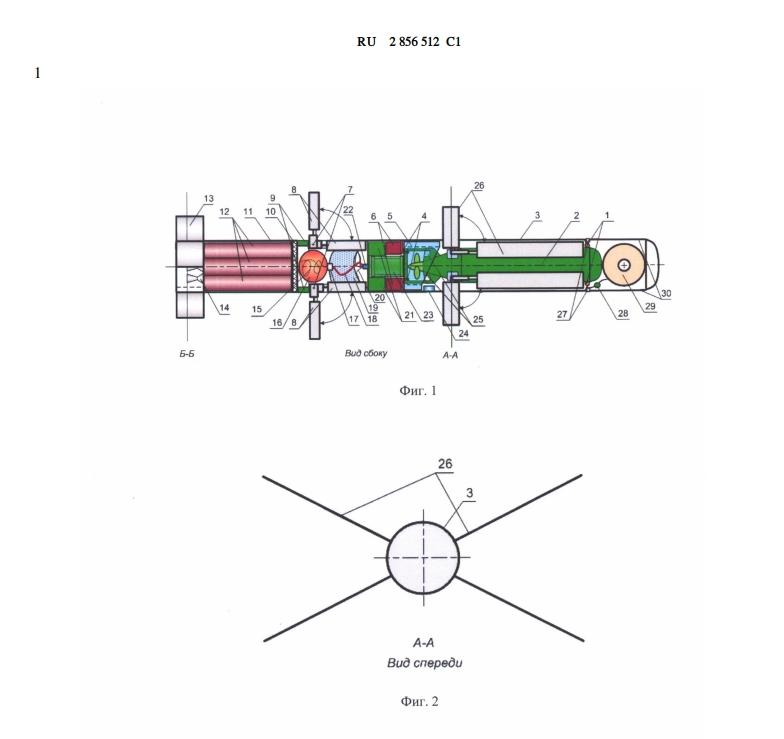
Then the nose compartment with the acoustic search system separates and submerges on a cable with hydrophones. Inside the body is an underwater vehicle with a power plant, propulsion unit, control surfaces, an explosive charge, and a homing system.
The key distinguishing feature of the glider missile is the fiber-optic cable connecting the underwater vehicle to the search system. The vehicle receives target data remotely and moves toward it without activating its own transmit-receive antenna. This reduces the risk of target evasion.
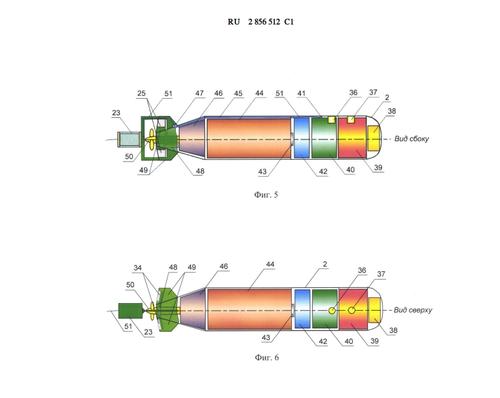
The power plant makes it possible to change the movement mode: at low speed, the guidance zone increases; at full speed, the time to close in is reduced. The homing system is activated only in the final phase before the attack.
Read more materials on the topic:
- A heavy amphibious drone in a high-wing configuration was devised in Russia
- Plane and helicopter in one: a unique drone with two swiveling engines was created at Bauman Moscow State Technical University
- The manufacturer of corvettes with Kalibr missiles received orders through 2028
Never miss our newsAdd this site to your preferred sources to see us more oftenAdd on Google