Translated with AI from the Russian original.
The ice thickness in the Baltic Sea exceeded expectations, so ships without ice reinforcement cannot sail without individual pilotage - an export collapse has formed. The Ministry of Transport decided to send the nuclear icebreaker "Sibir" of project 22220 and the diesel-electric icebreaker "Murmansk" of project 21900M to the northwestern ports of Russia.
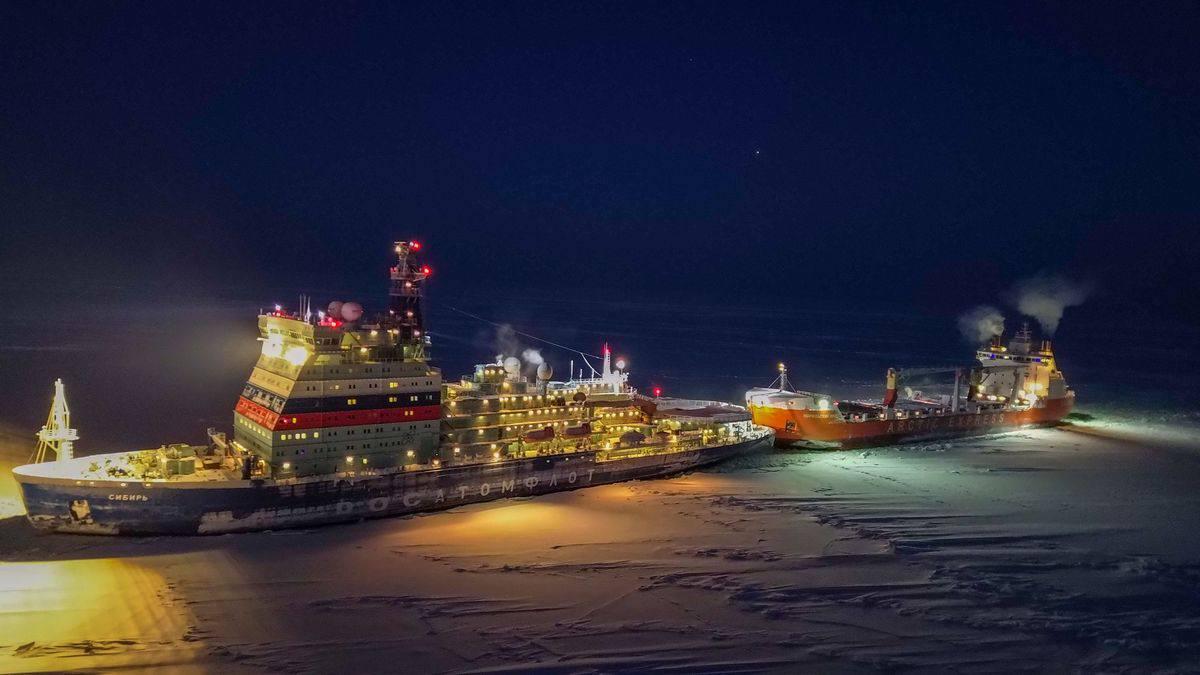
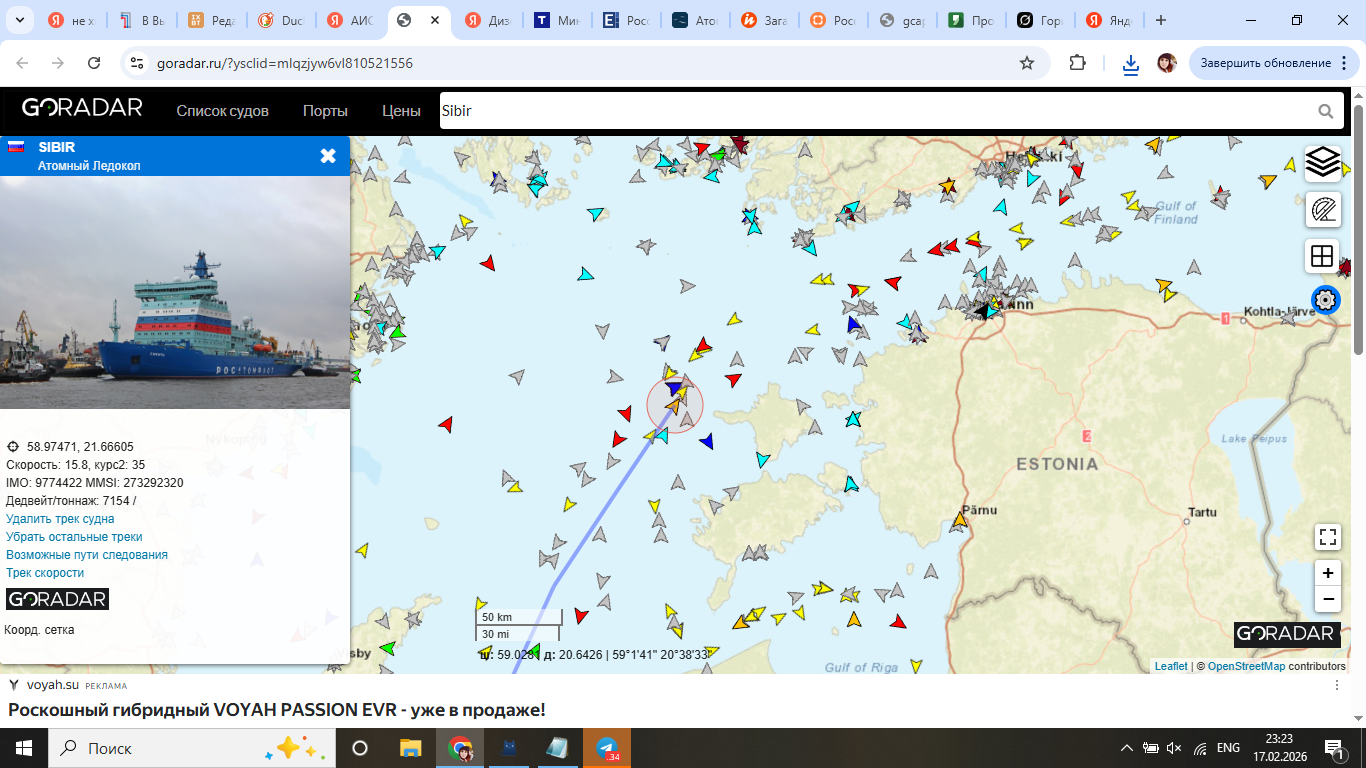
The nuclear fleet vessel will arrive in St. Petersburg on February 18. The arrival of the diesel-electric icebreaker is expected on February 19.
Special attention is paid to the pilotage of ships delivering socially important cargo, including ferries operating on the Ust-Luga - Baltiysk line.
"Sibir" is one of the newest Russian nuclear icebreakers of the "Arktika" class. The vessel was commissioned in 2022 and is capable of breaking ice up to 3 meters thick. In 2025, the icebreaker escorted tankers along the Northern Sea Route and piloted the diesel-electric ship "Norilskiy Nickel" on January 15.
The diesel icebreaker "Murmansk" can break even ice up to 1.5 meters thick. The vessel has been operating in the Yenisei Bay since mid-November, but is now heading to St. Petersburg.
Earlier, the German icebreaker Neuwerk got stuck in the Baltic Sea. The vessel was supposed to provide pilotage for the tanker Minerva Amorgos, but also found itself in an ice trap.
Earlier www1.ru reported that the Baltic ports of Russia are almost completely paralyzed.
- "Rescuer Karev" removed the bulk carrier "Megna Princess" from the shoal in the Gulf of Finland
- The new icebreaker "Vyborg" with a capacity of 18 MW will be commissioned in 2028
- A diesel-electric icebreaker of project 21900M2 is being built in Vyborg
Never miss our newsAdd this site to your preferred sources to see us more oftenAdd on Google

















