The Russian nuclear icebreaker "Leader", which has no analogues in the world, will be completed by 2030. This was announced by Russian President Vladimir Putin during a meeting with students of the Moscow Institute of Physics and Technology (MIPT).
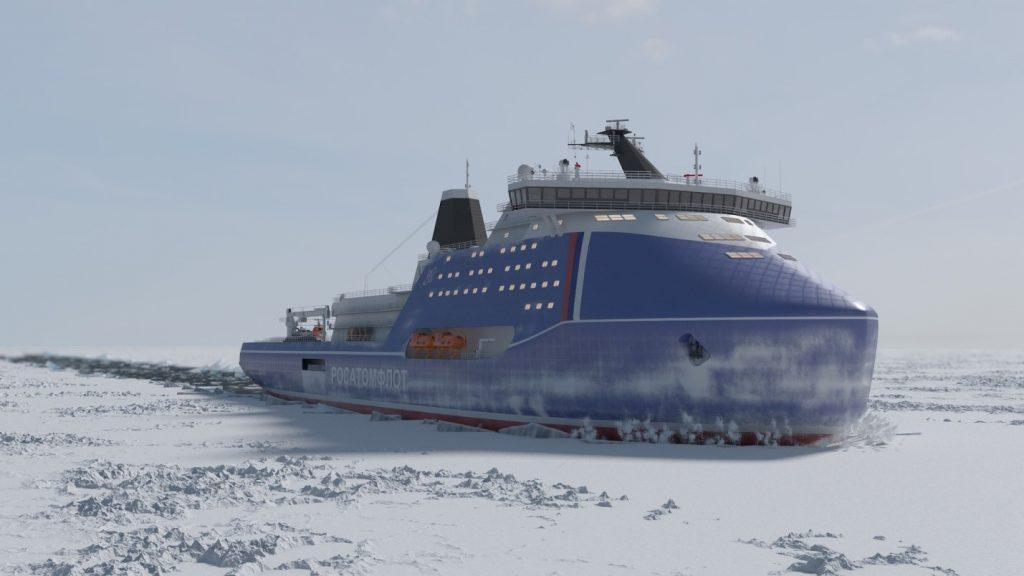
The 150 MW icebreaker is being built in the Far East at the Zvezda shipyard. The President stressed that the project is on schedule and confirmed his confidence in the successful completion of construction by the specified date.
Putin noted that Russia remains the world leader in the development of the Arctic: the country operates 34 diesel and 8 nuclear icebreakers, two more nuclear icebreakers — "Chukotka" and "Leningrad" — are under construction, and the "Stalingrad" project has already been laid down. He added that there are plans to build two more new icebreakers.
According to the President of the Russian Federation, "Leader" will allow passage through ice of any thickness. This will strengthen Russia's position in the Arctic, where nuclear icebreakers are a key element of infrastructure.
The development of the icebreaker fleet gives the country unique opportunities for safe navigation and economic activity in the harsh northern latitudes, Putin stressed.
Main characteristics of the "Leader"-type nuclear-powered ships: power — 120 MW (on shafts); speed — 22 knots (in clear water); length — 209 meters; width — 47.7 meters; icebreaking capacity (maximum) — 4 meters; displacement: with draft along the waterline — almost 70 thousand tons. According to project 10510, it is planned to build three "Leader"-type nuclear icebreakers.
Read more materials on the topic:
- The world's most powerful icebreaker of project 10510 "Leader" will receive the "MUSS-1032" control system
- Will break even multi-year ice of the Arctic - what is known about the nuclear icebreaker "Russia"
- Nuclear fuel for the under-construction nuclear icebreaker "Chukotka" was manufactured at Rosatom
Never miss our newsAdd this site to your preferred sources to see us more oftenAdd on Google

















