In Russia, a simple modular protection device against drones has been devised that can be installed on tanks, armored vehicles, automobiles, and stationary facilities without welding or interference with the structure. The development has already been registered in the FIPS patent database.
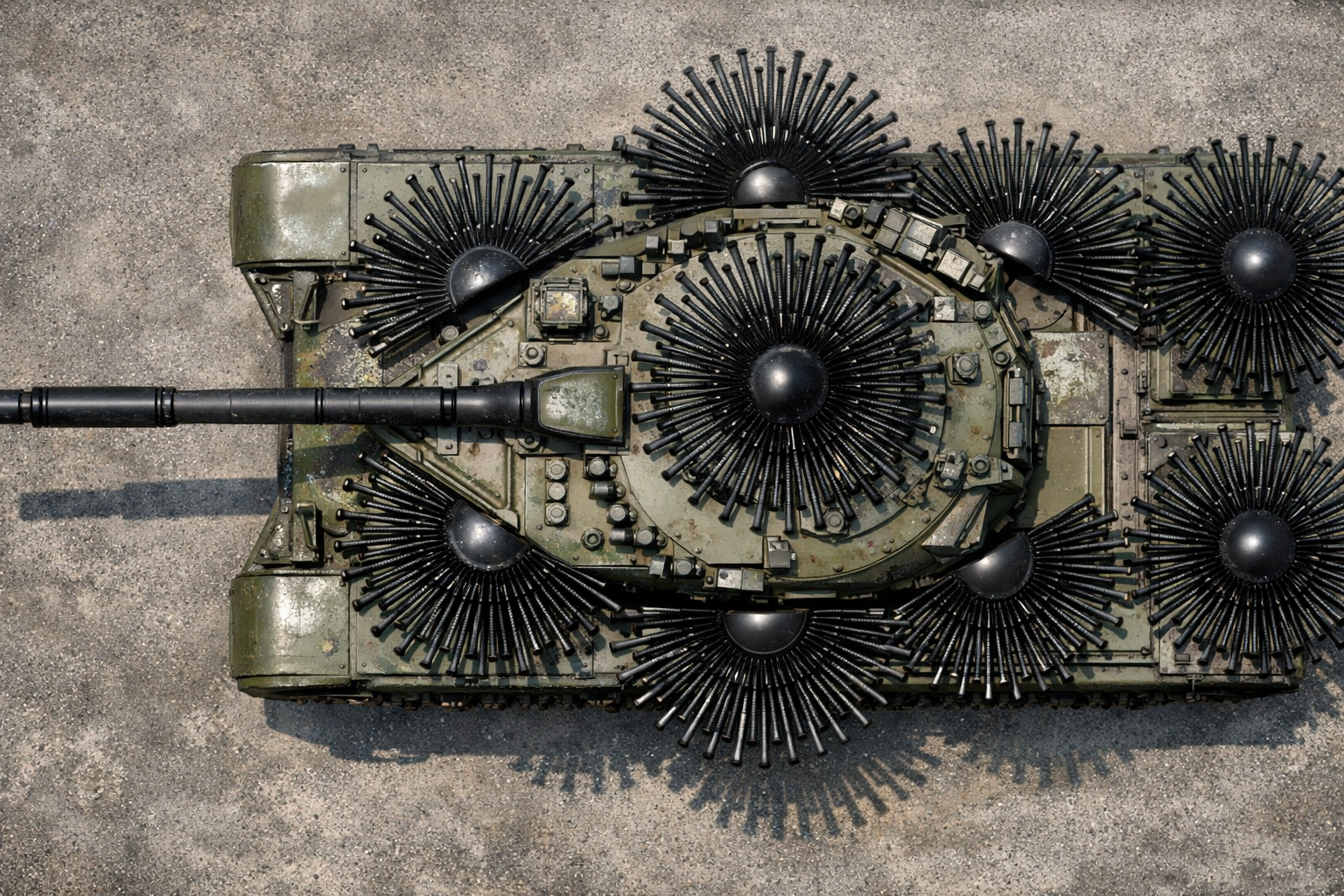
In the patent illustrations, the device is shown installed on a tank, where it covers vulnerable areas from attacks by strike UAVs and dropped munitions.
Unlike complex frame-type "barbecue grilles," the module is mounted in minutes and requires no hull modification.
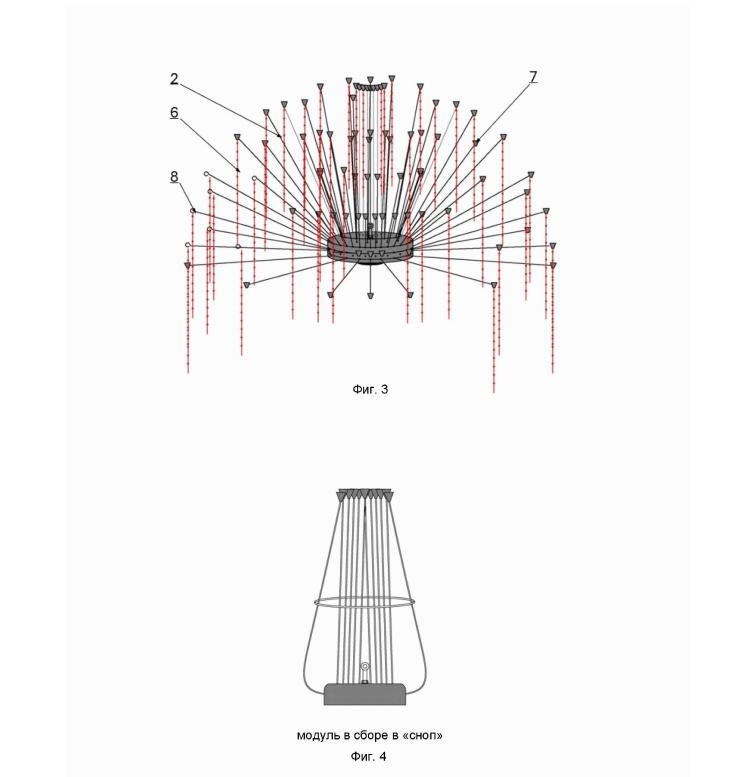
The basis of the design is a compact base with magnetic fastening. Flexible spikes are secured on it at a set interval, which in the working position form a ray-shaped hemisphere above the protected object. This geometry increases the probability of contact with the drone's propellers even if protective shrouds are present.
The authors proposed making the spikes from polymer materials or metal. But in the second case, springs will be required: upon collision, the element deflects, absorbs the load, and returns to its original position. The ends of the spikes are bent or fitted with protective tips, and to enhance the effect, freely hanging cables, chains, or ribbons are placed on them.
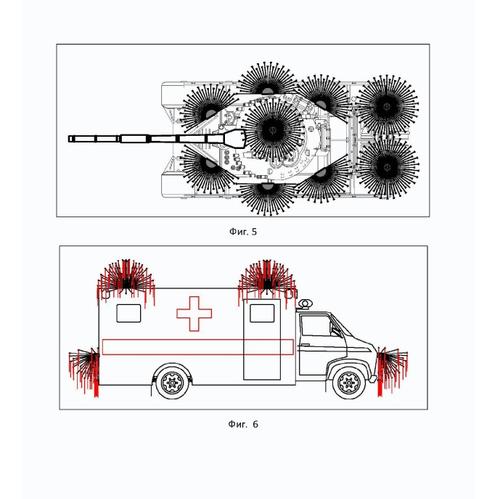
When a drone attacks, the spikes damage the blades, disrupt flight stability, and cause the warhead to detonate at a safe distance from the tank or vehicle. For transportation, the spikes are gathered into a "bundle" and secured with a clamp, which simplifies carrying and deployment in field conditions.
Read more materials on the topic:
- A unique helicopter without a tail boom and gearbox was devised in Russia
- An underwater drone in the shape of a torpedo for the Navy was developed in Russia
- A key element for a supersonic passenger aircraft was created in Russia
Never miss our newsAdd this site to your preferred sources to see us more oftenAdd on Google

















