Translated with AI from the Russian original.
In Russia, a patent has been registered for a device for attaching a supersonic passenger aircraft to a carrier aircraft. The development is intended for the joint high-speed flight of two aircraft with the subsequent separation of the supersonic aircraft in the air.
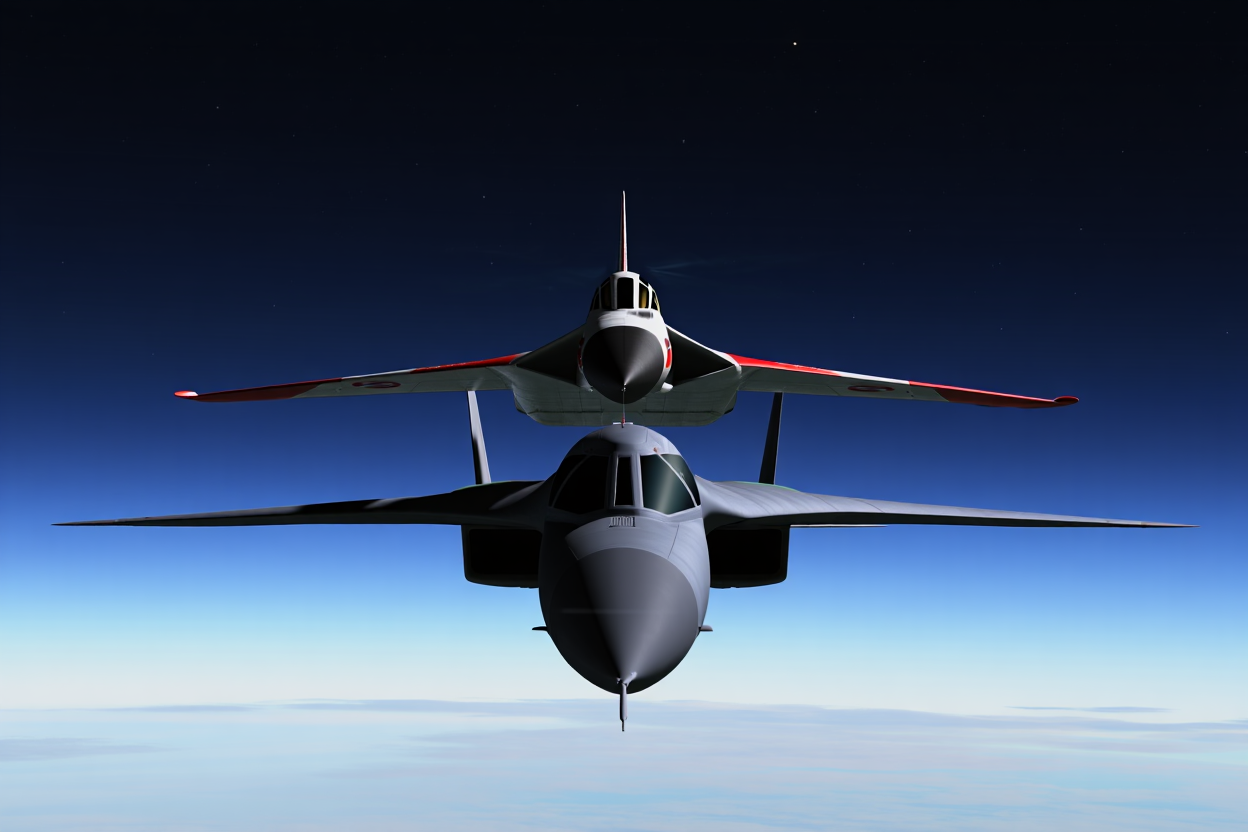
According to the authors' concept, the device will be made in the form of a launch platform on the upper surface of the carrier aircraft.
A section with a corrugated and perforated surface is placed on the platform, which comes into contact with the lower surface of the supersonic passenger aircraft.
A seal is installed along the closed contour of the section, ensuring the airtightness of the attachment zone.
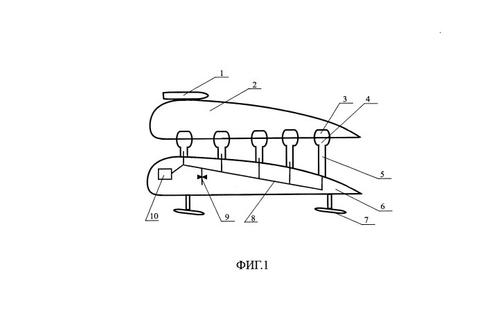
The holes in the perforated surface are connected by pipelines to a vacuum system and a gas supply system from a tank located on board the carrier aircraft.
To hold the passenger aircraft on the platform during the creation of a vacuum, the principle of pressure difference is used. Before the aircraft separates, the vacuum is shut off, and gas is supplied under its lower part. This creates an air cushion that prevents mechanical friction.
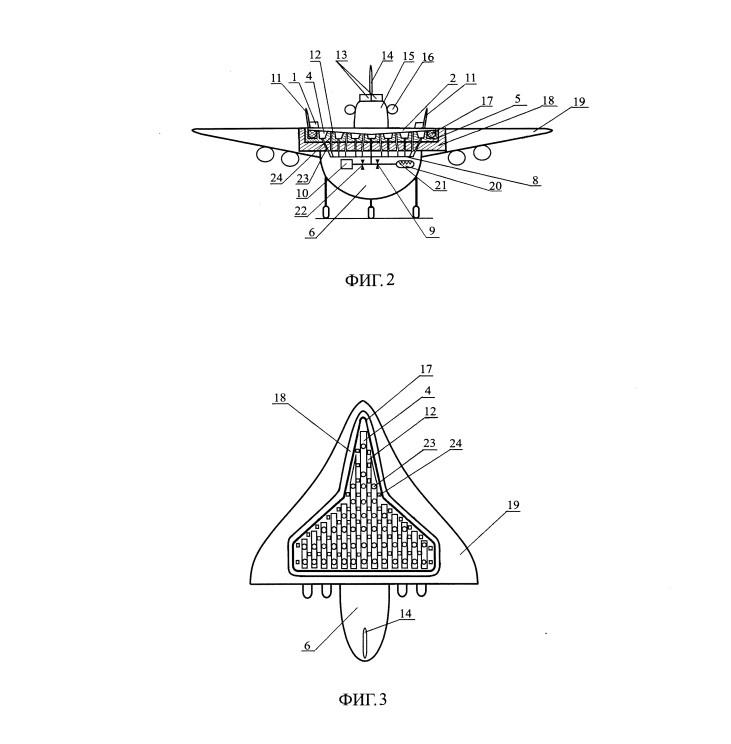
The patent emphasizes that the proposed mounting scheme does not require the installation of vacuum chambers on the passenger aircraft itself and does not use external struts or mechanical locks.
This reduces the aerodynamic drag of the structure and increases aerodynamic stability during joint flight at high speeds.
Andrei Kozlov, Director General of the P. I. Baranov Central Institute of Aviation Motors (CIAM), predicted that the first supersonic aircraft in Russia may appear no earlier than the 2040s. He also stated that Russia is three years ahead of the United States in work on an engine for supersonic civil aviation.
Read more materials on the topic:
- \"Dark cockpit\", cameras and AI: details of the supersonic aircraft in Russia revealed
Never miss our newsAdd this site to your preferred sources to see us more oftenAdd on Google

















