To protect industrial enterprises from drones, new "Darwin" interceptor nets have been developed in Russia, which have already protected hundreds of such facilities. This was reported by representatives of the developer, "Mechanical Protection Systems."
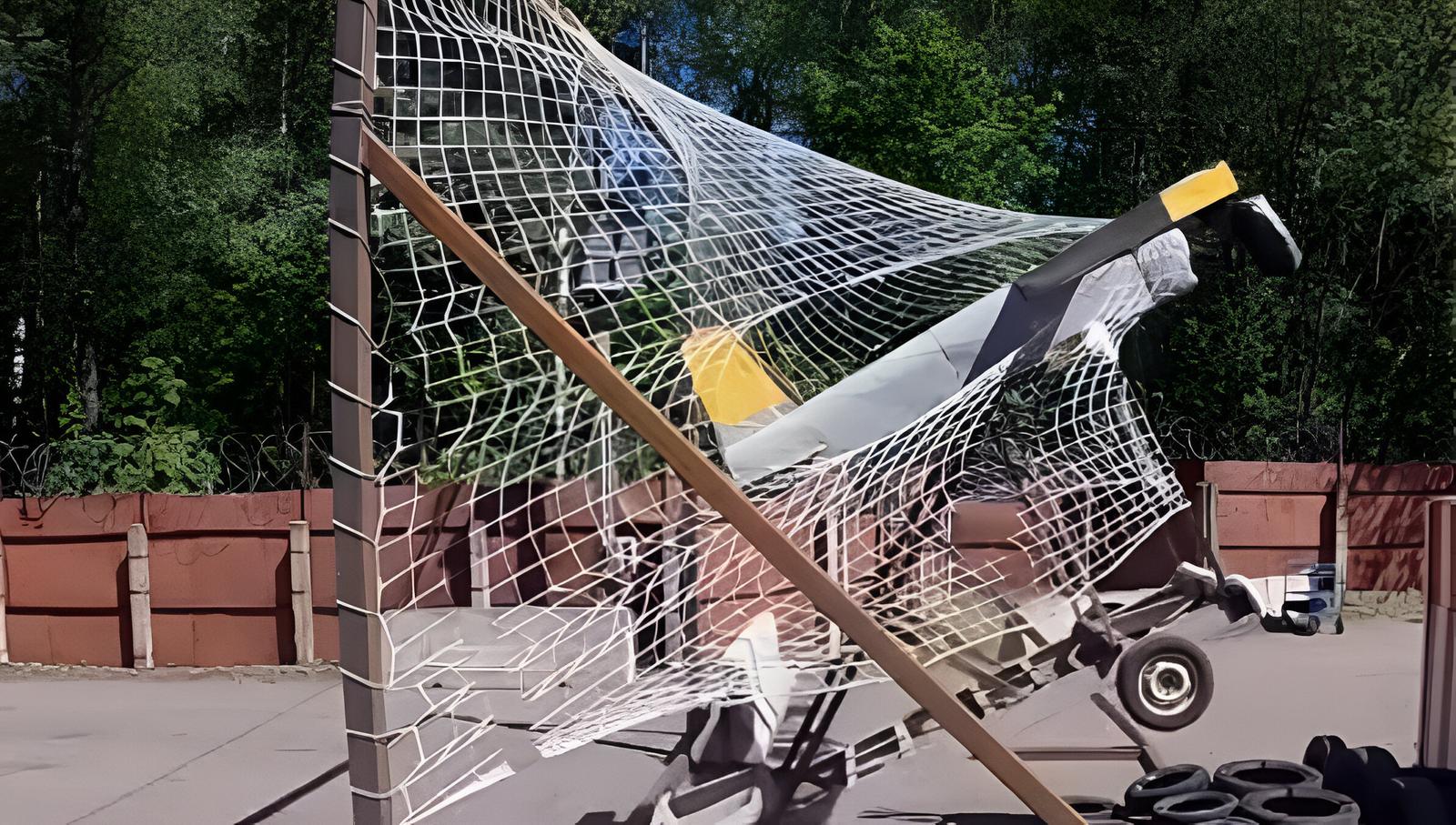
"Darwin" nets have demonstrated high efficiency in repelling drone strikes. No cases of damage to enterprises under their protection have been recorded to date.
The nets are effective even during massive drone raids and are used to cover industrial enterprises, power plants, and other facilities.
Thanks to the innovative "spider knot" weaving type, the net gently reduces the impact force of the drone and reduces the likelihood of detonation of the explosive device. Although at first glance the novelty looks like an ordinary net, its main secret lies in the physical properties of the stretching fibers.
It is very important that the net absorbs the energy capacity of the striking drone. If a rigid net is used, the drone will explode. When protecting civilian objects, it is very important to avoid explosions.
The thread is woven in a clever way and then compressed. Each cell stretches at the moment of impact. As a result, the drone gets caught in the net like a butterfly in a net.
Read also on the topic:
Never miss our newsAdd this site to your preferred sources to see us more oftenAdd on Google