Translated with AI from the Russian original.
Petersburg Metrostroy received new equipment from the Obukhov Plant for the construction of stations and the laying of tunnels.
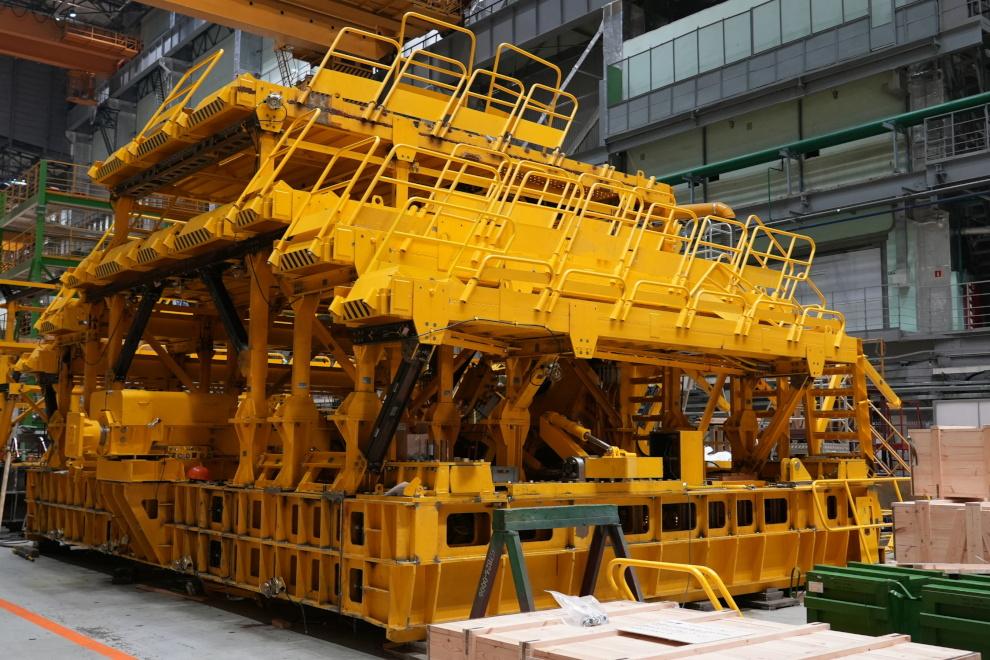
The batch includes two tunnel-boring shields with a diameter of 5.6 meters, two rail layers, and 19 vehicles for installing tunnel blocks. All equipment is made in Russia.
The equipment is planned to be used on the Krasnoselsko-Kalinin line of the metro between the stations "Karetnaya" and "Putilovskaya". One of the shields, named "Vera", has already begun to be assembled at a depth of 60 meters. It will lay a tunnel from "Putilovskaya" to "Karetnaya".
Russian equipment helps to build the metro without delays. By the end of 2025, it is planned to open the section from "Yugo-Zapadnaya" to "Putilovskaya" with a transfer to "Kirovsky Zavod". In total, ten new stations will appear in St. Petersburg by 2030, the construction of which is underway on five lines simultaneously.
Read more on the topic:
Construction of the deepest pit for the metro tram has begun in Krasnoyarsk
The first tunnel-boring complex for the metro tram has been delivered to Chelyabinsk
Never miss our newsAdd this site to your preferred sources to see us more oftenAdd on Google

















