Translated with AI from the Russian original.
The renovated car-ferry terminal pier in the Dry Cargo harbor of the Makhachkala seaport was put into operation on September 1, 2025. The work was carried out by order of FSUE "Rosmorport".
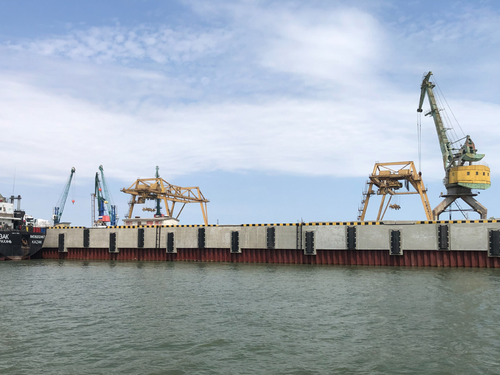
The overhaul of the pier, built in 1957, included the renovation of reinforced concrete and metal elements, the installation of 29 modern fender devices, and the replacement of four mooring bollards. The last reconstruction of the facility was carried out in 2000. The length of the pier remained 174 m, the width - 15.85 m, the design depth - 5.8 m, the navigational depth - 5.3 m. The structure is an anchored sheet pile wall with a monolithic head and an inclined platform for reloading wheeled vehicles.
The pier with a capacity of 0.2 million tons per year is designed for RO-RO ferries with a draft of up to 5.66 m, such as the "Composer Kara Karayev", as well as for transport vessels with general and bulk cargo. The renovated facility is already receiving dry cargo ships, including those from Iran.
Dredging operations have been completed in the port water area, during which 230 thousand cubic meters of soil were removed. This allows receiving vessels with a deadweight of up to 5 thousand tons with full loading.
Read more on the topic:
The slipway is being updated at the USC Krasnoye Sormovo plant
The third power unit of the Kursk NPP has resumed operation at full capacity
Engine, converter and frames: "Sinara" is testing components for a new Russian high-speed train
Never miss our newsAdd this site to your preferred sources to see us more oftenAdd on Google

















