Russia is developing the world's first system for the autonomous operation of drones called "Diktion," which can be entrusted with holding the line of combat contact. This was reported by the company "AviaTekhnoLab."
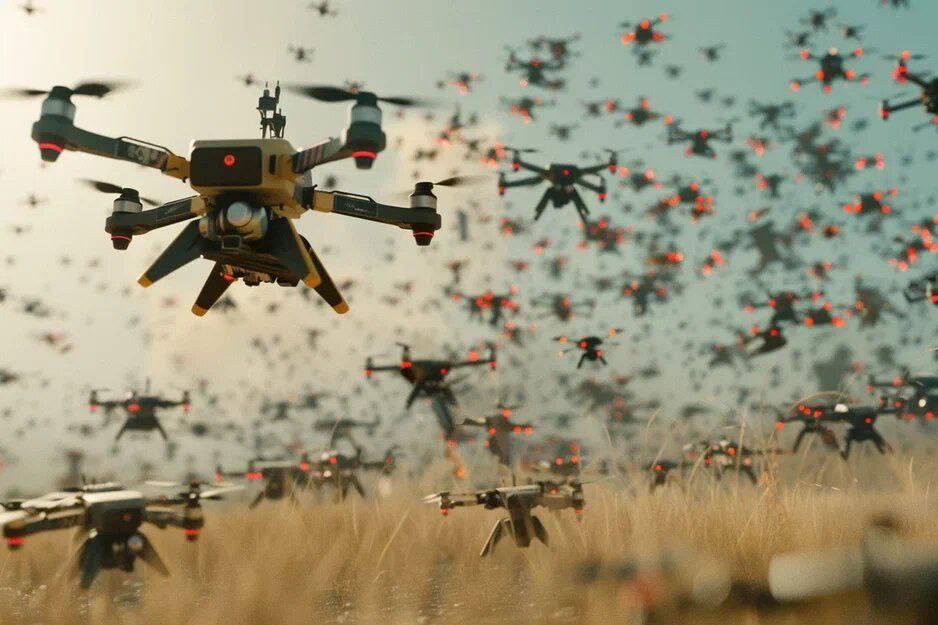
Groups of drones are expected to be placed in "nests" where they will be recharged. Depending on the tasks, the drones included in the set are planned to be divided into kamikaze drones, sapper drones, interceptors, and tactical bombers.
We will get a cheap and simple system, like a Kalashnikov assault rifle, with the cost of a drone at 40-50 thousand rubles. A group of fighters can scatter the nests within hours and move away from the line of combat contact, then the system will do all the work for them.
The "Diktion" control network, according to plans, may become decentralized. AviaTekhnoLab expects that one such network will allow controlling an area of up to 100 square meters without operators.
Earlier www1.ru reported that Russia is launching the Il-114-300 to replace the An-24: regional aviation is gaining support.
Read more materials:
Goodbye, Mi-8, hello, Mi-80: the "super-eight" helicopter will appear in Russia
Rostec has turned the Superjet SJ-100 into a robotic crane
Never miss our newsAdd this site to your preferred sources to see us more oftenAdd on Google









![Growth Point: After 5G Launch, Mobile Internet in Russia Accelerated by 20%","subtitle":"TelecomDaily recorded an upload speed increase of 19.7%, and download speed of almost 14%","announce":""}[]}],](https://media.ixbt.site/fit-in/320x/ixbt-data/1727896/ai-image-nvgq0a0v5cjnyxwoc8xpelva.webp)