At the Siberian Federal University (SibFU), domestic scaffolds for bone restoration have been created from food production waste. This was reported by the university's press service.
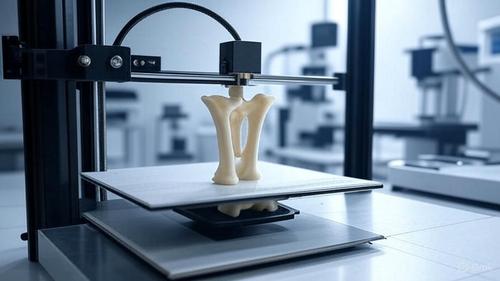
In modern medicine, special biocompatible scaffolds are used for severe fractures accompanied by bone loss. However, most existing solutions in Russia are based on expensive foreign materials.
SibFU scientists have created their own biopolymer production cycle, which allows the manufacture of medical implants from available local raw materials. The implant is based on polyhydroxyalkanoates (PHAs) - biopolymers produced by special bacteria. The uniqueness of SibFU's technology lies in the use of any organic waste containing carbon (used frying fat and fish processing waste).
First, the patient undergoes a computed tomography scan of the affected organ, then an individual scaffold suitable for the specific case is modeled. After that, the necessary part is printed on a 3D printer from biopolymer thread and placed in the fracture site.
Unlike most companies that purchase ready-made filaments of foreign production, we independently produce extrusion thread, which allows us to vary its properties for various needs. All components used (from bacterial strains to equipment) are of Russian production.
In the future, scientists plan to expand the use of biopolymers for the production of degradable packaging and other environmentally friendly products. The PHA production technology reduces the cost of the process by 50%. The quality of polymers is not inferior to foreign analogues.
Our goal is to create an affordable alternative to traditional polymers that not only solves medical problems but also reduces the burden on the environment.
Earlierwww1.ru reported that in St. Petersburg theycreated thermal insulation material from waste.
Read materials on the topic:
Radiation resistant: a "space" material for solar batteries has been created in Russia
Never miss our newsAdd this site to your preferred sources to see us more oftenAdd on Google

















