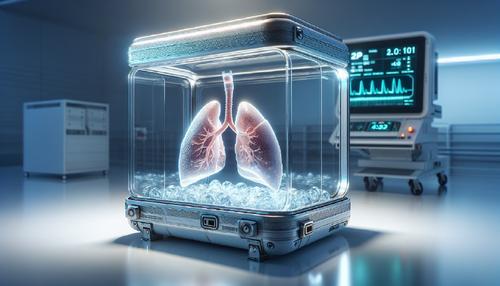
The St. Petersburg Electrotechnical University (LETI) has presented the innovative ReGenesis Box system. The development will increase the storage time of donor lungs by 4-12 times compared to existing counterparts, the university's press service reported.
One of the main problems in organ transplantation remains the shortage of donor material. Effective perfusion methods are needed to solve this problem. They ensure long-term viability of organs until transplantation.
The ReGenesis Box system uses a special plasma-substituting solution to saturate donor lungs with oxygen and nutrients. The system's software controls the sensors. They monitor the parameters of the internal environment, the operation of the pump and the temperature regime.
Unlike traditional cold preservation, it increases the viability of organs from 4-6 hours to 24 hours or more, potentially reaching 72 hours. This approach to preserving donor organs reduces the risk of ischemic damage and increases the percentage of successful transplants from 70% to 90%.
So far, scientists have developed a digital twin of the ReGenesis Box system. It allows to visually demonstrate the perfusion process with high accuracy.
Next year, it is planned to start designing the device, and then specialists will conduct preclinical trials.
Earlierwww1.ru reported that Russian scientistsinvented how to preserve artificial organs without losing their properties.
Read materials on the topic:
Skin, cornea, cartilage - growing human organs and tissues has begun in Bashkiria
A technology for 3D printing human tissue from living cells has been developed in Russia
The future is already near: polymers that mimic living tissue are being developed in Russia
Never miss our newsAdd this site to your preferred sources to see us more oftenAdd on Google

















