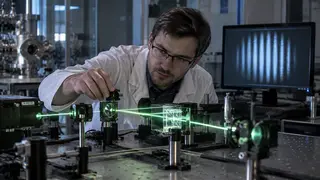
A new electronic compass to improve the accuracy of navigation of moving objects in the high latitudes of the circumpolar regions has been developed at Tula State University. The research was carried out at the expense of a grant from the regional government.

Traditional magnetic and electronic compasses lose their operability in the high latitudes of the circumpolar regions. The Tula development increases the sensitivity of the components used in the sensors by using a displaced measuring basis. Depending on the geographical location, the design of the device provides automatic adjustment of its angle.
As the IA "TASS" was told in the Ministry of Science and Higher Education, the compass uses a new method for calculating course angles using the Wiener filter.
A remarkable feature of the proposed method is the absence of the need to pre-calculate the pitch and roll angles or kinematic parameters. This invention has a wide potential for application in various fields of civil instrument engineering - from marine and aviation navigation to robotic systems.
Patents for the invention have already been obtained for the electronic compass and the method of measuring the magnetic course of a moving object.
Read materials on the topic:
Russian EMERCOM helicopters will go to the Arctic and will be able to land on icebreakers
Never miss our newsAdd this site to your preferred sources to see us more oftenAdd on Google