The Leonid meteor shower, actively visible from November 6 to 30, will reach its peak on the night of Monday, November 18. Astronomers predict up to 15 meteors per hour, according to the press service of the Moscow Planetarium.
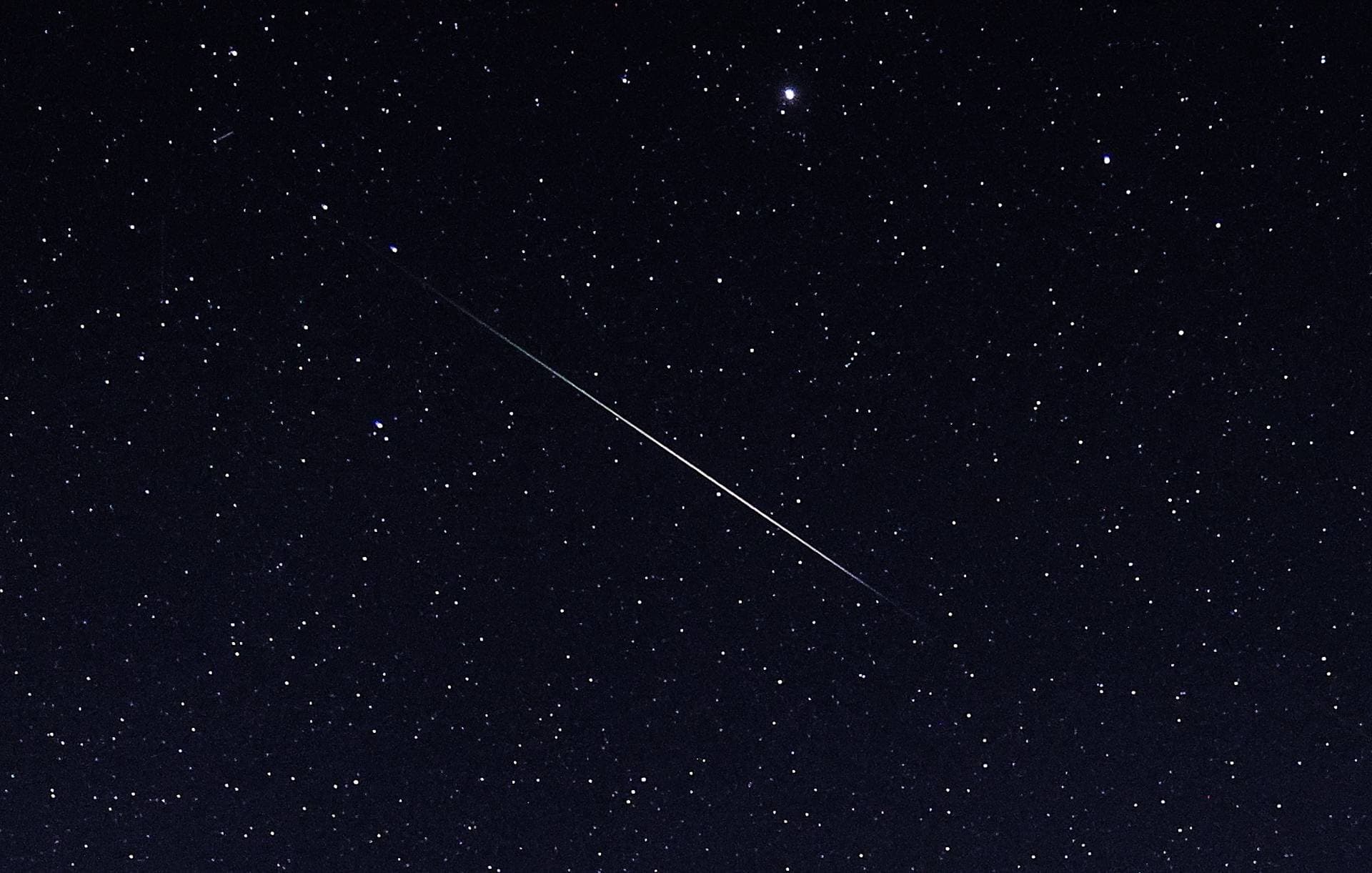
The most favorable viewing conditions are expected after midnight and until dawn. At this time, the constellation Leo, the source of the shower, will rise above the eastern horizon, weather permitting.
Planetarium representatives warned that the bright light of the almost full Moon (98% phase) may somewhat complicate the observation of the meteor shower, reducing its visual impact. Nevertheless, the nature of the Leonids themselves remains fascinating: their bright white flashes are tiny particles of comet 55P/Tempel-Tuttle, which makes a close approach to the Sun once every 33 years. During this period, the Earth passes through dense clouds of cometary dust, leading to a sharp increase in the shower's activity. It is these events that turn the Leonids into a real "star show," as was the case in 1833, 1866, 1966, 1999, and 2001. In 1966, more than 10,000 meteors per hour were observed, which became a real astronomical sensation.
Experts predict that the next outburst of similar intensity may not occur until 2099, as the Earth will not cross dense clouds of cometary dust in the coming decades. Moderate peaks of activity with the number of meteors around 15-20 per hour are expected until 2030.
Read more on the topic:
Up to 15 Stars per Hour: Orionid Meteor Shower to Peak on the Night of October 21
The Moon Will Cover Neptune, Saturn, and the Pleiades: Six Lunar Eclipses Expected in October
The Moon Will Eclipse Stars and Star Clusters Five Times in November