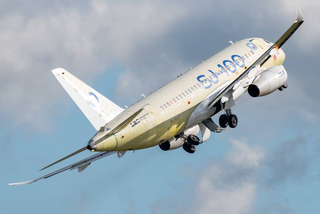
The development of a project for a shortened modification of the MC-21-210 aircraft will be financed in 2024-2025. The expected amount of support is 1.94 billion rubles. The corresponding document has been prepared by the Ministry of Industry and Trade and published on the portal of draft regulatory legal acts.

The project proposes to expand the list of expenses for research and development work. Their financing is carried out by the State Corporation "Rostec" through subsidies for the implementation of work on creating a preliminary design of the shortened version of the MC-21-210.
The financing of work on the development of the preliminary design in the period 2024-2025 will amount to approximately 1,940,000.0 thousand rubles, including 750,000.0 thousand rubles in 2024 and 1,190,000.0 thousand rubles in 2025, and will be carried out at the expense of the federal budget previously allocated to the state corporation "Rostec".
It is worth noting that earlier, Russian Deputy Prime Minister Denis Manturov reported that the MC-21 aircraft would receive a modification with a fuselage shortened by one section. This approach will increase the efficiency of the aircraft.
Earlierwww1.ru reported that the import-substituted Russian MC-21 airliner is almostready for certification tests.
Read related materials:
Irkutsk Aviation Plant received equipment for painting large aircraft components
Never miss our newsAdd this site to your preferred sources to see us more oftenAdd on Google