Russia has successfully tested the "Ivolga" unmanned aerial vehicle with artificial intelligence, operating on a domestic chip-microprocessor. The tests took place as part of the "Archipelago - 2024" project-educational intensive in Sakhalin.
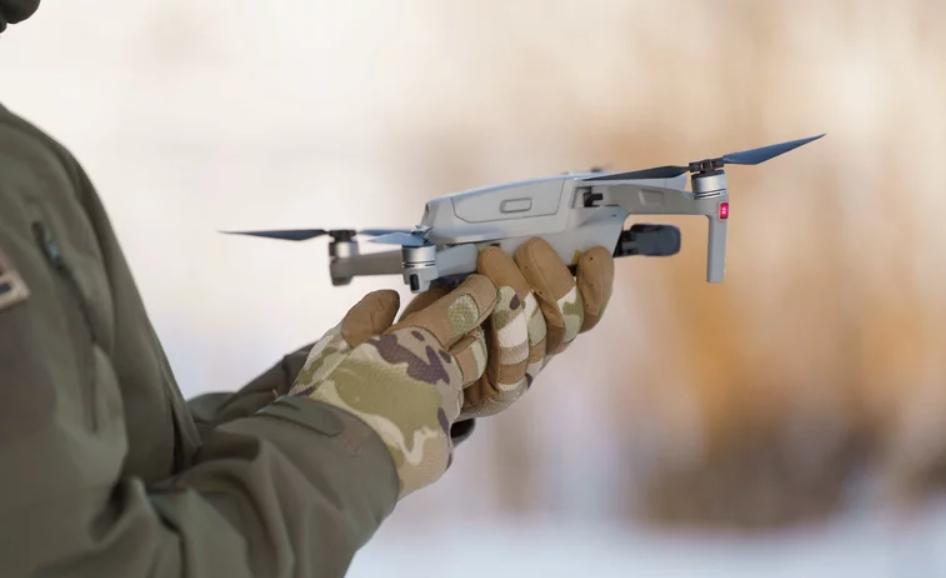
At "Archipelago," the "Ivolga" drone with artificial intelligence on a Russian chip was tested for the first time. The drone was developed by the company "Stratim," and the artificial intelligence chip "Skif" was produced by the company "Elvis" using a 28-nm process. This is our joint development. Before this, drones with AI on domestic chips had not flown.
The developers noted that the uniqueness of the drone lies in the fact that the microprocessor, without the use of a ground station, allows launching a neural network on board and performing all calculations directly during the flight on the drone with minimal delay.
"Ivolga" is capable of switching to autopilot mode and following a person thanks to the neural network.
It identifies a person in the frame and commands the drone to fly up to them at a certain distance, after which it maintains this distance in flight behind the person, wherever they move. Before this, chips that could be placed on board did not exist in Russia, nor did such integration.
Earlier,www1.ru reported that modernized Ka-27M helicopters haveentered service with the Pacific Fleet in Primorye. They are designed for anti-submarine warfare.
Read more on the topic:
Range Up to 1300 km: The Latest Geran-2 Reconnaissance UAVs Spotted on the Front Lines
Enemy Drones Won't Fare Well: Russian Armed Forces on the Front Lines Combine Four PKT Machine Guns
Never miss our newsAdd this site to your preferred sources to see us more oftenAdd on Google