The Government of the Russian Federation intends to allocate 300 billion rubles from the National Welfare Fund for the construction of the high-speed railway (HSR) Moscow — St. Petersburg in 2025. This became known after the publication of the list of instructions of the President of the Russian Federation Vladimir Putin following a meeting on the construction of the HSR.

According to the document, the allocated funds will be used to provide loans for the construction of transport infrastructure facilities necessary for the implementation of the project. The interest rate will not exceed 1% per annum with capitalization of interest in the first 10 years.
How will the financing process take place?
The main participants in the project — the company «Russian Railways», Sberbank and government agencies — must conclude a concession agreement with LLC «HSR Two Capitals» by July 15 of this year.
In the period from 2024 to 2028, 28.5 billion rubles will be allocated from the federal budget for the purchase of land and up to 299.4 billion rubles for subsidies to make the project financially sustainable.
In addition, a capital grant from the federal budget will be allocated for the construction of the facility for the purchase of land plots and subsidies to balance the operational model of the project. Additional funding will also be provided by Moscow (at least 150 billion rubles), the Moscow Region (at least 20 billion rubles), St. Petersburg (at least 30 billion rubles) and other regions participating in the project (at least 21 billion rubles).
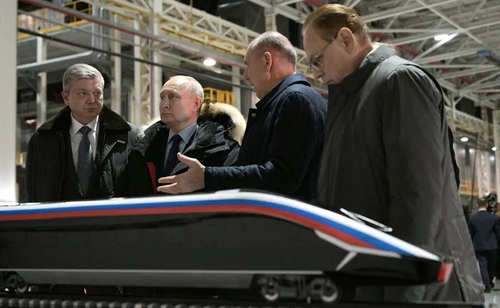
In the context of this project, the concessionaire will be responsible for the construction and operation of the high-speed railway line Moscow — St. Petersburg, and the concession grantor is the state and state structures that provide funding and conditions for the implementation of the project.
If the number of passengers is lower than planned by 5%, the losses will be covered by the federal budget. If the difference is 5–10%, the losses will be reimbursed by the concession grantor. If more than 10%, the costs will be shared by the concession grantor and the concessionaire.
If the delivery of trains is delayed by six months, the concessionaire will receive compensation. If additional costs arise due to delays or an increase in construction costs by more than 10%, further actions will be agreed upon between the concession grantor and the concessionaire.
Read materials on the topic:
Never miss our newsAdd this site to your preferred sources to see us more oftenAdd on Google

















