For the first time in history, the autonomous underwater vehicle (AUV) "MMT-3500" operated in freshwater Lake Baikal. The expedition, organized by specialists from the Institute of Marine Technology Problems of the Far Eastern Branch of the Russian Academy of Sciences, the Limnological Institute of the Siberian Branch of the Russian Academy of Sciences, and the Institute of System Dynamics and Control Theory of the Siberian Branch of the Russian Academy of Sciences, was successfully completed. The work was carried out from the research vessel "G.Yu. Vereshchagin".
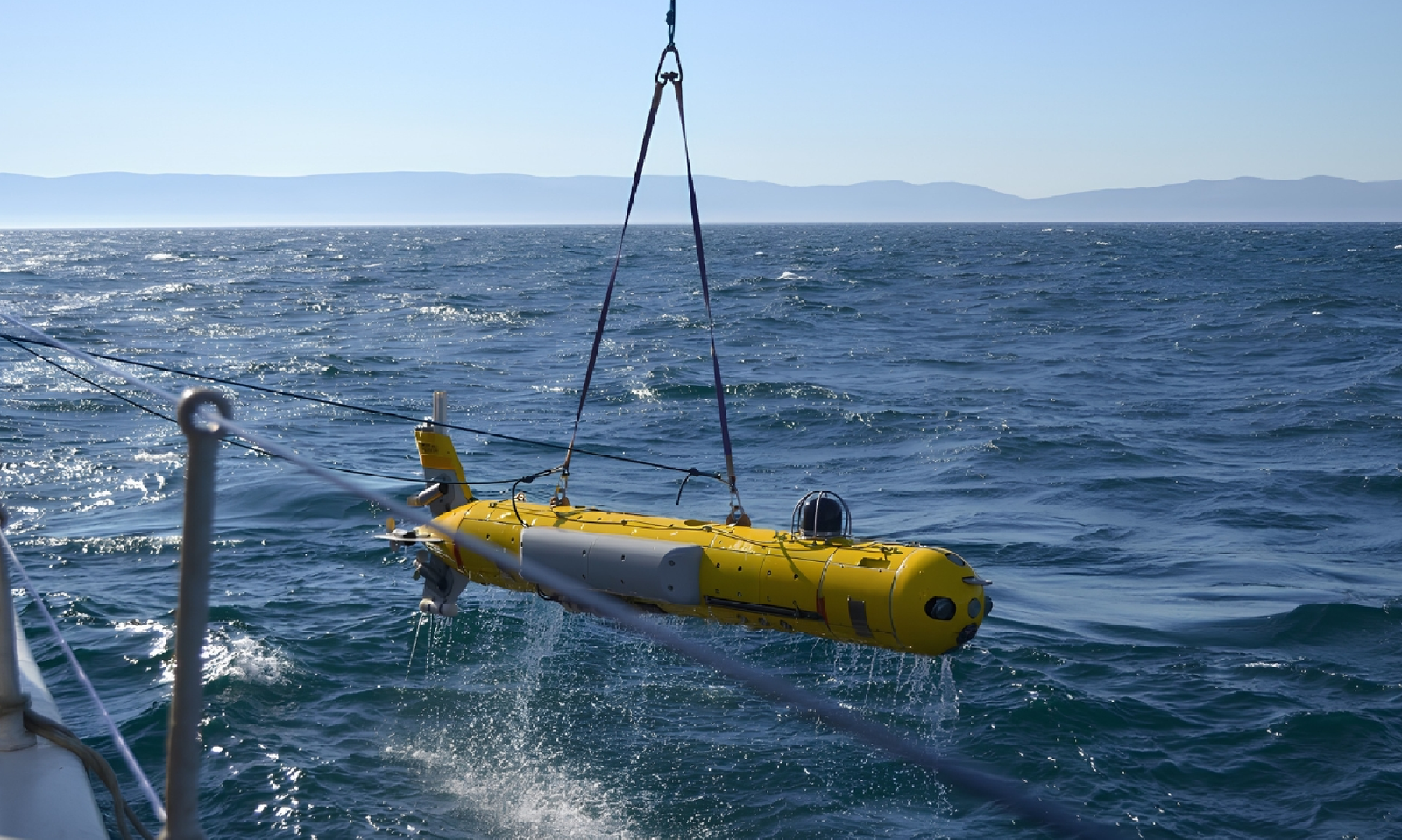
The apparatus, created in Vladivostok and designed for studying seas and oceans, operated in freshwater conditions for the first time. The total underwater path covered almost 180 km, and the total volume of collected information exceeded 75 GB. The maximum diving depth reached 1410 meters during a technical descent 7 km from Cape Kadilny in the Southern Basin of the lake.
The research was conducted in three areas of Lake Baikal's Southern Basin. Scientists surveyed the mud volcanoes "Malenkiy" and "Tolstyy," as well as the water area and bottom near the Baikal Pulp and Paper Mill (BPPM). According to expedition leader Mikhail Makarov, no traces of negative impact from the plant's operation have been found yet, but data processing has only just begun.
Alexander Pavin, Head of the Technical Vision Systems Laboratory at IPMT FEB RAS, noted that the collected data has high spatial resolution and a large coverage area, which was previously unattainable with traditional hydrographic survey methods. During the mission, underwater photo images, side-scan sonar images, bottom profiles, and multibeam echosounder measurements were obtained.
The expedition participants are confident that joint research with the "MMT-3500" will continue: the apparatus's potential and operational experience open up new opportunities for deep-water research in Lake Baikal.
Read more on the topic:
Never miss our newsAdd this site to your preferred sources to see us more oftenAdd on Google