Russia is developing a software module based on artificial intelligence to assess risks when three or more drugs are prescribed simultaneously. The solution should help doctors identify dangerous drug combinations that can arise during the treatment of oncological diseases and multiple chronic diagnoses, the press service of the Moscow Aviation Institute reported.
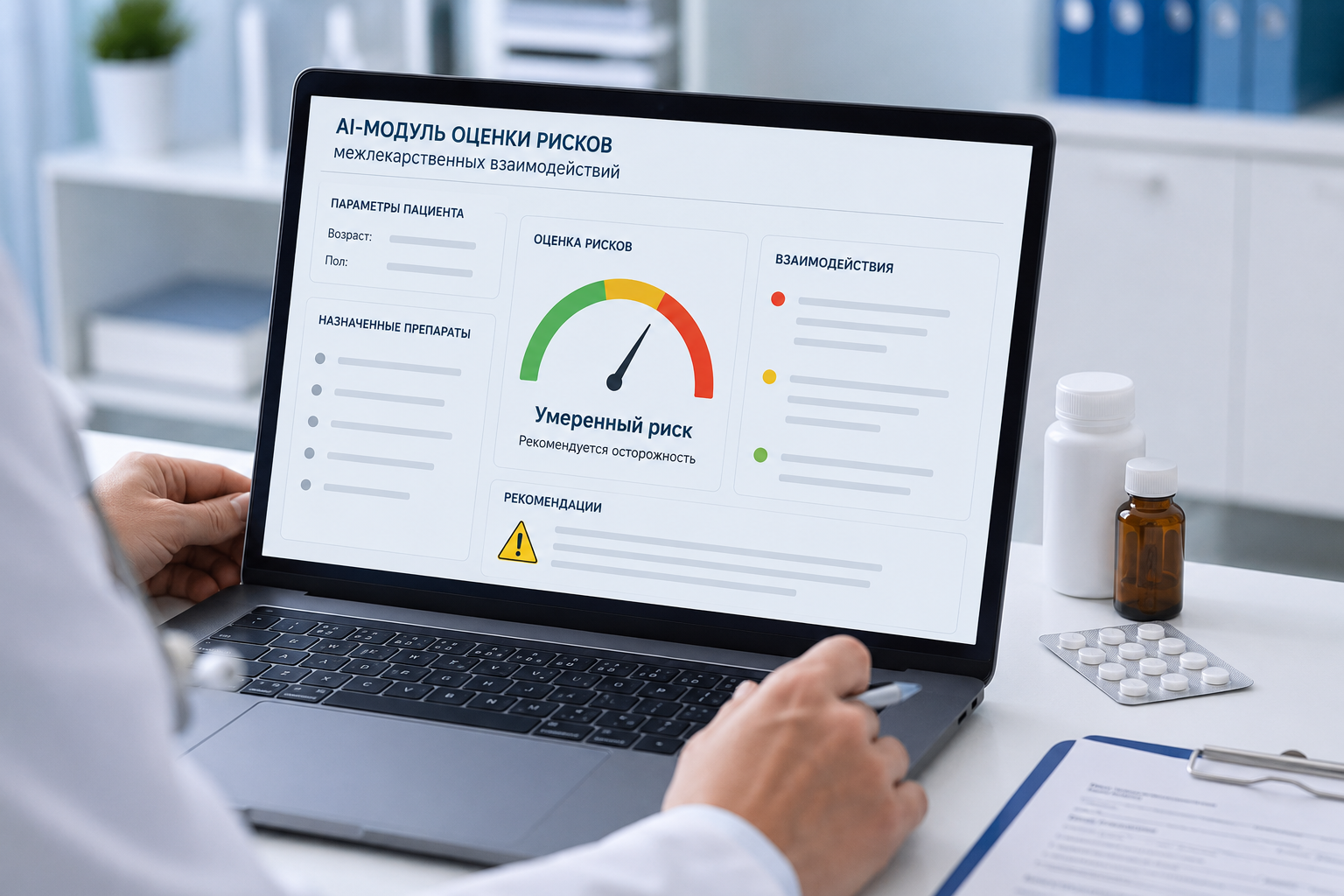
The technological basis of the module is a Bayesian network. This is a probabilistic model that takes into account many factors and the relationships between them.
We determine how each drug affects a person in accordance with its instructions from the state register of medicines. The system takes into account not only direct contraindications, but also situations where several drugs affect the same organ and an overdose occurs. After the analysis, the system assesses the total risk.
When working with the system, the doctor enters a list of prescribed drugs, the patient's age and gender into the interface. After that, the module automatically checks drug interactions, assesses the risk of side effects taking into account this data, and searches for potentially dangerous combinations. Such combinations can worsen chronic diseases or reduce the effectiveness of therapy.
The result is shown using a "traffic light" principle. Green means the drugs are compatible. Yellow warns of possible risks and the need for careful use. Red indicates dangerous interactions or contraindications – in this case, it is recommended to choose a different treatment regimen.
In the first stage of testing, data on 92 popular drugs used for chronic heart failure and influenza were loaded into the database, and 110 serious side effects possible with their simultaneous use were identified.
Testing continues, and in the future, the developers plan to integrate the solution into clinical information systems, including EMIAS.
Read more on the topic:
Never miss our newsAdd this site to your preferred sources to see us more oftenAdd on Google

















