Translated with AI from the Russian original.
Boris Titov, Special Representative of the Russian President, stated in an interview with TASS that the issue with the "Power of Siberia-2" gas pipeline is not about the gas price, but about technical aspects. According to him, the main task is to choose the optimal route in terms of construction costs, safety, and reliability.
This is not a question of price, which many media wrote about – that we cannot settle the price. That's not the issue. The issue is more about logistics. Making the right decision about the route of this gas pipeline.
Titov emphasized that this is a working issue that will be resolved in the near future, but no one is rushing.
What is known about the "Power of Siberia-2" project
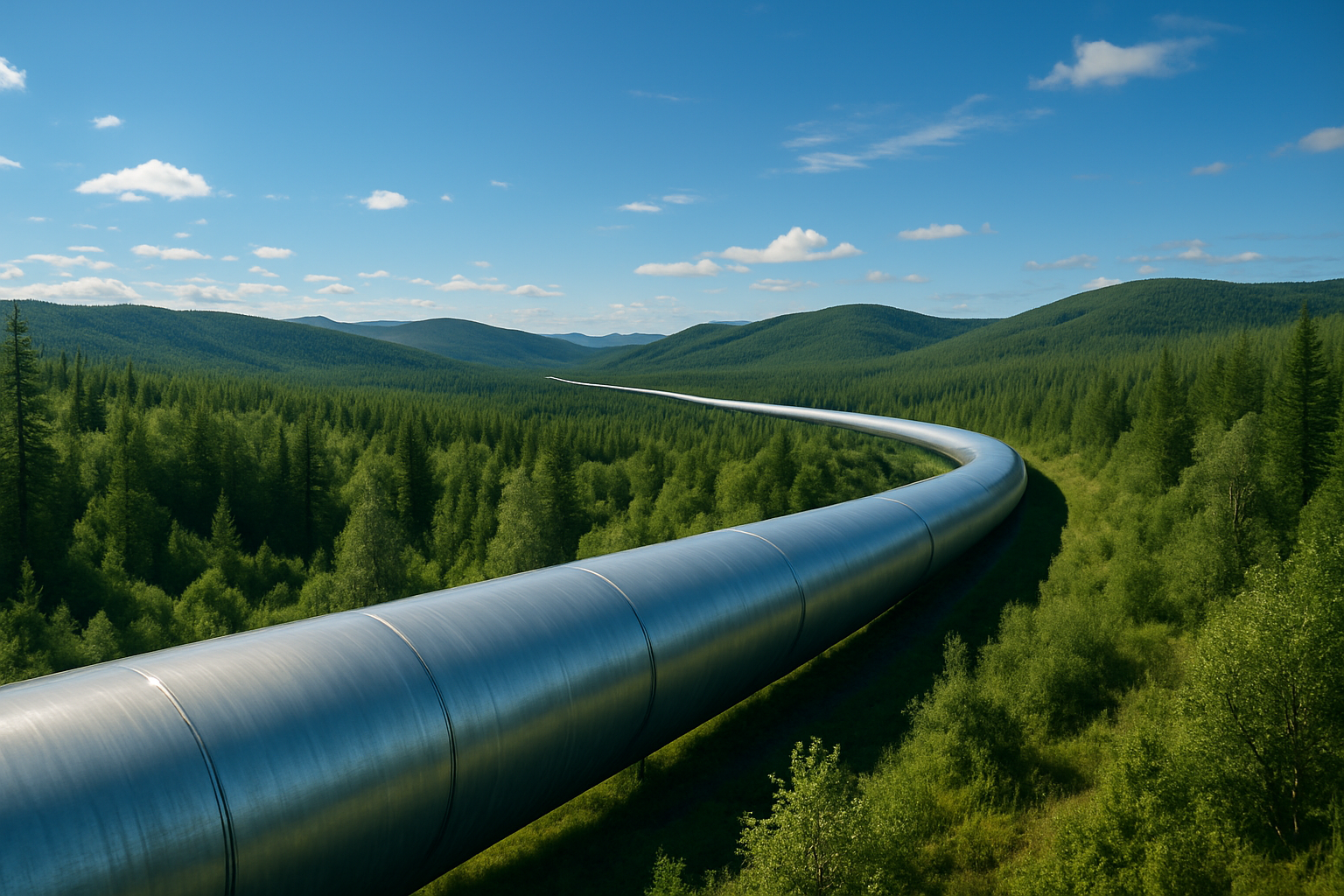
The design capacity of the pipeline is 50 billion cubic meters of gas per year, which is comparable to Nord Stream. The total length of the route will exceed 6,700 km, of which about 2,700 km will pass through Russian territory. The route runs through the most populated areas of Siberia parallel to the Trans-Siberian Railway, near cities such as Achinsk, Krasnoyarsk, Kansk, Sayansk, Angarsk, and Irkutsk. Bypassing Lake Baikal from the south, the pipeline will reach the border near Naushki, where the Mongolian section ("Soyuz Vostok") will begin.
The project is important not only for exports to China. Branches with a total length of about 700 km are planned from the main pipeline for gasification of Ulan-Ude and Chita.
The possible passage of the pipeline near Krasnoyarsk has already become a locomotive for the gasification of the Krasnoyarsk Krai, where the problem of coal generation and the "black sky" regime is acute. The design of distribution networks within the region is synchronized with the construction schedule of the main pipeline. At the government level, this link was fixed back in October 2025 at a meeting of the Federal Gasification Headquarters: additional opportunities for providing gas to the growing needs of the Irkutsk Oblast and Krasnoyarsk Krai will be available precisely with the construction of "Power of Siberia-2". At that time, 782 settlements and more than 784 thousand apartments and households had already been gasified in the Siberian Federal District, and 117 gas distribution stations were operating with a consumption of 16.5 billion cubic meters of gas. According to programs for 2026–2030, another 16 cities and 143 settlements are planned to be gasified.
As for the legal basis of the gas pipeline itself, Gazprom and CNPC signed a binding memorandum back in September 2025. In May 2026, Deputy Prime Minister Alexander Novak announced that the contracts were in the final stage and technical refinement of the documents was underway.
The implementation of the project, as El Pais previously wrote, is capable of forever changing global natural gas distribution flows.
Read more on the topic:
Never miss our newsAdd this site to your preferred sources to see us more oftenAdd on Google

















