Translated with AI from the Russian original.
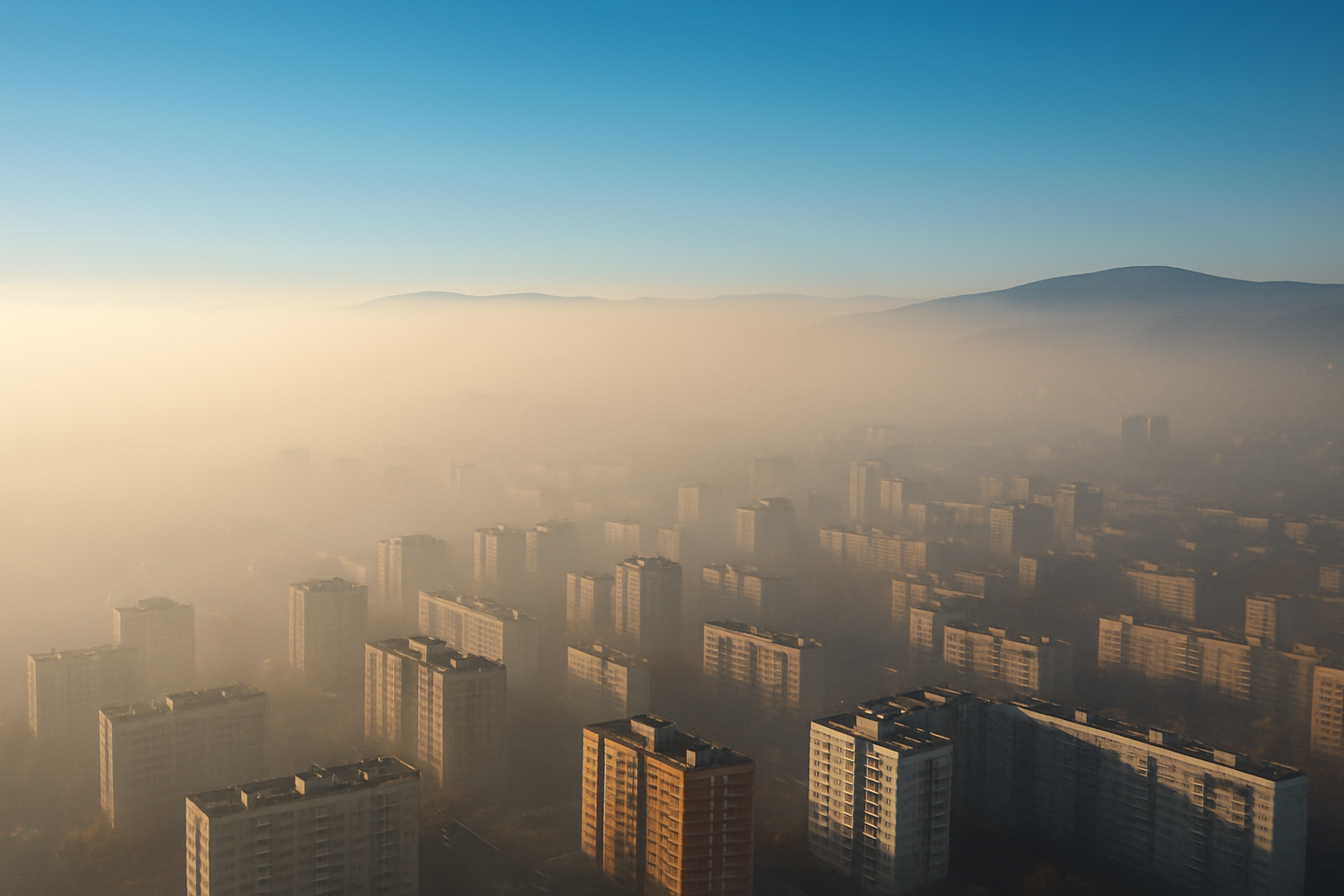
The "black sky" regime, introduced in Krasnoyarsk on June 13 from 7:00 PM until 7:00 PM the following day, turned out to be another formality amidst multi-day exceedances. As early as June 11, Pavel Gudovsky, chairman of the chamber of environmental organizations of the Civil Assembly of Krasnoyarsk Krai, stated on TVK that the air monitoring system requires modernization, and forecasting methods are imperfect.
According to him, benzopyrene concentrations in the Solnechny microdistrict reached almost 12 MPCs, formaldehyde in the Kirovsky district – 5.4 MPCs, and hydrogen sulfide – 3.23 MPCs. However, the unfavorable meteorological conditions regime itself does not help.
The key practical indicator available to any resident is wind speed. As Gudovsky explained, if the forecast gives a value below 2 m/s, exceedances are guaranteed. The reason is temperature inversion, typical for Krasnoyarsk: emissions are trapped in the ground layer and do not disperse. At the same time, the number of monitoring stations in the city is limited, and real concentrations, according to the ecologist, may be higher than those published.
The systemic problem remains the industry's reaction to UMC. According to the Ministry of Ecology of Krasnoyarsk Krai, during the latest inspections, none of the 11 surveyed enterprises presented an emission reduction plan, and many do not even inventory pollution sources. The materials have been submitted to the prosecutor's office, and companies face fines of up to 100 thousand rubles.
However, Gudovsky emphasized that Rosprirodnadzor controls only large factories – participants in the federal project "Clean Air," while small and medium-sized businesses remain outside the scope of attention.
The federal project "Clean Air" has been operating since 2019, and billions of rubles have been spent on it. The main expenditure item was the conversion of the private sector from manual coal boilers to automatic ones. However, as the ecologist noted, there has been no reduction in benzopyrene concentration – a class one carcinogen. Positive changes are recorded for other parameters due to the installation of electrostatic precipitators at thermal power plants and the modernization of the aluminum plant, but the air remains dangerous. Worn-out utility networks, which produce hydrogen sulfide, and poor roads, which generate fine dust, contribute additionally.
As protective measures, the expert recommended using specialized masks with formaldehyde and benzopyrene filters costing about 6 thousand rubles, as well as air purifiers indoors. At the same time, he admitted that such expenses are unaffordable for many families, and in hot conditions, when the temperature in apartments rises to +35°C, refusing to ventilate becomes a separate health threat.
According to the results of the latest National Environmental Rating, Krasnoyarsk Krai ranked 77th out of 83, remaining among the outsider regions.
Read more on the topic:
Never miss our newsAdd this site to your preferred sources to see us more oftenAdd on Google

















