Translated with AI from the Russian original.
The Institute of Urology and Human Reproductive Health at the First Moscow State Medical University is developing software for planning laparoscopic access during kidney surgeries using augmented reality, "Pervy Tekhnichesky" was told by the university's press service. The algorithm will help the surgeon see the patient's precise 3D anatomy even before the intervention. This will ensure more accurate surgery, reduce the risk of errors, and eliminate postoperative complications.
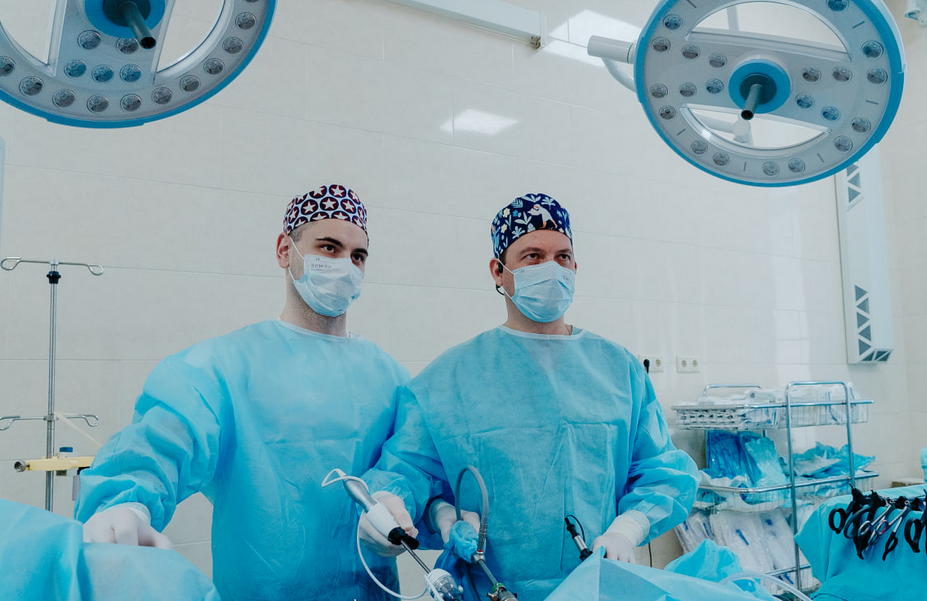
Surgeons often face discrepancies between CT images and the patient's real anatomy on the operating table. This is especially critical for kidney surgeries, as this organ is mobile – any change in the patient's position alters the kidney's location. Evgeny Shpot, Deputy Director of the institute, explained: difficulties begin already at the stage of trocar placement, as the patient's position on the CT scan may not coincide with their position on the operating table. This creates a risk of damage to blood vessels, ureters, and other anatomical structures.
The software's operation is based on the patient's CT image. The system will correlate it with the patient's position on the table, calculate the error between the kidney's position in the image and in reality, and then suggest to the surgeon how to minimize it. Project leader, urologist Dmitry Konovalov noted: scientists are currently training the system to calculate errors, account for them, and minimize them – these are the key tasks of the predictive module. The project involves building a 3D anatomical model for each patient, which the surgeon will see on the monitor during laparoscopic intervention. Over time, the software will be able to highlight optimal access points for trocars.
Evgeny Shpot believes that the new software will be an impetus for improving a personalized approach to treatment. Its use will allow surgeons to perform kidney operations with maximum accuracy and comfort, and most importantly – with the best results for the patient. Personalization is one of the key vectors in the development of modern medicine, which helps achieve more effective treatment and shorten rehabilitation periods.
Read more on the topic:
Never miss our newsAdd this site to your preferred sources to see us more oftenAdd on Google

















