Translated with AI from the Russian original.
Specialists from NRNU MEPhI have developed an artificial intelligence-based algorithm capable of modeling the propagation of electrical signals in heart tissues during atrial fibrillation. As reported by the university's press service, the technology is a decision support system for surgeons, not a replacement for a doctor.
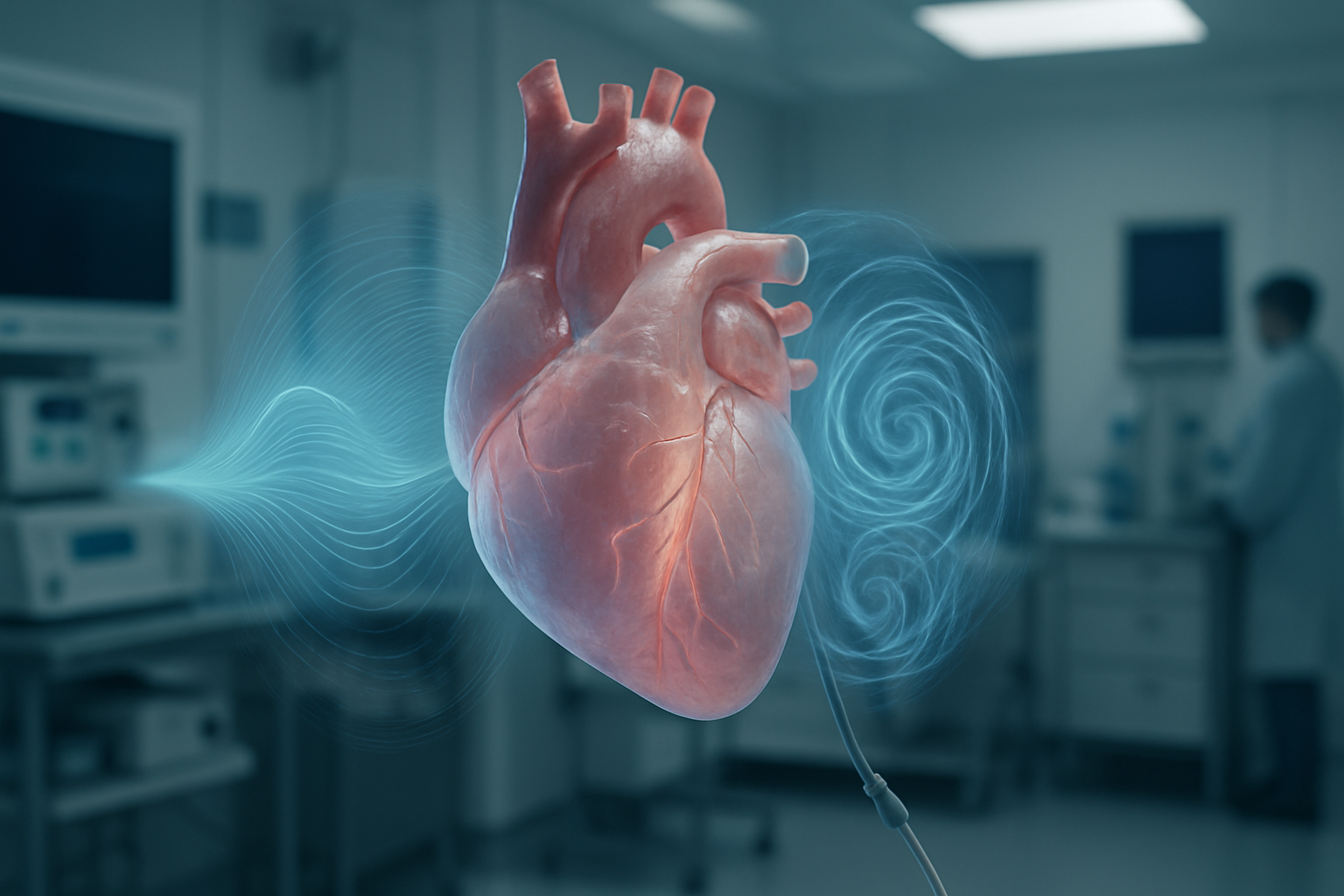
The algorithm's mechanics reproduce the physics of the pathology. In atrial fibrillation, excitation signals turn into chaotic vortices instead of a smooth frontal wave. The doctor sees this on catheter videos, but identifying the true source of the malfunction can be extremely difficult. The digital twin calculates exactly how the excitation front proceeds in a specific patient, taking into account the individual geometry of the atria and the distribution of fibrous tissue, and then shows how the picture will change with a certain operation and whether such intervention will be effective.
A trial version of the algorithm already exists, and a number of scientific articles have been published. The MEPhI team aims to replicate the success of American developers who are currently conducting clinical trials of similar technology.
Immediate plans include creating an AI competence center at the university and attracting grant funding. In fact, this involves transitioning from empirical surgery to computational surgery, where a mathematical model predicts the outcome of an operation on a specific heart in advance.
Read more on the topic:
Never miss our newsAdd this site to your preferred sources to see us more oftenAdd on Google

















