Translated with AI from the Russian original.
The government has approved a plan according to which by 2028, mandatory registration of personal mobility devices with the issuance of license plates will be introduced in Russia. According to "Gazeta.Ru", electric scooters, monowheels, and electric bicycles will fall under the law. In the future, by 2030, mandatory labeling confirming their safety will also be introduced.
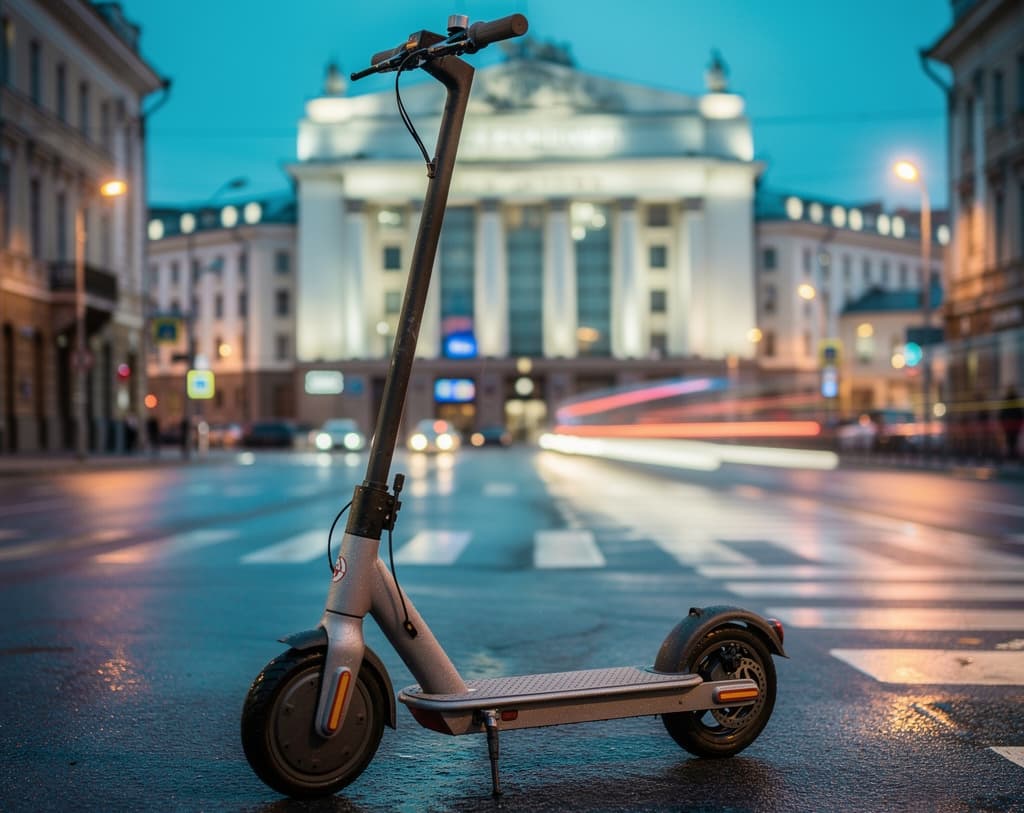
The reason for tightening the screws was a sharp jump in accident rates. According to the Scientific Center for Road Safety of the Ministry of Internal Affairs, the number of accidents involving personal mobility devices increased from 410 cases in 2020 to a peak of 4.4 thousand in 2024. In 2025, a slight decrease to 3.2 thousand incidents was recorded. Last December, President Vladimir Putin drew attention to the problem, acknowledging the citizens' justified dissatisfaction with couriers on sidewalks.
Experts have already called the initiative difficult to implement. It is indicated that private owners will massively evade registration, and the police will physically not be able to catch violators due to the high maneuverability of personal mobility devices. The price threshold for entry also does not contribute to registration: the cost of the most affordable adult electric scooter does not exceed 14 thousand rubles.
Maxim Kadakov, editor-in-chief of "Za Rulem" magazine, explained to "Gazeta.Ru" that registration will apply only to personal mobility devices newly sold in Russia, and not to those already in operation.
It is unrealistic to apply registration to scooters that are already in use. Currently, traffic police officers from motorcycle battalions chase pitbikers, but they cannot always catch them everywhere. And the motorcycle battalion is a unit from large cities; they are not in district centers. There will be no "D-day" for scooter riders, of course.
The market is clearly divided: rental scooters are already equipped with telematics modules that control speed and geofences, while the private sector remains anonymous and unmanaged. Whoosh and Urent suggest not relying on physical numbers, but rather going the route of embedding SIM cards and tracking trips – that is, forcibly implementing the technology that already works in kicksharing across the entire market.
Read more on the topic:
Never miss our newsAdd this site to your preferred sources to see us more oftenAdd on Google

















