Translated with AI from the Russian original.
Recent photographs of the two-seat version of the Russian fifth-generation fighter — the Su-57D — have generated immense interest in Indian defense circles, IDRW reports. Currently, the Su-57D is only the second production two-seat fifth-generation fighter in the world, after the Chinese J-20.
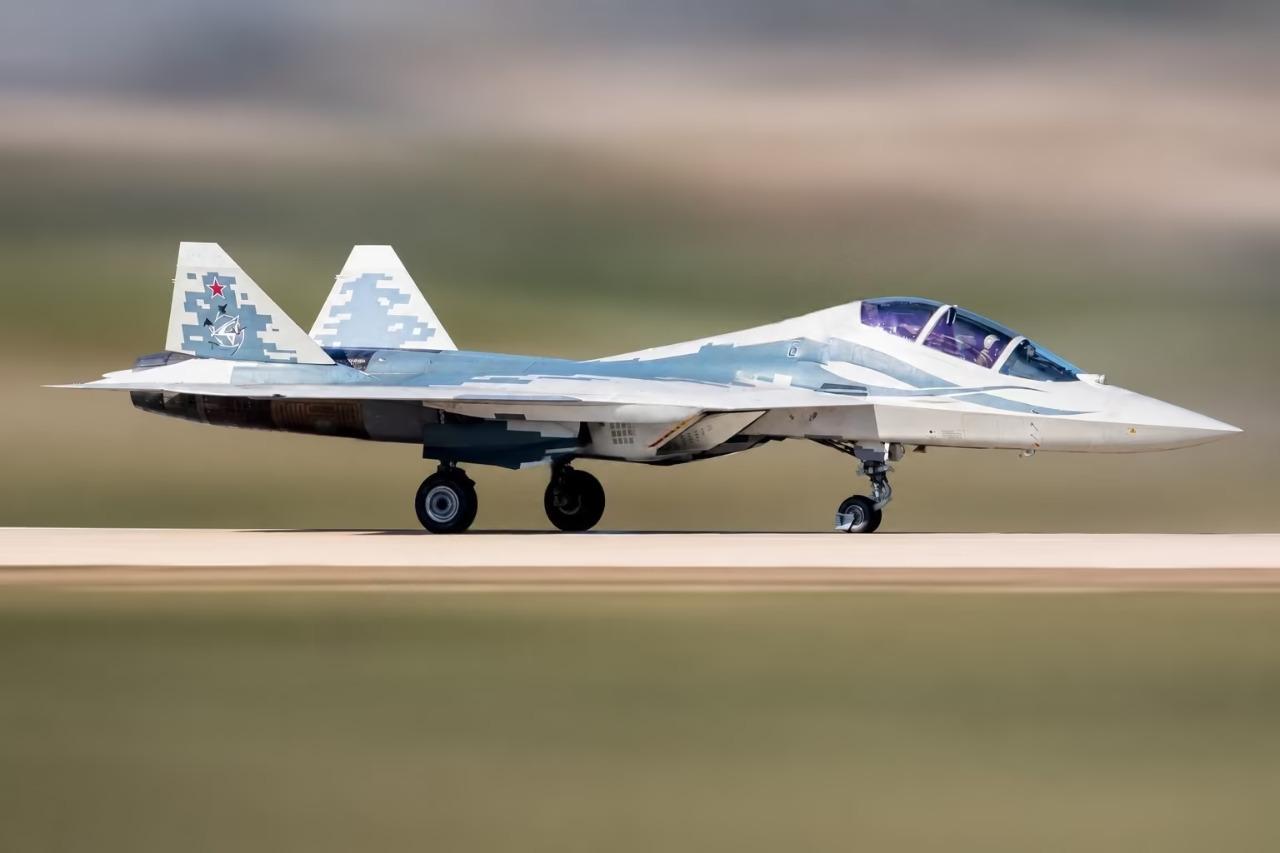
For India, which had shown interest in such a configuration more than a decade ago, the emergence of the Su-57D represents the realization of a long-standing concept. In the early 2010s, India was negotiating with Russia for the joint development of a fifth-generation fighter. The Indian Air Force then clearly stated the need for a two-seat aircraft — alongside single-seat fighters. The country planned to acquire about 48 tandem aircraft for pilot training, electronic warfare, and complex strike missions.
Russia set a condition: the development of a two-seat variant would require significant funding. Moscow requested approximately $4.5–5 billion from India for design, prototyping, testing, and certification — and the program ultimately did not materialize.
The appearance of the Su-57D after almost 16 years of independent Russian development shows how challenging the task of creating a two-seat stealth fighter with sustained supersonic cruise speed, advanced sensor integration, and high maneuverability proved to be. Two-seat fifth-generation fighters offer critical advantages: pilot training in highly automated cockpits and high effectiveness due to task sharing between two crew members.
Read more on the topic:
Never miss our newsAdd this site to your preferred sources to see us more oftenAdd on Google

















