Translated with AI from the Russian original.
Sofya Kuznetsova, a student of the "KosmoBio" project profile at the "Kalashnikov" Academy, presented a prototype of a tactile system for UAV control. The solution is designed to improve piloting accuracy and reduce operator load in complex flight conditions.
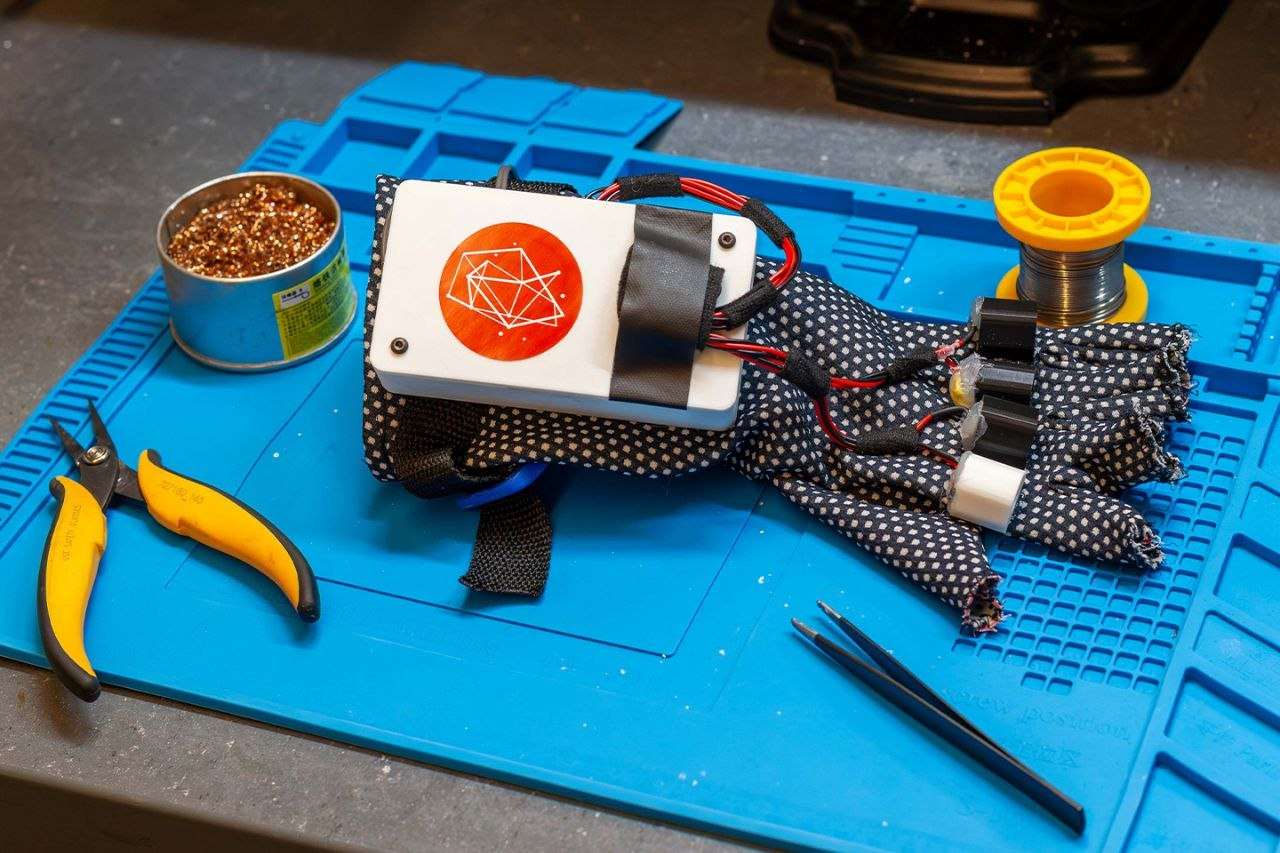
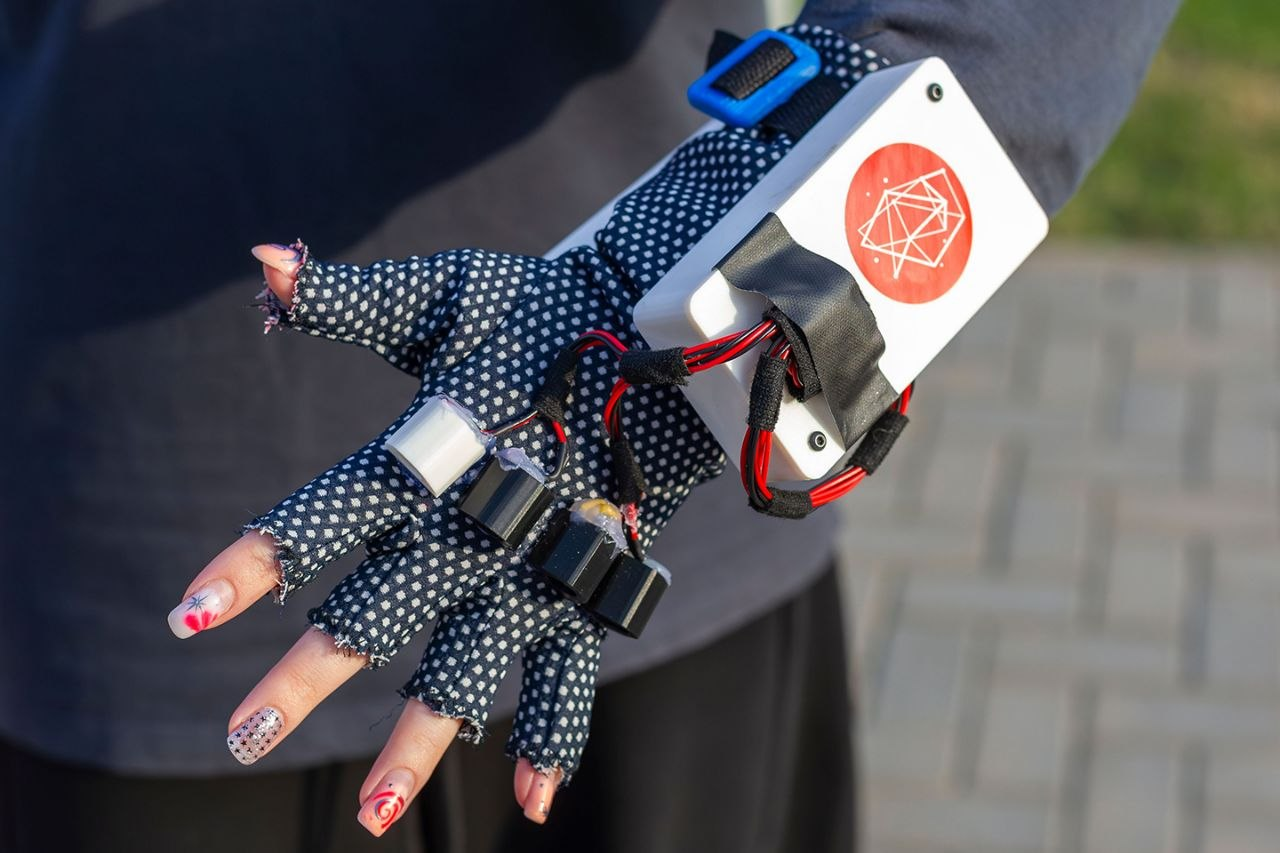
The system consists of two modules. One is installed on the drone and collects data on the aircraft's movement using a gyroscope and accelerometer. The second is attached to the operator's hand and connected to a glove with four built-in vibratory motors.
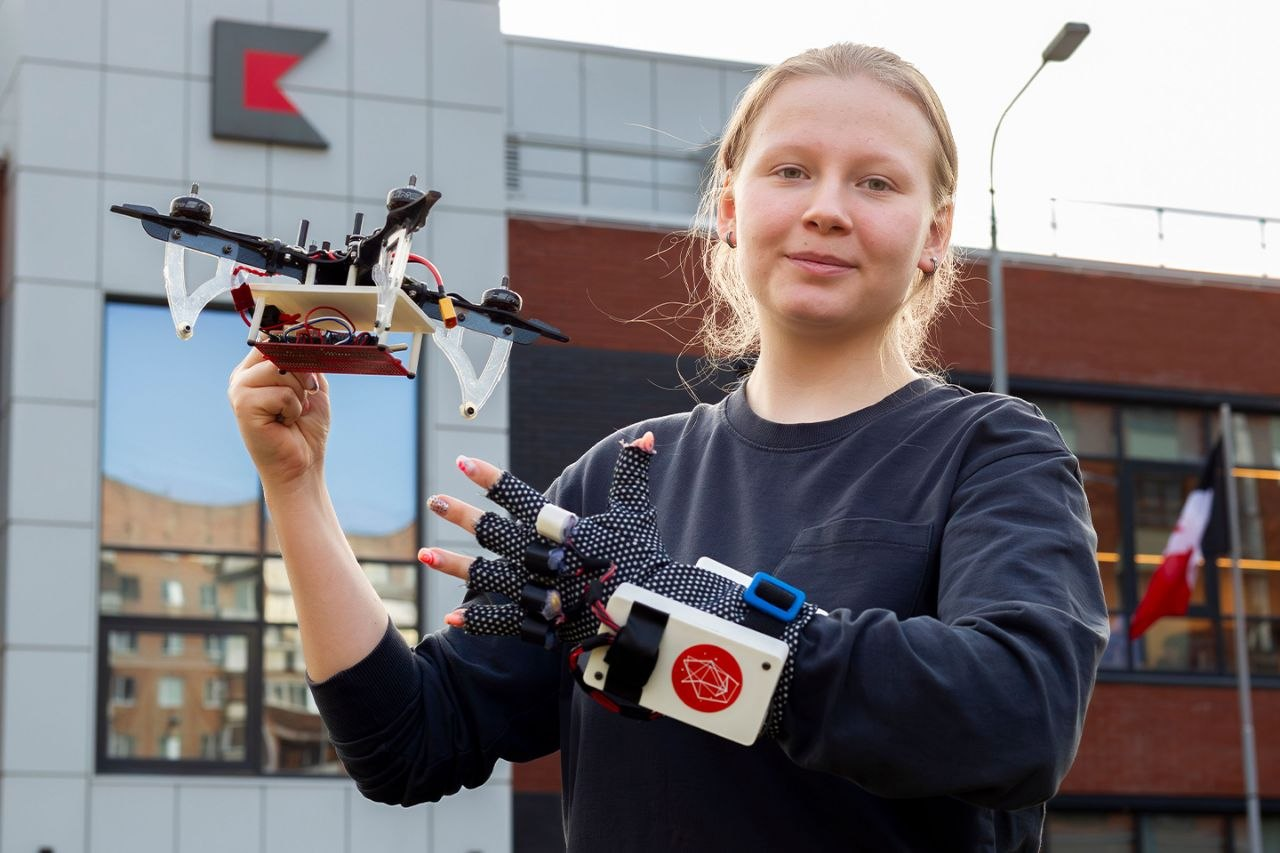
During flight, the device transmits signals about the drone's roll and pitch through vibration. When the drone deviates to the side or changes its angle of inclination, different motors on the back of the hand are activated. This allows the operator to intuitively perceive the aircraft's position without being distracted from visual control.
Data transmission between modules occurs via a radio channel in the 433.4–473 MHz range. The system is based on Arduino Nano microcontrollers and open-source software. The housing of the elements is made using 3D printing.
According to the developers, the project emerged due to a lack of sensory information during remote UAV control. In conditions of poor visibility, interference, or high workload, visual and auditory information alone is often insufficient for the operator, which can lead to errors and accidents.
The prototype's cost is about 4 thousand rubles, which is significantly lower than foreign solutions costing about 1000 dollars. At the same time, there are currently no direct analogues for unmanned aviation on the market.
Read more on the topic:
Never miss our newsAdd this site to your preferred sources to see us more oftenAdd on Google

















