Materials scientists from the Advanced Engineering School of St. Petersburg State University have for the first time created a block sorbent product using additive technologies. As reported by the university's press service, the technology defines the adsorbent structure at the printing stage, eliminating the problem of granule destruction, which is characteristic of bulk charges in industrial installations in the chemical, oil refining, and electronics industries.
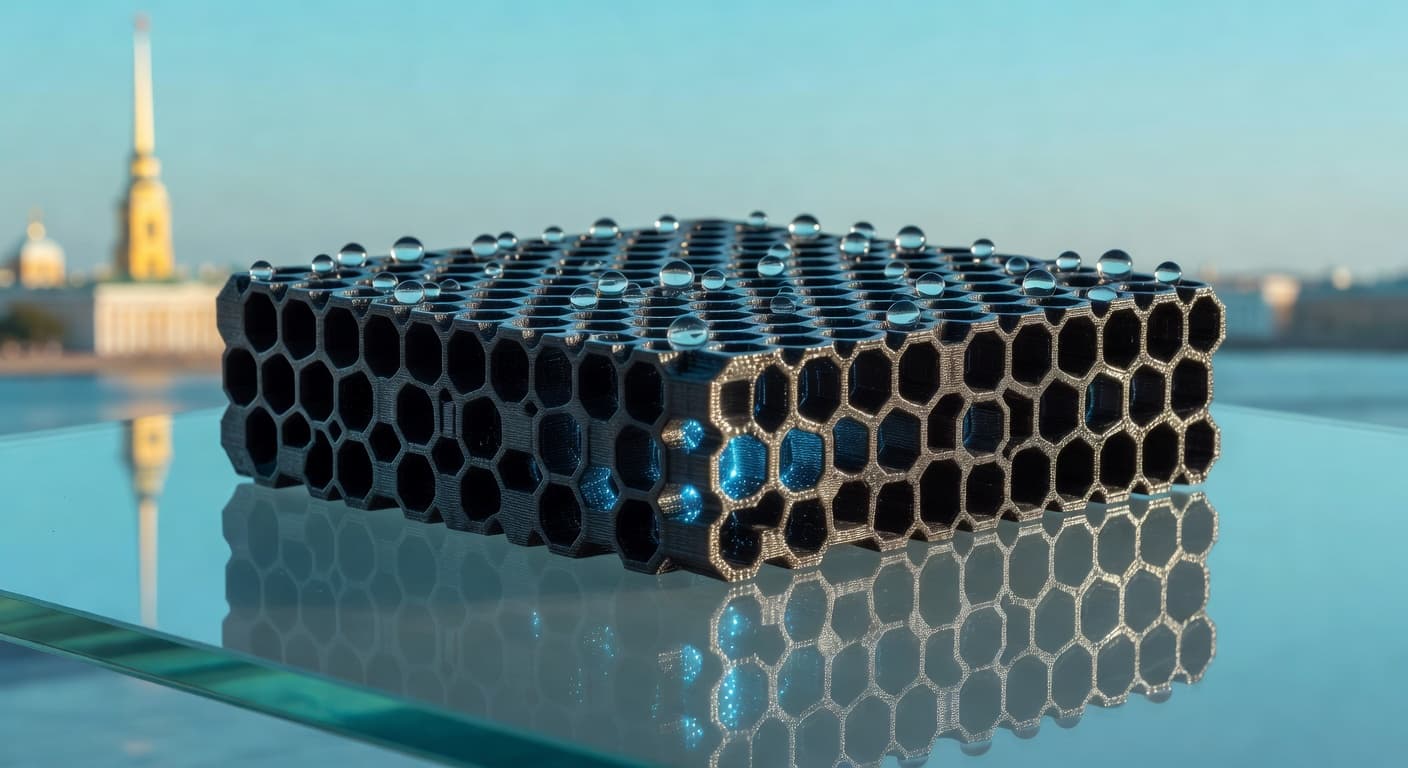
The researchers tested three methods and settled on selective laser sintering. A powder mixture of anthracite – a high-grade metamorphic coal – and novolac phenol-formaldehyde resin in a 60% to 40% ratio was recognized as optimal. This combination provided maximum strength of the finished blocks and print quality. The resulting product has a honeycomb structure, which provides less hydraulic resistance and saturates faster compared to traditional granular backfill.
Honeycomb blocks withstand mechanical loads that cause conventional adsorbents to crumble and disable equipment. The carbon sorbent, laser-printed to a given geometry, maintains pore volume and surface chemical activity throughout its service life. For industrial gas and liquid media purification plants, where pressure drop and loading wear directly affect process cost, such a replacement means increased overhaul intervals and stable output parameters.
Read more on the topic:
Never miss our newsAdd this site to your preferred sources to see us more oftenAdd on Google