A heart attack can now be detected in just six minutes – and with an accuracy 45 times higher than existing rapid tests. Russian scientists have developed a system that could radically change the diagnosis of heart attacks. This was reported by the MIPT press service.
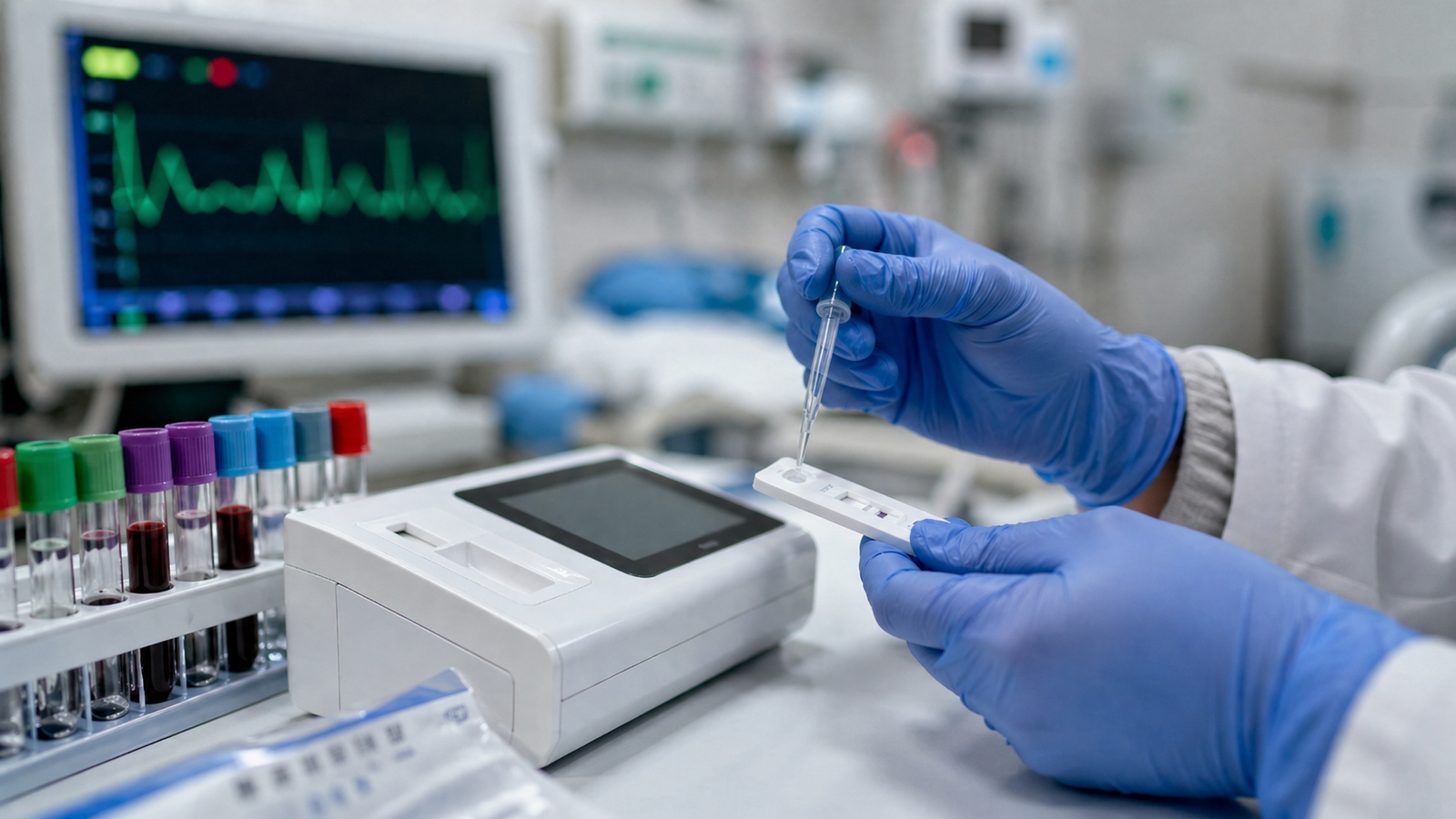
This is especially important because the speed of diagnosis directly affects a patient's chances of survival. Currently, laboratory methods take 30 to 60 minutes and require special equipment and trained personnel. However, existing rapid tests often give false-negative results due to insufficient sensitivity.
As Alexey Orlov, a senior researcher at the Institute of General Physics of the Russian Academy of Sciences, explained, the new development will help solve this problem.
The new technology is based on special sensors – nanochains made of iron oxide particles about a micrometer long. Antibodies are attached to them, which react to the H-FABP protein – one of the early markers of a heart attack. This protein appears in the blood within the first hour after the onset of an attack, allowing the problem to be detected as early as possible.
The peculiarity of nanochains is that in a rotating magnetic field, they actively mix the blood around them, accelerating the contact between the protein and antibodies by tens of times. In addition, the "activated" chains begin to attract each other, amplifying the signal and reducing interference by about half.
At the same time, the system does not require complex changes: ordinary test strips are used, and only a simple rotating magnetic field generator, which can run on batteries, is needed for operation.
Read more on the topic:
Never miss our newsAdd this site to your preferred sources to see us more oftenAdd on Google