Translated with AI from the Russian original.
In Russia, a rocket for combating hail clouds has been patented. The development was presented by the Cheboksary Production Association named after V.I. Chapaev. After completing its mission, the rocket breaks into fragments that do not pose a danger to the population when falling to the ground.

How the anti-hail rocket works
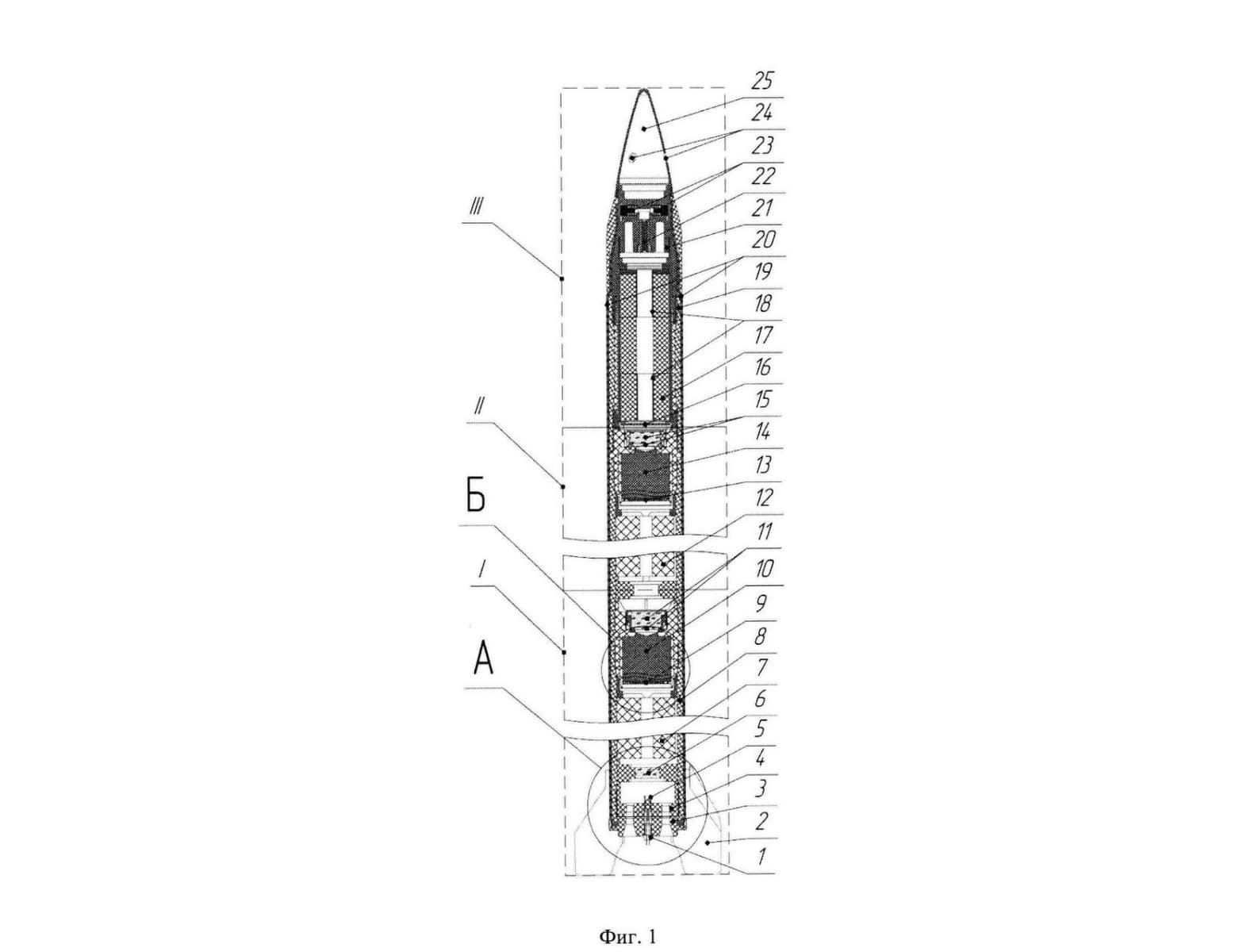
The invention relates to devices for changing atmospheric conditions. It is a meteorological anti-hail rocket designed to affect hail clouds in order to prevent hailstorms and induce precipitation.

The rocket is launched from a rail launcher. Inside there is a channel grain that, when burning, creates an aerosol with an ice-forming reagent. This aerosol is released into the atmosphere.
In the cloud, because of this substance, small ice particles form instead of large chunks of ice, and they fall as ordinary precipitation.
How the new development differs
Similar rockets had been created before. In 2023, the state corporation Rostec presented the Alazan-8M rocket, developed by the same Cheboksary Production Association named after V.I. Chapaev. It is intended to affect hail-dangerous clouds and protect agricultural land.
Such systems are considered critically important for agricultural regions: their use makes it possible to reduce crop losses by 70–90%. The Alazan-8M became a development of the previous Alazan-6 version and received an improved body design, a reduced diameter, and an updated ice-forming compound with lower silver content.
The new invention, meanwhile, is expected to increase the reliability of the rocket engine sections, including the launch assembly. At the same time, the nose section and the self-destruct mechanism have been improved.
These changes were achieved by optimizing the design while maintaining a uniform and stable consumption of the ice-forming reagent along the entire seeding trajectory.
The developers assured that serial production of such rockets is possible at the existing manufacturing facility.
Read more on the topic:
Never miss our newsAdd this site to your preferred sources to see us more oftenAdd on Google

















