Kazakhstan is preparing to change the rules of the game in the automotive market: cars from Russia may become more expensive due to an increase in the recycling fee. This is about an attempt to level the terms of trade within the EAEU, as well as to exclude the so-called regulatory and price arbitrage within the Eurasian Economic Union.

The corresponding order is currently undergoing registration with the justice authorities, the Ministry of Industry and Construction of Kazakhstan reported.
The amount of the recycling fee will be set for each type and category of vehicle — in proportion to the rates in force in Russia.
At the same time, Kazakhstan emphasizes that a sharp rise in prices in the market is not expected. The cost of cars imported from Russia will indeed increase, but in proportion to the increase in the recycling fee coefficient. In general, the impact on the market may be limited, since the share of Russian cars remains small, the statement said.
Kazakhstan imports the bulk of its cars from China, Georgia, the UAE, South Korea and Japan. China is the leader in direct deliveries.
The share of cars from Russia in official sales remains minimal: in 2024 — 0.43% (883 cars), in 2025 — 1.31% (3,088 cars), and in the first two months of 2026 — 1.62% (447 cars).
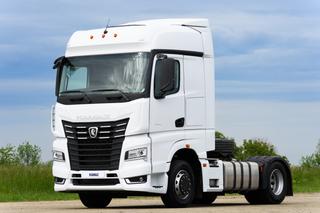
The basis of imports from Russia is made up of budget models Lada — Granta, Vesta and Niva, as well as commercial vehicles GAZ and KamAZ, which traditionally lead in the segment of light-duty trucks and special equipment.
At the same time, the production of cars of the Lada brands and other brands has already been established inside Kazakhstan.
Earlier, in January, the Ministry of Ecology and Natural Resources of Kazakhstan proposed to increase the recycling fee not only for cars, but also for agricultural machinery imported from Russia and Belarus. The draft document was published for public discussion. It also refers to the need to level the conditions of access to the markets of the EAEU countries through comparable parameters for calculating the recycling fee.
Read more on the topic:
 The Ministry of Industry and Trade of the Russian Federation will not change the recycling fee for cars from the EAEU from April 1
 Despite the recycling fee: imports of used Japanese cars have hardly changed since December 1
 Gray Imports Under Threat: Ministry of Industry and Trade Proposes Adjusting Recycling Fee Formula
Never miss our newsAdd this site to your preferred sources to see us more oftenAdd on Google