Translated with AI from the Russian original.
Future doctors in Russia are increasingly being trained to work not only with patients, but also with artificial intelligence, digital services, virtual reality and engineers. On the sidelines of Medical Education Week — 2026 in Moscow, they discussed how all these technologies help educate new generations of specialists.
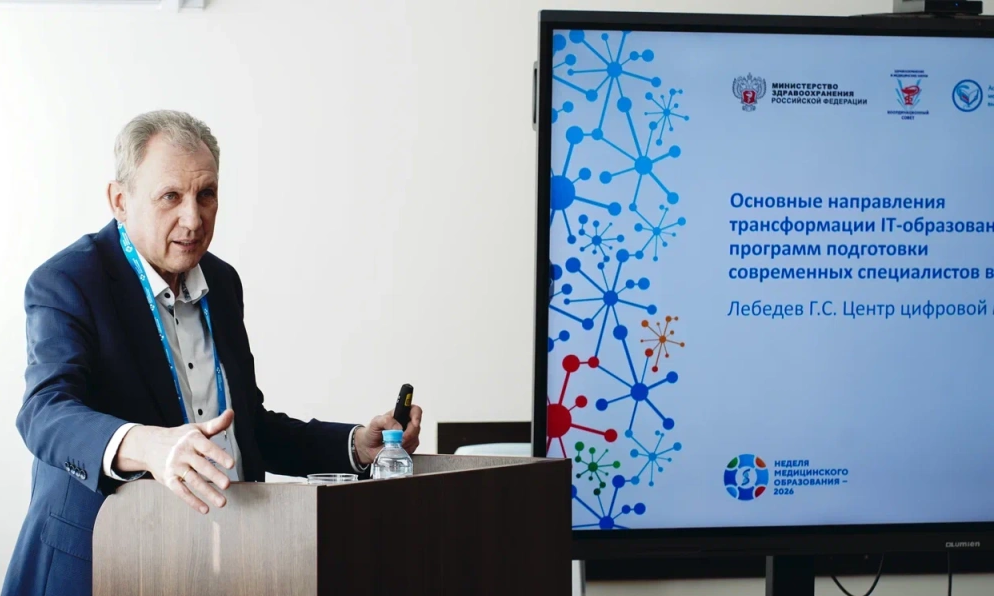
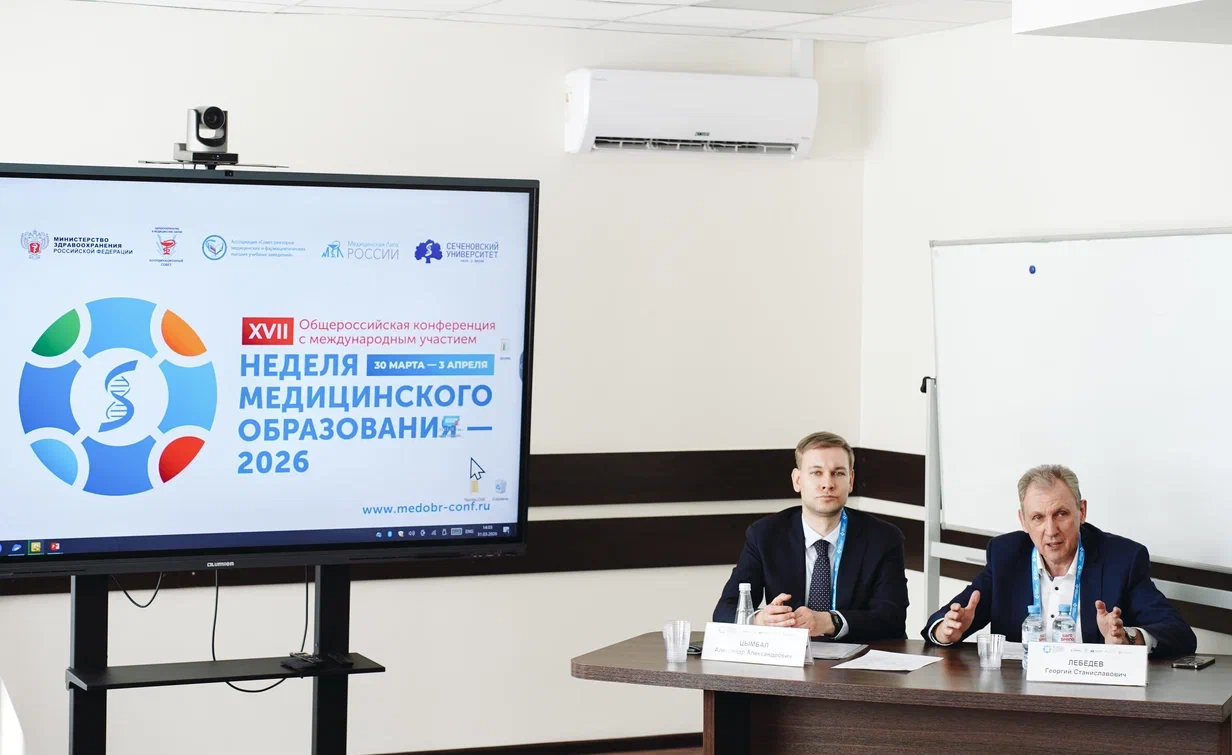
The Sechenov University hosted the section "Digital Technologies and Artificial Intelligence in Medical Education 2026–2030: Realities vs. Prospects." One of the key topics of discussion is the long-standing gap between medicine and technology. The problem is that a doctor understands well what a hospital and a patient need, but cannot always correctly set a task for an IT developer. An engineer, in turn, knows how to create digital solutions, but is often not sufficiently immersed in the medical subject area.
As a result, the traditional education system produces specialists who only meet at the workplace and then spend years learning to understand each other. Therefore, the focus is now on a different model: not just training a doctor separately and a programmer separately, but assembling teams in advance that are capable of creating products for healthcare. In this model, the doctor sets the task, the engineer implements it, and both begin to speak the same language even before entering the labor market.
How this is taught in practice — students are immersed in digital medical technologies through project activities. A multidisciplinary team is responsible for each project. Future clinicians act as subject matter experts and task setters. They formulate a request for future engineers who are studying in bachelor's and master's programs at an advanced engineering school. They, in turn, take on the role of technical specialists and developers.
One of the reports was devoted to a new model for training a doctor using artificial intelligence. Particular attention was drawn to the VR simulator, which was developed to train students of medical and engineering specialties to work with domestic medical equipment. For example, engineering students can completely disassemble the device in virtual reality, conduct diagnostics and troubleshoot. The development has two modes: training, when the material can be mastered calmly, and an exam, when there is no right to make a mistake.
The capabilities of the simulator were shown using the example of working with a domestic hemodialysis machine created by Rosatom RDS JSC together with engineers from the Institute of Bionic Technologies and Engineering. Since the device is new to the market, medical and engineering students needed to learn how to work with it. To speed up and simplify this process, a series of training simulators was created, allowing you to get acquainted with the device in a completely safe virtual environment.
Read more on the topic:
Never miss our newsAdd this site to your preferred sources to see us more oftenAdd on Google

















