Translated with AI from the Russian original.
The Lobachevsky CubeSat, created at Lobachevsky University on the Geoscan 16U platform, has transmitted the first multispectral images to Earth, First Technical was told at Geoscan Group. The surroundings of the American city of Oxnard (California) and the Japanese city of Yokosuka (Kanagawa Prefecture) were captured in four spectral ranges.
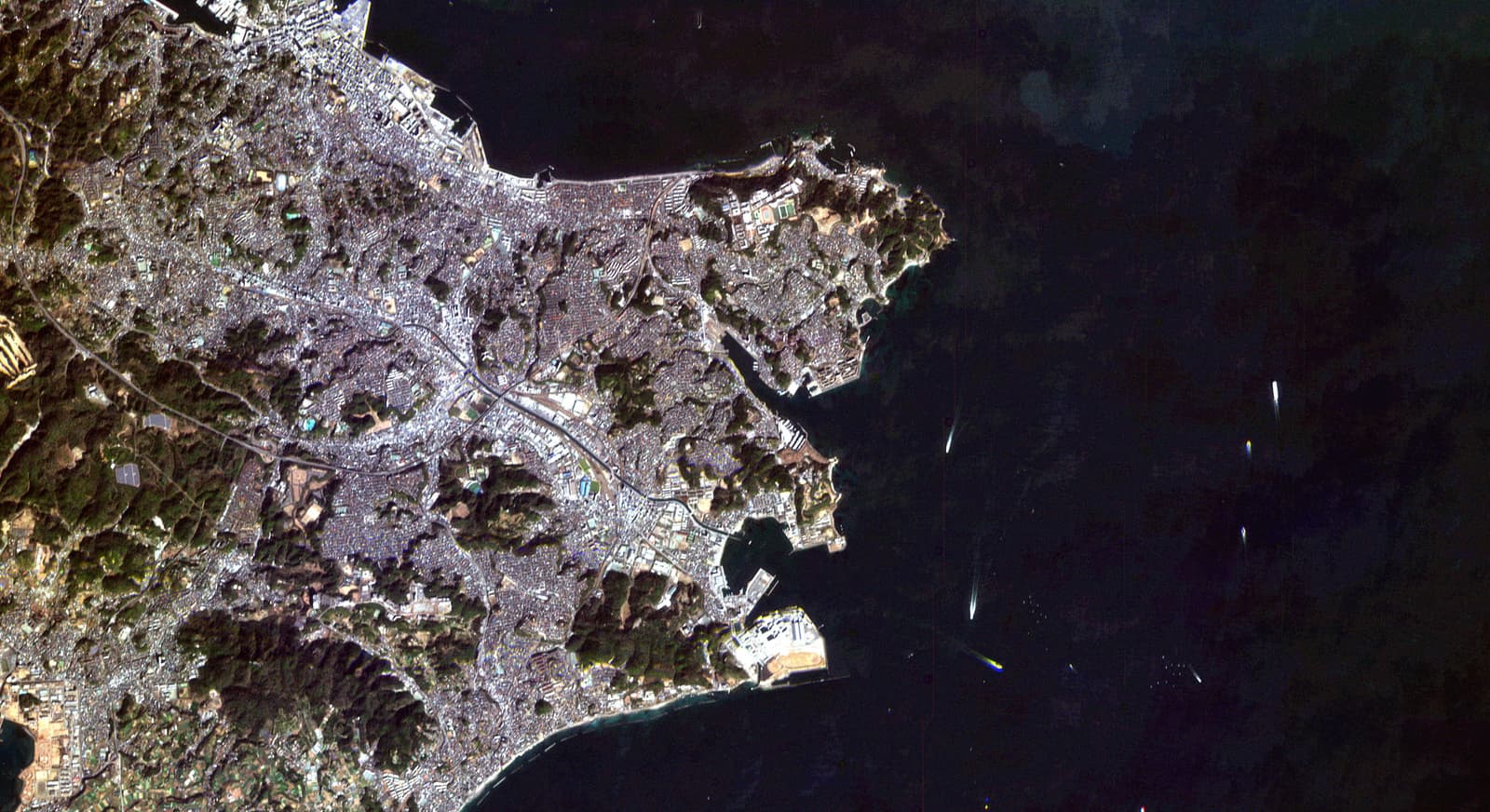
The multispectral camera manufactured by JSC NPO Lepton has a resolution of 4 meters per pixel at an orbit altitude of 500 kilometers. Together with the hyperspectral camera created at Samara University named after Korolev, it will allow NNSU scientists to conduct agroecological research: to assess the state of vegetation in forest and agricultural areas. The data will be processed using a software and hardware complex developed by the university.
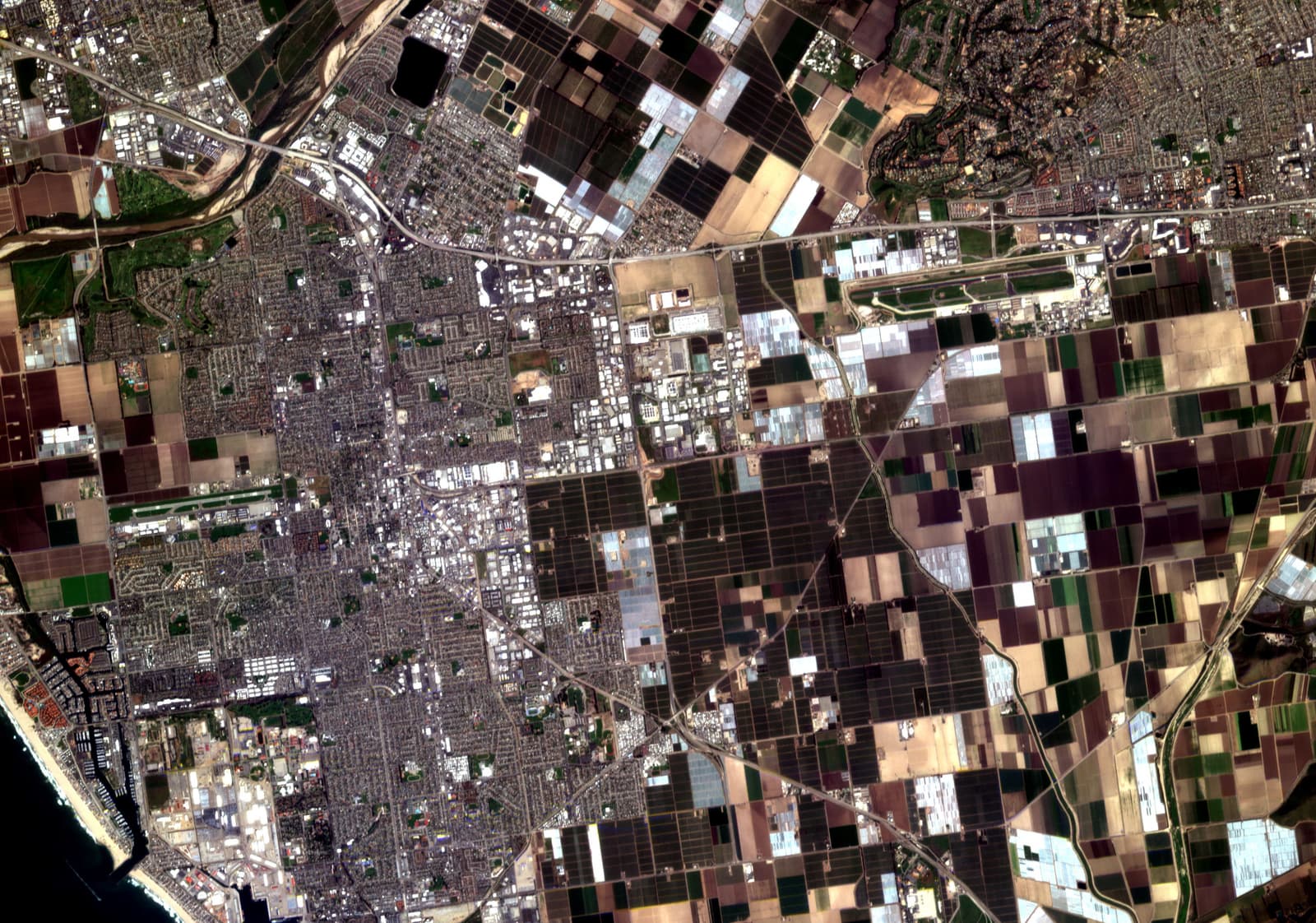
Unfortunately, most of Russia is still covered in snow, bodies of water are covered in ice, and high atmospheric humidity forms dense cloud cover that obscures the earth's surface. Therefore, territories on the coast and with a warmer climate were chosen to obtain test images. The results obtained confirm that both the multispectral camera and the satellite orientation system are working correctly and reliably, which means that with the onset of the growing season, our scientists and students will be able to begin research.
The Lobachevsky CubeSat was launched on December 28, 2025 from the Vostochny Cosmodrome as part of the Space-π educational program with the support of the Innovation Promotion Fund and the Nizhny Novgorod Scientific and Educational Center. Geoscan has been developing the space direction since 2021: to date, 15 small spacecraft of its design are in orbit.
Read more on the topic:
Never miss our newsAdd this site to your preferred sources to see us more oftenAdd on Google

















