Translated with AI from the Russian original.
In early March 2026, the sixth MS-21 prototype, aircraft 73057, continued testing at the airfield in Zhukovsky. This was reported by the analytical blog "Letaem vmeste". This is the first aircraft in the program equipped with fully import-substituted systems. All key components, including the avionics and cockpit equipment, have been replaced with domestic equivalents. The engines are Russian PD-14s.
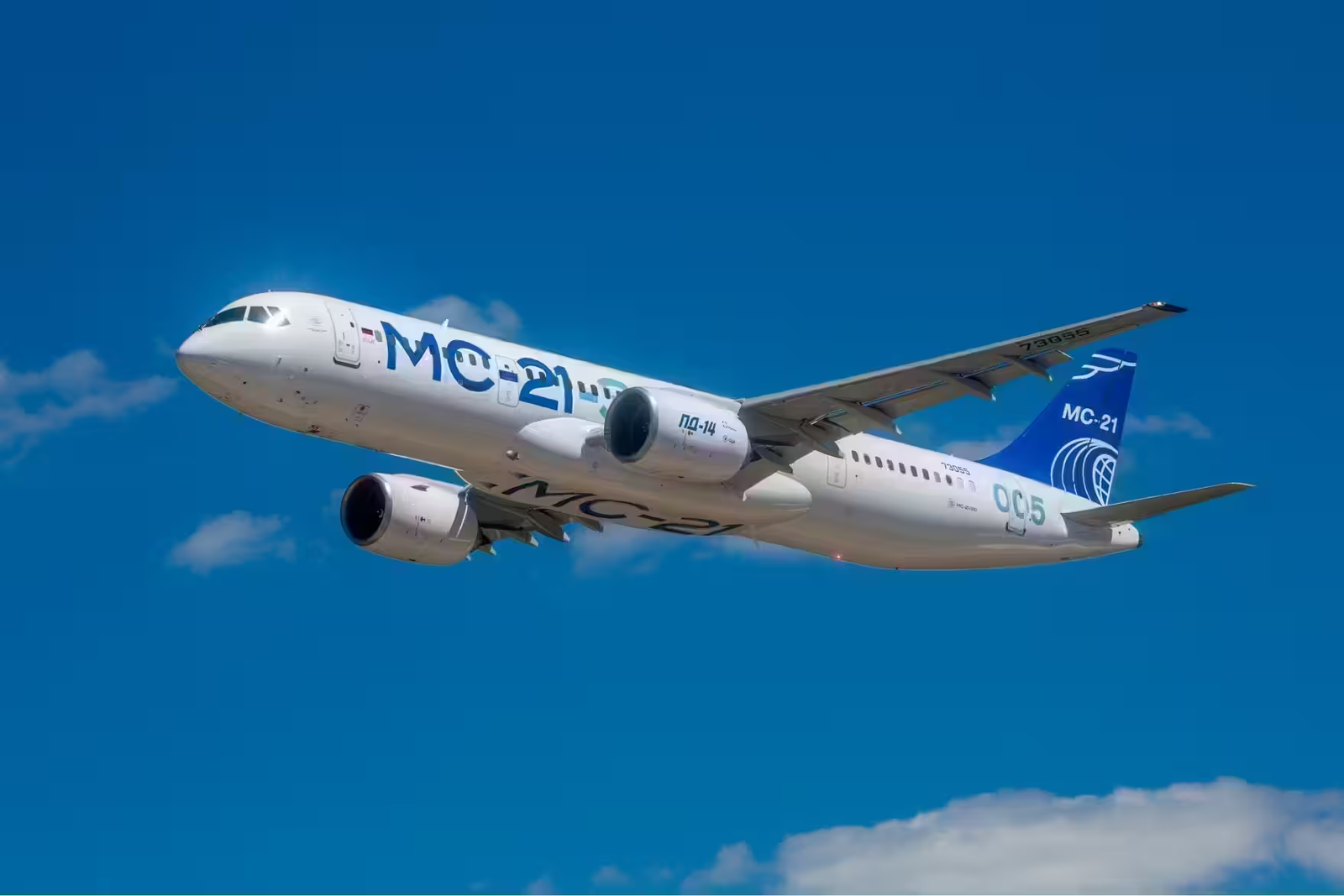
From February 23 to March 8, the aircraft completed four flights. Total flight time exceeded 10 hours. Each flight addressed specific tasks related to verifying the aircraft's behavior with the new equipment configuration.
On March 3, aircraft 73057 made its 29th test flight. The aircraft spent about three hours in the air. The crew practiced modes at low altitude, up to 2,300 meters, and at speeds of around 320 km/h. Information on this flight is partially restricted, but the very fact of stable climb and parameter retention indicates correct system operation.
The next day, March 4, the 30th flight took place. It proved to be longer, lasting 4 hours and 7 minutes. The airliner climbed to 6,200 meters and reached a speed of up to 690 km/h. These figures are closer to cruising modes, which made it possible to check the operation of the onboard systems in conditions close to real-world operation.
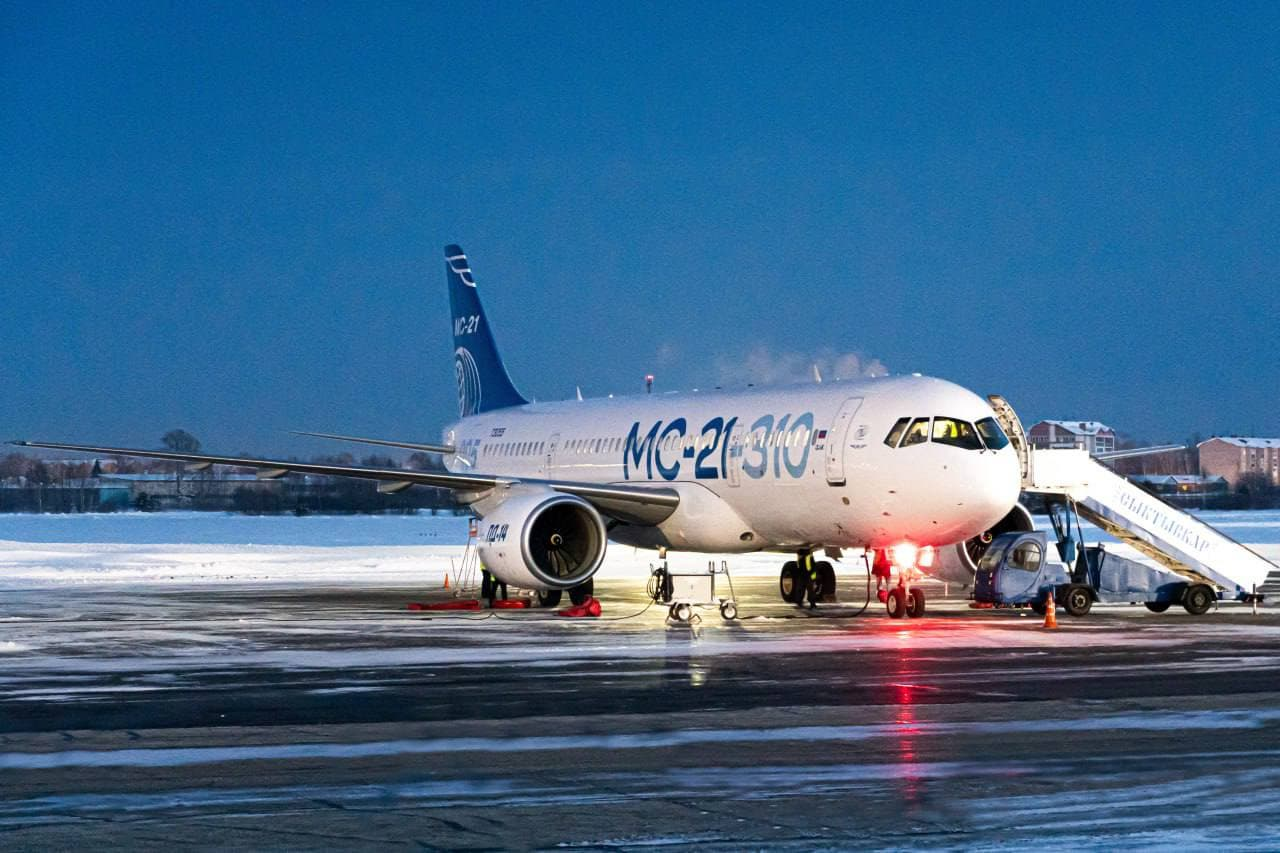
On Friday, March 5, the 31st flight took place. The mission details have not been disclosed, but it is known that the aircraft was in the air for about three and a half hours. Such a dense flight schedule, three days in a row, indicates the aircraft's high readiness for an intensive fine-tuning program.
Aircraft 73057 is not just another prototype. It is the first MS-21 flying with a full package of Russian solutions. Earlier, aircraft with partial import substitution were tested, where some of the equipment remained foreign-made. Now the team is checking how the airliner behaves when all systems are domestic.
The test program for aircraft 73057 is only gaining momentum. It is expected that in the coming weeks the crews will continue to build up flight hours, gradually increasing the complexity of the tasks. Particular attention will be paid to testing the systems in autonomous mode and in abnormal situations, a key stage for future certification.
Read more on the topic:
Never miss our newsAdd this site to your preferred sources to see us more oftenAdd on Google

















